
The timing of meals in Spain is one of the first things that disorients northern European and American visitors. Lunch at 2pm feels late. Dinner at 10pm feels impossible. The afternoon gap between 2pm and 9pm when restaurants are closed feels like a problem. Understanding why the schedule exists, and how to work with it rather than against it, transforms the experience of eating in Spain from frustrating to one of the most pleasurable aspects of the trip.
The daily meal schedule
Desayuno (breakfast): 7am to 10am
The Spanish breakfast is small and quick. A coffee (café con leche, cortado, or café solo) with a piece of toast, a croissant, or a pastry, eaten standing at a bar counter or sitting for 15 to 20 minutes. Many Spaniards eat almost nothing at home in the morning and stop at a bar on the way to work for this first breakfast.
A second breakfast (almuerzo) follows mid-morning, between 10am and noon, for people whose work schedule allows it. This is still a bar stop rather than a meal — a coffee and a small bocadillo (sandwich) or a tapa. Construction workers, tradespeople, and anyone with a physical morning job typically takes this break.
Comida (lunch): 2pm to 4pm
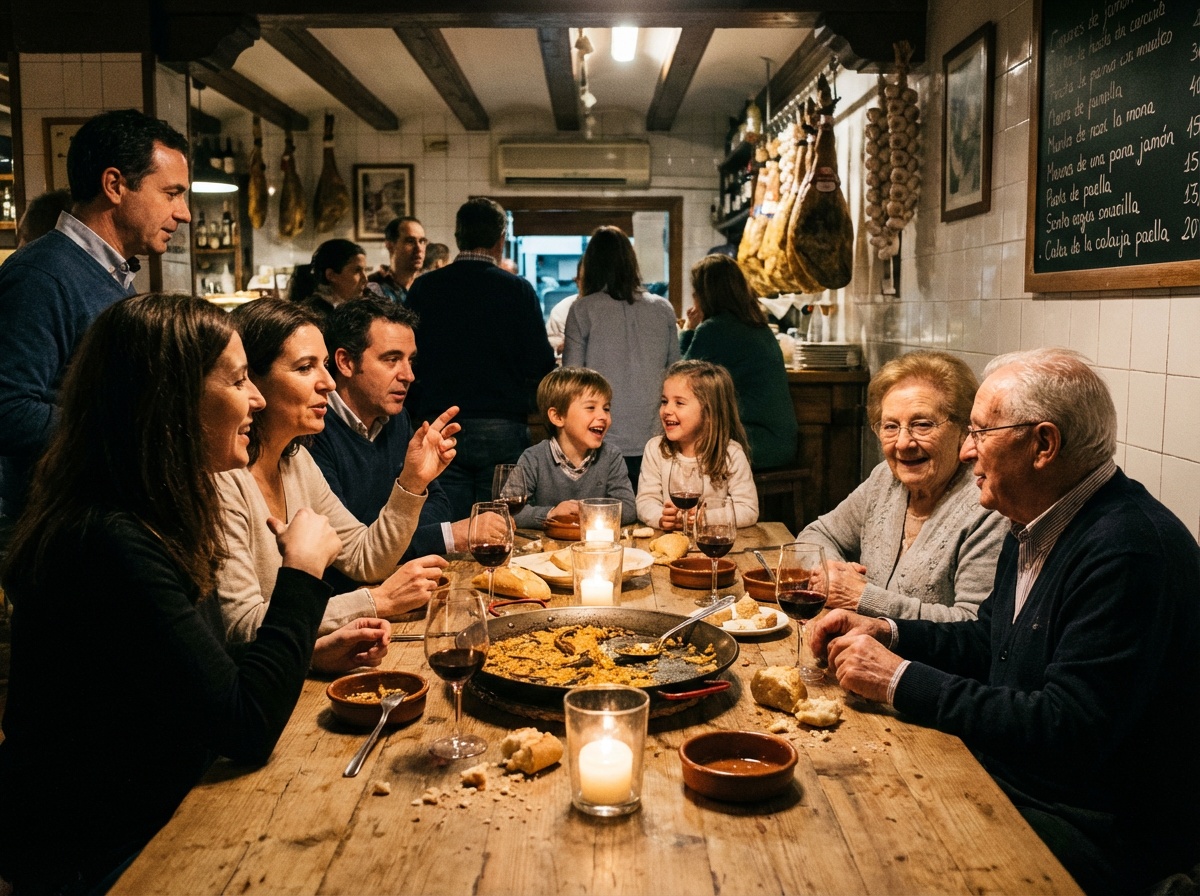
Lunch is the main meal of the day in Spain. The two-hour window from 2pm to 4pm is when Spanish workers eat their most substantial meal, typically a full three courses if they are eating out (via the menú del día) or a cooked meal at home. The length of the lunch break — still 1.5 to 2 hours in many Spanish workplaces — enables a proper meal rather than a sandwich eaten at a desk.
Restaurants fill completely between 2pm and 3.30pm on weekdays. Arriving before 2pm means eating ahead of the wave; arriving after 3.30pm means finding the kitchen winding down or closed. The Spanish lunch hour is fixed and the restaurants operate on this schedule rather than extended continuous service.
Merienda (afternoon snack): 5pm to 7pm
A small snack in the late afternoon, inherited from the tradition of school children coming home hungry after a long day. Adults eat merienda too — a piece of fruit, a pastry, churros and chocolate on a weekend — but it is primarily associated with children. Café culture peaks again during this window, with families stopping at pastry shops and cafés.
Aperitivo (pre-dinner drinks and tapas): 7pm to 9pm
The aperitivo hour is the social peak of the Spanish day. From 7pm, bars fill with people eating small plates and drinking wine, beer, or vermouth before dinner. This is not dinner itself — it is the transitional period between the working day and the meal. In many Spanish cities, the aperitivo runs from 7pm to 9pm or 9.30pm, after which people either move to a restaurant for dinner or continue at the bar for a longer tapas session.
Cena (dinner): 9pm to 11pm
Dinner in Spain begins at 9pm. This is not flexible in the same way the other meal times are — 9pm is genuinely when Spanish families and couples sit down to dinner, at home and in restaurants. Restaurants fill between 9.30pm and 10.30pm. Kitchens typically close between 11.30pm and midnight at traditional restaurants.
The late dinner time is a product of the long afternoon gap, the substantial lunch, and the aperitivo period. By 9pm, the body has processed the afternoon snack and the aperitivo and is ready for a full meal. Eating dinner at 7pm, by contrast, would compress the aperitivo and dinner into the same window in an uncomfortable way.
Why the schedule exists
The Spanish meal schedule developed in response to the climate. The midday heat in summer — particularly in Andalucia, Extremadura, and the central meseta — made outdoor and physical work impractical between approximately 2pm and 5pm. The long lunch break coincides with this period of intense heat, and the late dinner follows the cooler evening hours when social life resumes.
In northern Spain (the Basque Country, Galicia, Cantabria, Asturias), where the climate is cooler and wetter, the meal schedule is slightly earlier — lunch from 1.30pm, dinner from 8.30pm — but still substantially later than northern Europe. The schedule is cultural throughout the country, not only practical in the hottest regions.
The siesta — the post-lunch rest period — is now rare in urban Spain outside August. Spanish shops and businesses close for two to three hours in the afternoon in smaller towns and villages; in Madrid, Barcelona, and Seville, most businesses operate continuous hours. The meal schedule persists even as the commercial break that enabled it has disappeared for most urban workers.
How to adapt as a visitor
The most common mistake tourists make is arriving at a restaurant at 7pm for dinner and finding it either closed or empty. The solution is to eat on the Spanish schedule, which requires shifting your internal clock by approximately two hours from a northern European baseline.
Practical adjustments:
Eat a proper lunch at 2pm. This is when the food is at its best, the prices are lowest (menú del día), and the restaurants are operating at full capacity. A full lunch at 2pm means you are not hungry again until 9pm, which aligns perfectly with the Spanish dinner schedule.
Use the aperitivo hour. Between 7pm and 9pm, go to a bar and eat tapas. This is not dinner — it is a social and eating activity that bridges the afternoon and evening and satisfies mild hunger without eating a full meal too early.
Eat dinner at 9pm or later. If you have eaten properly at lunch and had tapas during the aperitivo, 9pm is the natural time to be hungry enough for a full meal. Arriving at a Spanish restaurant at 9pm means you are eating when the kitchen is at its best and the room is filling with the energy of a dining room coming alive.
Frequently asked questions
What time is lunch in Spain?
Between 2pm and 4pm. This is the main meal of the day for Spanish people. Restaurants fill between 2pm and 3.30pm on weekdays. The menú del día (fixed-price lunch) is served during this window.
What time is dinner in Spain?
Between 9pm and 11pm. Restaurants begin filling at 9.30pm. Kitchens typically close between 11.30pm and midnight. Arriving before 9pm at a Spanish restaurant means eating in an empty room before the main service begins.
Do Spaniards really eat dinner at 10pm?
Yes. Particularly on weekends and in summer. A Spanish family sitting down to dinner at 10pm or 10.30pm is entirely normal and not considered late. The large lunch, the merienda, and the aperitivo mean the body is genuinely not hungry for a full meal until this hour.
What is the best time to eat tapas in Spain?
Between 7pm and 9pm for the evening aperitivo session, or from 1pm to 2pm for a pre-lunch tapas round. Both windows have full kitchens and full bars. Avoid eating tapas at 6pm (too early) or after 11pm (kitchen winding down at most bars).
More practical eating knowledge? Read our guide to the menú del día explained and tipping in Spain.
Found a correction or an update?
Email us at hello@spainfoodguide.com — we keep our entries current.
Run a restaurant in Spain you think we should know?
Get featured →