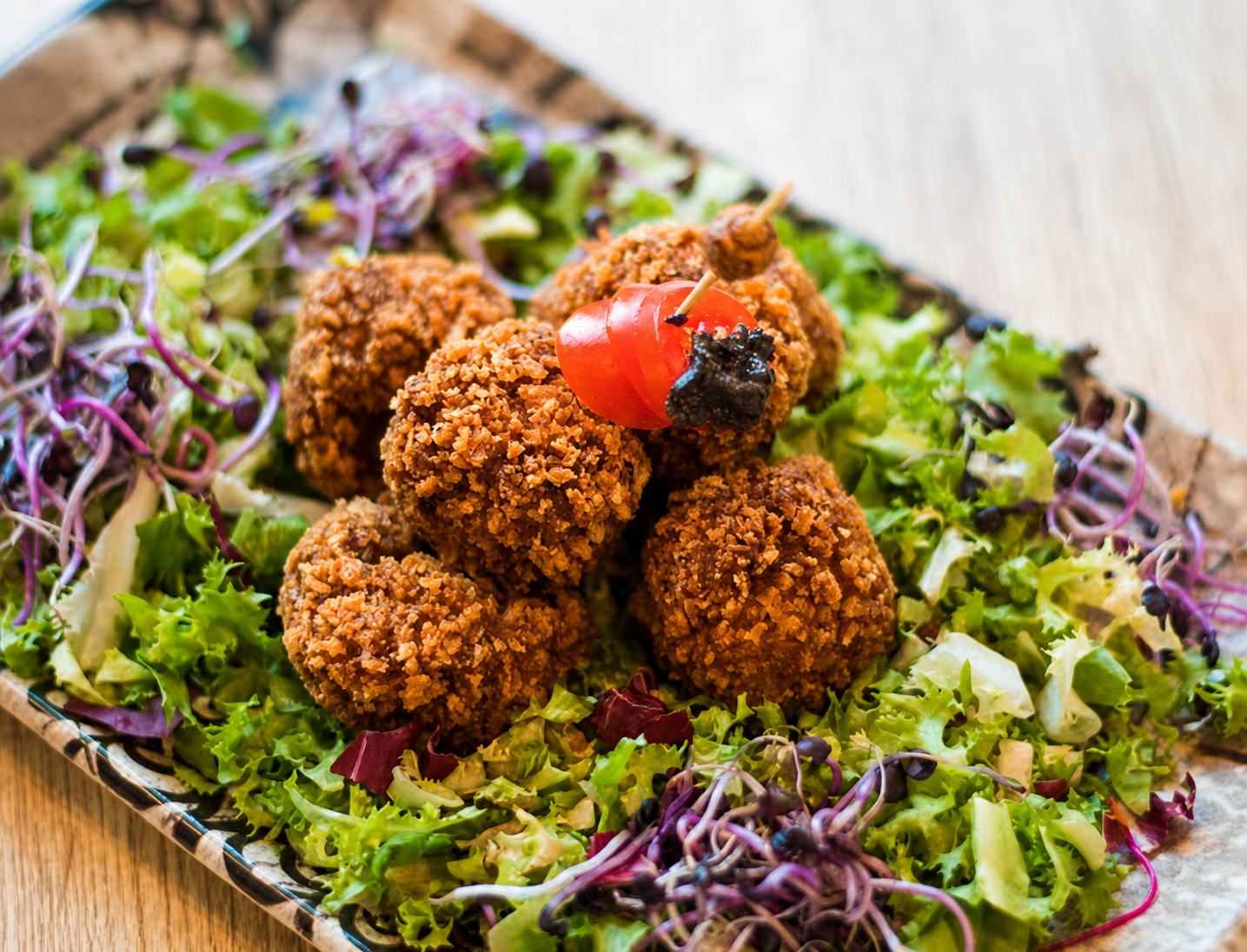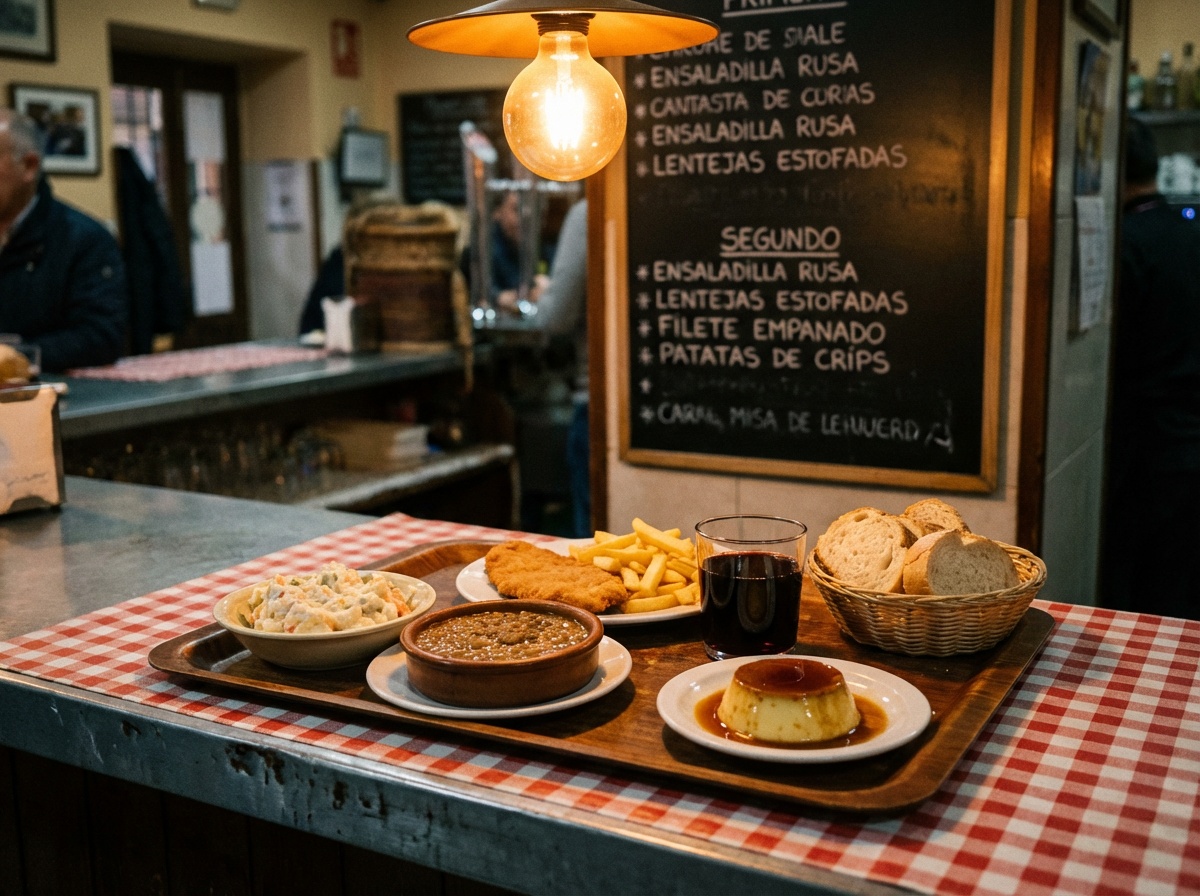

The menú del día is one of the best deals in Spanish eating and one of the most misunderstood by visitors. It is a fixed-price lunch menu served from Monday to Friday, typically between 1pm and 3.30pm, at restaurants that cook for a local working clientele. It includes multiple courses, bread, a drink, and dessert for a price — typically €10 to €14 outside major cities, €12 to €18 in Madrid and Barcelona — that represents the best value eating in Spain.
Understanding how the menú del día works, where to find the best versions, and what to expect from each course makes the difference between one of the best meals of your trip and a slightly confusing experience at a restaurant you stumbled into at 2pm.
What the menú del día includes
A standard menú del día includes:
- First course (primer plato): A choice of two or three options, typically including a soup, a salad, a rice dish, or a vegetable preparation. The first course is often the most seasonal and variable part of the menu — it reflects what the kitchen has that day.
- Second course (segundo plato): A choice of two or three options, typically including a fish and a meat. The protein is the main event of the meal. Common options: grilled fish (dorada, lubina, merluza), a meat stew, a grilled chop, or chicken.
- Dessert (postre): Usually a choice between fruit, yoghurt, flan, or the day’s cake. The dessert is rarely the reason to order the menú but it is included.
- Bread: Always included, arrives at the table without asking.
- Drink (bebida): A choice of water, wine, beer, or a soft drink. The wine included is house wine (vino de la casa) — a glass, typically, though some restaurants bring a quarter-litre carafe. The water is tap unless you specify otherwise.
- Coffee: Sometimes included, sometimes €1 to €1.50 extra. Always worth asking.
How to find a good menú del día
The menú del día exists to feed local workers at lunch, not to attract tourists. The best versions are in restaurants that are primarily local — near offices, markets, hospitals, industrial areas, or residential barrios away from the tourist centre. The worst versions (overpriced, poorly cooked, designed to intercept tourists who see “MENÚ €15” on a board near a museum) are in the tourist zones.
The practical filter: walk away from any major tourist attraction and the menú quality improves within two blocks. Look for restaurants where the diners are wearing work clothes or look like they eat there every week. A full dining room at 2pm on a Tuesday is the most reliable indicator of a good menú.
The board outside a good menú restaurant lists the dishes for that day specifically. Restaurants that list only “fish” and “meat” as options, without naming the specific dishes, are either cooking to a lower standard or do not want to commit to specific produce because it has not been bought yet. Both are bad signs.
The timing
The menú del día is a lunch service. It begins when the kitchen opens for lunch — typically 1pm or 1.30pm — and ends when the kitchen closes, usually 3.30pm to 4pm. Arriving after 3pm at a good menú restaurant risks finding that the first-course options have sold out or that the kitchen is winding down.
The ideal arrival time is 1.30pm on a weekday. The first wave of the lunch service (the workers who eat early) is finishing; you arrive into a moderately full room with the kitchen at full capacity and the full selection available.
The menú del día is not available at dinner. Some restaurants offer an evening version called the menú de noche, but this is less common and generally at a higher price point. The menú del día is specifically a lunch convention built around the Spanish working lunch break.
What the different courses actually mean
Primer plato: The first course in a good menú restaurant is cooked, not assembled. A bowl of lentil stew with chorizo, a plate of judías verdes (green beans) with olive oil and garlic, a vegetable menestra (mixed vegetables in broth), or a bowl of caldo (broth) with noodles. These are the dishes that Spanish home cooks make and that the best menú restaurants also make, because their customers eat the same food at home and will notice if it is done poorly.
Segundo plato: The protein course. The quality of the second course is the primary variable between menú restaurants. A poor kitchen sends out a grilled piece of frozen fish with frozen chips. A good kitchen sends out a piece of fresh fish bought that morning, properly grilled, with a simple accompaniment of boiled potato or sautéed vegetables. The same €12 menú price covers both.
Vino de la casa: The house wine at a good menú restaurant is chosen by someone who drinks it regularly. It is not the best bottle in the cellar, but it is not bought from the cheapest possible source either. Asking what region the house wine comes from before you order gives you information about how seriously the restaurant takes its food.
Regional variations
The menú del día format is consistent across Spain but the content varies significantly by region. In the Basque Country, the menú txikia (the Basque equivalent) tends to be more elaborate and more expensive (€16 to €25) than the national average, reflecting the higher quality of cooking in the region. In Andalucia, the first course is often a gazpacho or salmorejo in summer and a bean or lentil stew in winter. In Catalonia, the first course frequently includes rice or pasta dishes from the Catalan tradition.
The cheapest menus in Spain are in the agricultural provinces of the interior — Extremadura, Castilla-La Mancha, Murcia — where a full three-course menú with wine can still be found for €8 to €10. The most expensive are in Madrid, Barcelona, and the Basque Country.
Frequently asked questions
What is a menú del día in Spain?
A fixed-price weekday lunch menu, typically €10 to €18, including a first course, second course, dessert, bread, and a drink. It is the standard way that Spanish workers eat lunch and represents the best value eating in the country.
Is the menú del día only available at lunch?
Yes, almost without exception. It is a lunch service, available from approximately 1pm to 3.30pm on weekdays. Some restaurants also offer it on Saturday. Sunday lunch in Spain tends toward a more elaborate family format rather than the menú del día.
Do you have to order every course?
The menú del día is a set menu — all courses are included in the price and expected. You can skip a course (tell the waiter you do not want the dessert, for example) but the price does not change. There is no reduced price for eating fewer courses.
What should I order if I cannot read the Spanish menu?
Point at what the table next to you ordered. Ask the waiter “¿qué recomienda?” (what do you recommend?). Both work consistently well. Spanish restaurant staff are not precious about language barriers.
More on eating in Spain? Read our guide to when Spaniards eat and the complete guide to ordering wine in Spain.
Found a correction or an update?
Email us at hello@spainfoodguide.com — we keep our entries current.
Run a restaurant in Spain you think we should know?
Get featured →