
Mercado de la Paz is the food market of the Salamanca district, one of Madrid’s most affluent neighbourhoods. It opened in 1882, occupies a ground floor site on Calle de Ayala between Calle de Serrano and Calle de Claudio Coello, and has been the provisioning market for the Salamanca bourgeoisie for over a century. It is not a tourist attraction. It is a working market that the neighbourhood uses to shop for food.
The market is also one of the best places in Madrid to eat a tortilla de patatas standing at a market bar at lunchtime, which is reason enough to visit even if you are not provisioning a household in the Salamanca district.
What the market sells
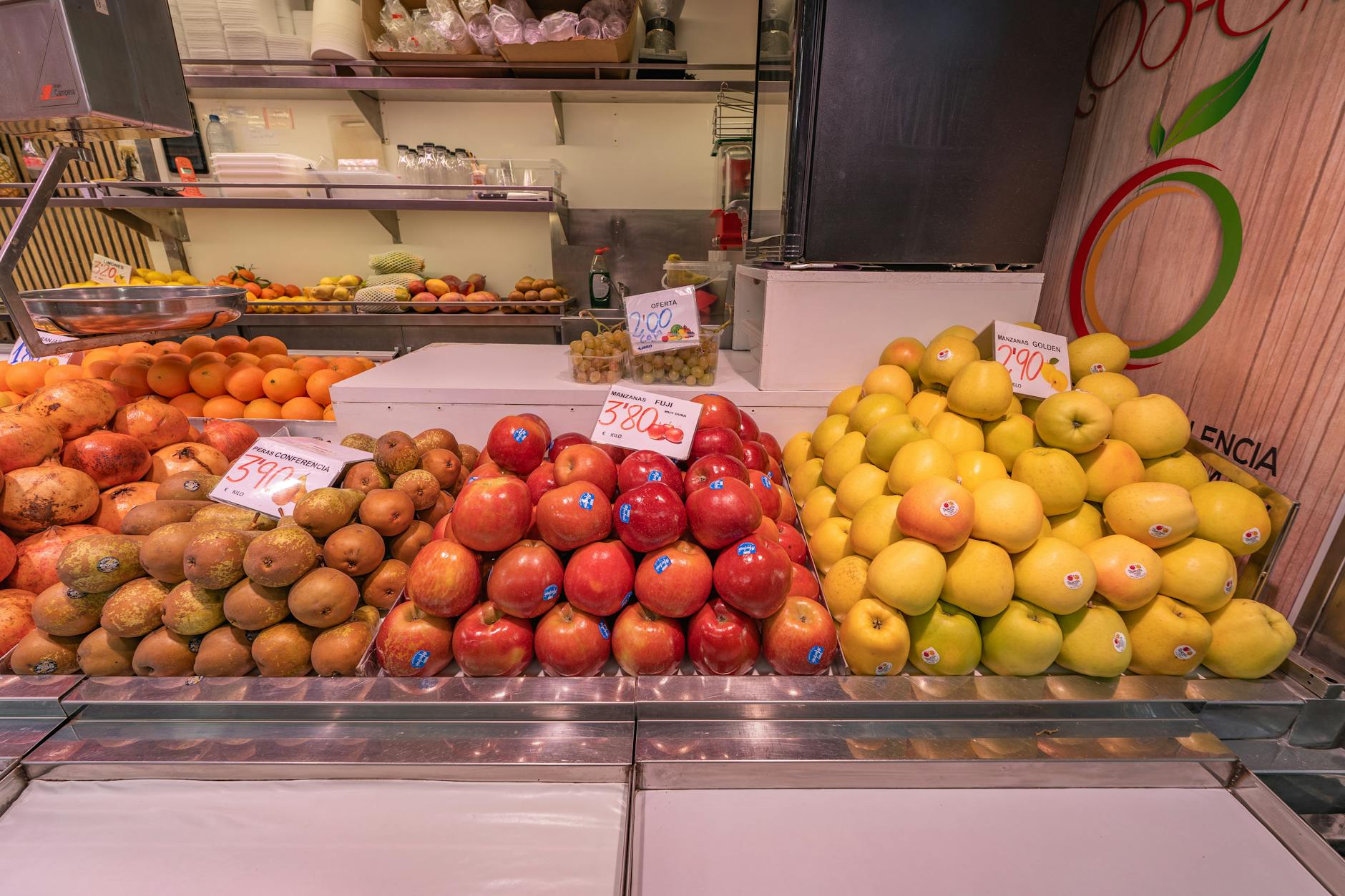
Mercado de la Paz has around fifty stalls across three connected market halls. The quality of the produce reflects the purchasing power of the surrounding neighbourhood — this is not a discount market. The fruit and vegetable section has the best seasonal produce in the city at any given time of year. The fish counters are extraordinary: a full range of Atlantic and Mediterranean species, filleted to order, with a turnover that ensures freshness.
Fish and seafood: The fish section of La Paz is one of the references for quality in Madrid. Several stalls specialise in specific categories — one in shellfish and crustaceans (percebes, nécoras, langostinos), one in salt cod (bacalao) in all its forms (fresh salt cod, desalted, various cuts), one in smoked fish. The best fishmongers here have been operating for three or four generations and their relationships with the Galician and Cantabrian fishing ports that supply them produce a better selection than any supermarket in the city.
Meat: The butchers in La Paz operate at the premium end of Madrid’s meat supply. Chuletón de buey (ox rib steak) aged for a minimum of 30 days is available from at least two stalls; the quality is comparable to the best steak restaurants in the city at a fraction of the price if you are cooking at home. The lamb section, particularly the lechazo (milk-fed lamb) from Castilla y León, is exceptional in winter and spring.
Cheese: A dedicated cheese counter with one of the better selections of Spanish and European cheese in Madrid. The manchego section alone runs to five or six ages and producers; the selection of Basque and Catalan cheeses is broader than most dedicated cheese shops in less affluent neighbourhoods.
Jamón: Several jamón stalls selling ibérico products of various grades, cut by hand to order. The stalls in La Paz tend toward the higher end — more bellota-grade ibérico and less of the commodity serrano that fills the tourist-facing markets. Prices are high but the product is excellent.
Eating at the market
Several bar counters operate inside the market, serving food and drink to market workers, neighbourhood residents doing their shopping, and anyone who knows to stop at a market bar for lunch. These are among the best-value lunch options in the Salamanca district, which is not a neighbourhood associated with budget eating.
The tortilla counter: The market is most famous in Madrid food circles for the tortilla de patatas served at the bar counter near the main entrance. It is made fresh throughout the morning and sold by the slice at the bar. The tortilla at La Paz has a moist, barely-set centre that runs slightly when cut — the Madrid standard for a correctly made tortilla — with a golden exterior and a generous proportion of slowly caramelised onion. A slice costs €2.50 to €3.50 depending on size. Order it at the bar with a caña (small draught beer) or a glass of wine.
Bar Los Gallos: The main sit-down bar in the market, which serves a full menu del día (fixed-price lunch) at very reasonable prices for the Salamanca postcode. The lunch menu (around €14) typically includes a fish or seafood first course using market produce, a meat second course, dessert, bread, and wine. The quality varies with what the fish counters had that morning.
The Salamanca neighbourhood
The market is the anchor of the broader Salamanca food circuit. Calle de Serrano and its side streets have a concentration of excellent food shops, wine merchants, and specialty grocers that makes the neighbourhood Madrid’s best area for food shopping.
Lavinia: On Calle de José Ortega y Gasset, the largest wine shop in Madrid (and one of the largest in Europe). Over 4,500 references across all price points, a professional staff who know the inventory, and a wine bar on the premises for tasting before buying. Lavinia is worth the trip from anywhere in Madrid for anyone seriously interested in Spanish wine.
Mallorca: On Calle de Serrano, the Salamanca outpost of the Barcelona pastry institution. The house-made charcuterie, pastries, and prepared foods are at a consistent high level. Buy the ensaïmada if you will not be passing through Barcelona on the same trip.
When to visit
Tuesday through Saturday morning is the market at full operation. Saturday is the best day for the maximum selection at the fish and meat counters, as the weekend provisioning brings out the full range. Arrive before 11am for the best selection; by 1pm the best cuts and the freshest fish are sold.
Monday is the quietest day and some stalls are closed or operating on reduced stock after the weekend. Sunday the market is closed.
For the tortilla: go at 11am when the first batch of the day is at its peak. The 1pm lunchtime rush produces good tortilla but the freshest version, just out of the pan, is the 11am version.
Getting there
Metro: Serrano (Line 4) or Velázquez (Line 4). The market is on Calle de Ayala, midway between the two stations. A five-minute walk from either.
Frequently asked questions
Is Mercado de la Paz a tourist market?
No. It is a working neighbourhood provisioning market with minimal tourist infrastructure. There are no tapas stalls designed for standing consumption in the way that San Miguel is organised. The bars inside serve the market workers and local shoppers. Visitors are welcome but the market operates on the rhythm of the neighbourhood rather than the tourist schedule.
What is the best thing to buy at Mercado de la Paz?
The fish if you are cooking, the tortilla if you are eating on site, and the chuletón de buey from the aged meat stall if you have access to a good grill. The cheese counter is also worth a serious browse.
How does Mercado de la Paz compare to Mercado de San Miguel?
Completely different in purpose and atmosphere. San Miguel is a food consumption destination for tourists and well-heeled visitors. La Paz is a provisioning market for Salamanca residents. San Miguel is busy with tapas consumers; La Paz is busy with people doing their weekly shopping. Both are worth visiting; they provide different things.
More Madrid markets and food shopping? Read our guide to Mercado de San Fernando vs Mercado de San Miguel and the best jamón bars in Spain.
Found a correction or an update?
Email us at hello@spainfoodguide.com — we keep our entries current.
Run a restaurant in Spain you think we should know?
Get featured →