
Madrid has two markets that are frequently mentioned in the same sentence and are almost entirely different in what they offer, who uses them, and what they are actually for. Mercado de San Miguel is a tourist destination built inside a 1916 cast-iron market hall, three blocks from the Plaza Mayor. Mercado de San Fernando is a working neighbourhood market in Lavapiés, the most ethnically diverse barrio in Madrid. Both are worth visiting. They serve completely different purposes.
Mercado de San Miguel
San Miguel is one of the best-preserved iron market structures in Spain. The building, completed in 1916, has a glass and iron facade of considerable elegance. It was restored and reopened in 2009 as a gourmet market and tapas destination — a concept borrowed from similar operations in Barcelona (Mercado de Santa Caterina) and San Sebastián.
The market today operates as a collection of stalls serving small portions of food and drink for consumption standing up or at the bar counters around the perimeter. The offer covers most of the Spanish food canon: jamón ibérico, seafood, pintxos, vermouth, wine, cava, oysters, croquetas, fresh pasta, olives, cheese, and small plates of various elaborations. Most stalls are operated by quality food producers or specialist vendors. The prices are higher than neighbourhood bars (€3 to €6 per tapa, €4 to €8 per glass of wine) and the clientele is a mix of tourists and well-resourced madrileños.
What San Miguel does well: The quality of the raw ingredients at the specialist stalls is genuinely high. The jamón ibérico from the carving station, the oysters, the anchovies from the Cantabrian stall, and the vermouth from the bar that makes it in-house are all worth the price. The building itself is beautiful and worth seeing regardless of what you eat.
What San Miguel does less well: The atmosphere is closer to a food hall than a market. Nobody is shopping for tonight’s dinner here. The experience is designed for consumption rather than for provisioning, and the prices reflect this. It is also perpetually crowded — on weekend afternoons, moving through the market requires patience.
Best time to visit: Weekday mornings between 10am and noon, when the market is quiet, the stalls are stocked with fresh product, and you can eat at the bar without queuing. Weekend evenings are the opposite — maximum crowds, minimum atmosphere.
Mercado de San Fernando
Mercado de San Fernando is on Calle de Embajadores in Lavapiés, six minutes walk from the Lavapiés metro station. It is a functioning neighbourhood market that also contains a collection of independent bars, small restaurants, and creative businesses operating inside the market structure.
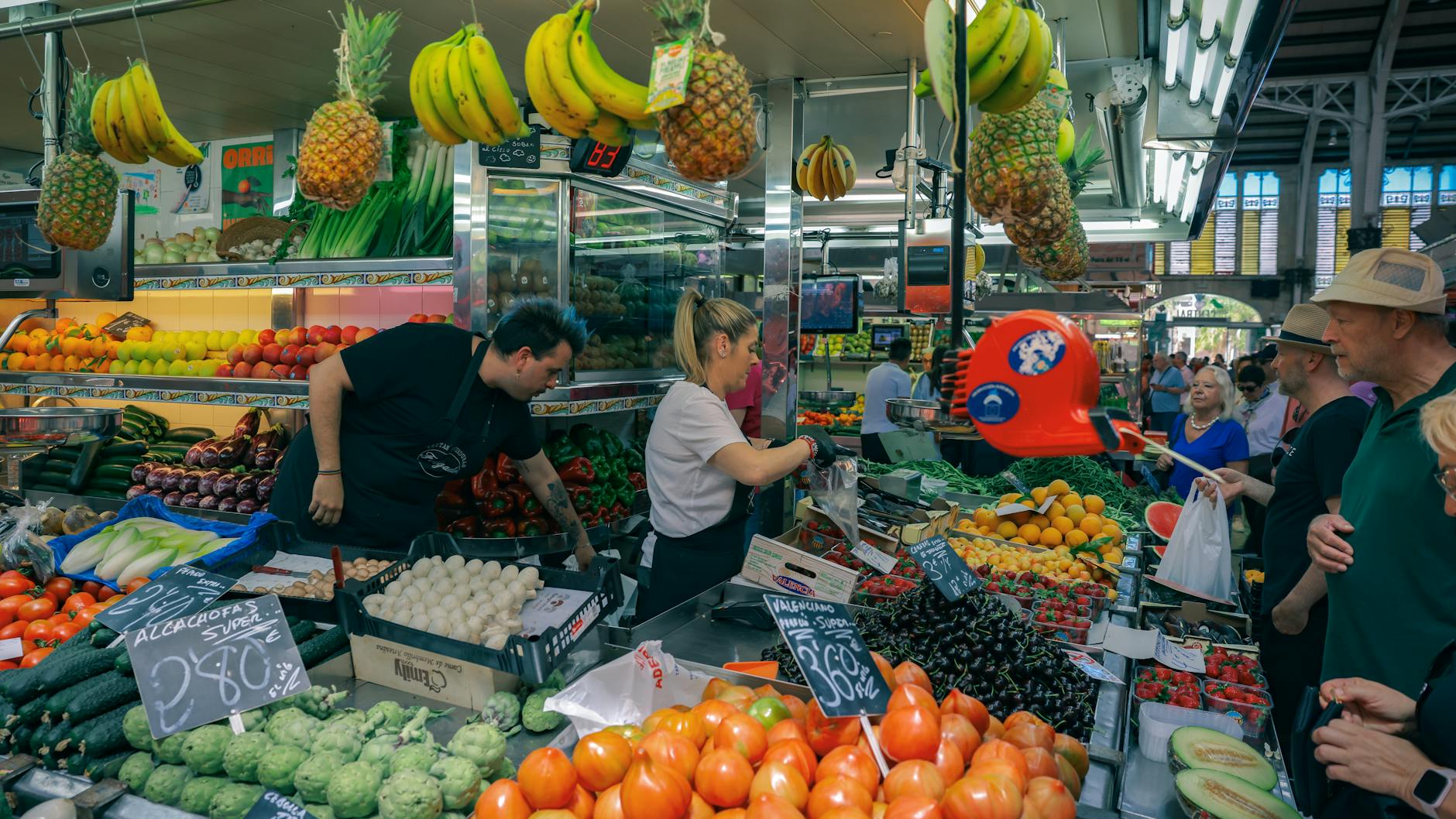
The market was built in 1945 and serves the Lavapiés community — one of the most multicultural and economically mixed in Madrid, with significant populations from West Africa, South Asia, China, and Latin America, alongside the artists, musicians, and lower-income Spanish families who have lived in the neighbourhood for generations. The food stalls in San Fernando reflect this: fresh produce, butchers, fishmongers, and cheese vendors alongside Senegalese food stalls, a Nigerian grocery, a Korean grocery, and a Moroccan patisserie.
What San Fernando does well: It is a real market where real people shop. The produce quality is good and the prices are neighbourhood prices rather than tourist prices. The independent bar and restaurant operators inside the market — a small wine bar with an excellent natural wine list, a bookseller with a café attached, a craft beer bar — provide the kind of creative energy that comes from independent operators rather than curated food halls. It is also completely unpretentious in a way that San Miguel, however excellent its products, is not.
The bars inside San Fernando: The wine bar in the southeast corner of the market has one of the better short lists of Spanish natural wine in Madrid. The craft beer bar serves rotating Spanish craft beers at lower prices than the dedicated craft beer bars in the Malasaña and Chueca neighbourhoods. Several of the food stalls do cooking to order during lunch hours — the West African groundnut stew, when available, is excellent and costs €7 to €8 for a generous portion.
Best time to visit: Saturday morning is the best time for the market itself — the produce stalls are at full supply and the neighbourhood energy is at its peak. Weekday lunchtime is best for the bars and eating stalls, when the market workers and local residents eat at the interior counters.
The comparison
San Miguel and San Fernando are not competing for the same visitor. San Miguel is a destination for people who want to eat well in a beautiful building without needing to navigate a neighbourhood. San Fernando is for people who want to understand a specific Madrid neighbourhood through its market and the businesses it has attracted.
If you are visiting Madrid for three days and want to eat in one market: San Miguel is the more reliable choice for quality tapas in a convenient location. If you are staying longer and want to see Madrid beyond the tourist infrastructure: San Fernando in Lavapiés is one of the most interesting markets in the city and the neighbourhood around it is worth at least a morning.
If you can visit both: go to San Miguel on a weekday morning for the jamón and oysters, and go to San Fernando on Saturday morning for the market and the wine bar.
Practical details
Mercado de San Miguel: Plaza de San Miguel, s/n (adjacent to Plaza Mayor). Open daily 10am to midnight (later at weekends). Metro: Sol or Ópera.
Mercado de San Fernando: Calle de Embajadores, 41, Lavapiés. Open Tuesday to Saturday, roughly 9am to 9pm (individual stalls vary). Metro: Lavapiés.
Frequently asked questions
Is Mercado de San Miguel worth visiting?
Yes, with adjusted expectations. It is a food consumption destination, not a traditional market. The quality of produce and tapas at the better stalls is high and the building is beautiful. Go at opening time on a weekday to avoid the crowds and get the best product.
Is Lavapiés safe?
Yes. Lavapiés has a reputation built on outdated perceptions of the neighbourhood in the 1990s. The current Lavapiés is one of Madrid’s most interesting barrios, with a thriving independent arts and food scene. Normal urban awareness is appropriate, as in any dense city neighbourhood.
What is the best thing to eat at Mercado de San Miguel?
The hand-carved jamón ibérico de bellota at the jamón stall, the fresh oysters, and the house vermouth at the vermut bar are the strongest options. The anchovies from the Cantabrian fish stall are among the best available in Madrid.
Are there other good markets in Madrid?
Mercado de la Paz in the Salamanca district (see our full guide) is one of the best traditional food markets in Madrid. Mercado de Maravillas in Tetuán is the largest food market in Madrid and operates as a working provisioning market with minimal tourist infrastructure.
More Madrid food? Read our guide to the La Latina Sunday vermut circuit and our look at Madrid’s best churros and chocolate.
Found a correction or an update?
Email us at hello@spainfoodguide.com — we keep our entries current.
Run a restaurant in Spain you think we should know?
Get featured →