
Bullit de Peix: Ibiza’s Two-Course Fisherman’s Feast
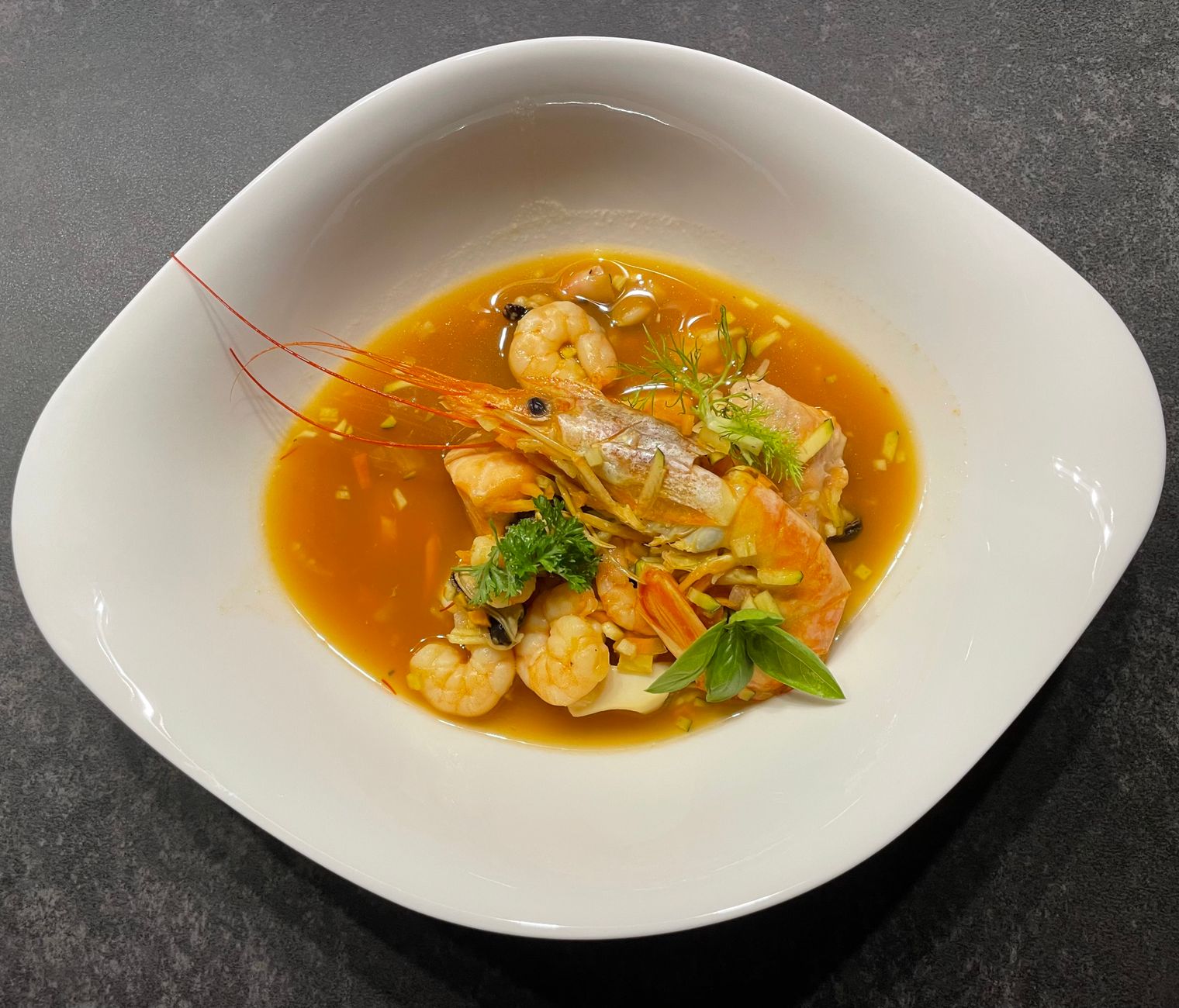
Bullit de peix is Ibiza’s signature fish stew, eaten in two courses from a single pot. First the boiled fish and potatoes with a light aioli. Then a saffron rice, arròs a banda, cooked in the broth the fish left behind. It began as a fisherman’s dish, made from the catch that did not sell, and it is now the meal islanders name above all others when they talk about home.
Around 35% of locals, surveyed by the island’s gastronomic guides, name it as their star dish. No other Ibizan plate comes close. It is not a tourist invention and it is not on every menu, which is exactly why learning it is the fastest way to eat the real island. This is what it is, how it is built, and where to order it properly.
Quick answer: what is bullit de peix?
Bullit de peix (literally “boiled fish” in Ibizan Catalan) is a two-course fish stew from Ibiza. White fish such as scorpionfish, grouper or monkfish is simmered with potatoes, garlic, tomato, green pepper and saffron in a clay greixonera. You eat the fish and potatoes first, dressed with aioli, then the broth is used to cook a soupy saffron rice served as the second course.
A dish born on the boats
Bullit de peix comes from the fishing communities of Ibiza, and its logic is the logic of people who could not waste anything. When a boat came back with fish that would not sell at market, the catch went into the pot. Fishermen cooked it on board or in small harbour kitchens with what kept well: potatoes, garlic, dried peppers, a thread of saffron.
The genius of the dish is that one pot becomes two meals. The fish feeds you, and the broth it releases is too good to throw away, so it cooks the rice that follows. Nothing is discarded. That frugality is why the stew tastes of the sea more honestly than almost anything you will order on the coast.
You will find versions of this idea across the Balearics, and a related land dish, bullit d’ossos, uses bones and offcuts the same way. But on Ibiza the fish version is the one that became a point of pride.
The two courses, explained
This is the part visitors get wrong, so it is worth being clear. Bullit de peix is not a starter and a main. It is one dish served in two acts, and the order matters.
First course: the fish and potatoes. The boiled white fish comes to the table with potatoes from the broth, dressed with a light aioli (garlic and olive oil emulsion). This is the cleaner, purer half. The fish should be firm and fresh, the potatoes soft with broth, the aioli sharp enough to lift both.
Second course: arròs a banda. While you eat the fish, the kitchen cooks rice in the strained fish broth, often with a little more saffron and tomato. It arrives soupy, not dry like a paella, and it is deeply savoury because every bit of flavour the fish gave up is now in the rice. Many islanders will tell you the rice is the better course. They are usually right.
Eat them in order. The fish prepares your palate, the rice rewards it.
What goes in the pot
The fish is whatever the day’s catch allows, which is part of the point. Traditional bullit de peix uses firm Mediterranean white fish, and a good kitchen will use more than one kind:
- Scorpionfish (cap-roig or rascasse), prized for the flavour it gives the broth
- Grouper (mero), for firm, meaty flesh
- Monkfish (rap), which holds together in the pot
- John Dory or flounder, depending on the boat
- Sometimes prawns or lobster added for a richer, restaurant version
The supporting cast is short and fixed: potatoes, garlic, ripe tomato, green pepper, bay leaf, saffron, good olive oil, salt. No cream, no wine reduction, no garnish for the sake of it. The restraint is the recipe.
The greixonera: why the pot matters
Traditional bullit de peix is cooked in a greixonera, the glazed earthenware pot of the Balearic Islands. It is not nostalgia. The clay holds and spreads heat gently, so the fish poaches rather than boils hard, and the broth stays clear and concentrated rather than turning cloudy.
A greixonera is the same vessel used for the islands’ baked custards and stews, and seeing one arrive at the table is a good sign. It tells you the kitchen is cooking the dish the way it has been cooked for generations, not plating a quick approximation.
Where to eat bullit de peix in Ibiza
This is a dish to plan around, because the best versions are made to order and the best-known address is genuinely hard to book. These are the names islanders give. For the wider island context, see our full guide to where to eat in Ibiza.
| Restaurant | Location | What to know |
|---|---|---|
| El Bigotes | Cala Mastella (east coast) | The famous one. A no-frills shack; reserve by phone or WhatsApp up to two weeks ahead. You eat what the boat brought. |
| Es Torrent | Es Torrent cove, near Sant Josep | Bullit on the menu since 1984. More polished, easier to book, serious wine list. |
| Sa Caleta | Sa Caleta cove, south coast | Cliffside spot above the red-rock beach, strong on local fish. |
| S’Espartar | Sant Josep area (inland) | Does both bullit de peix and sofrit pagès well, built around local produce. |
Two rules apply everywhere. Call ahead, because the dish is cooked to order and many places need a day’s notice. And expect to pay for it: a full two-course bullit de peix typically runs €35–50 per person, because it is fresh fish cooked slowly, not a cheap plate. That price is the dish being honest, not a tourist mark-up.
How to order it like you know
A few signals separate the visitor from the regular. Order the bullit for the table, not per person, and confirm when you book. Take the two courses in order and do not ask for them together. Let the kitchen bring the aioli rather than asking for extra sauces. And if you have a choice of fish, ask which came in that morning rather than picking from a list.
End the way the island does, with a slice of flaó, the mint-scented cheese tart, and a small glass of hierbas ibicencas, the local herb digestif. That sequence, broth to rice to flaó to hierbas, is the traditional Ibizan meal in full.
Frequently Asked Questions
What is bullit de peix?
Bullit de peix is Ibiza’s traditional fish stew, served in two courses. First, boiled white fish and potatoes with aioli. Then a saffron rice (arròs a banda) cooked in the fish broth. It originated with Ibizan fishermen who cooked the day’s unsold catch in a clay greixonera pot with potatoes, garlic, tomato and saffron.
Why is bullit de peix served in two courses?
Because one pot makes two dishes. The fish and potatoes are eaten first, then the broth they released is used to cook a soupy saffron rice served as the second course. The two-course structure comes from the fishermen’s logic of wasting nothing: the broth was too valuable to discard, so it cooked the rice.
What fish is used in bullit de peix?
Firm Mediterranean white fish, usually a mix. Scorpionfish (cap-roig) is prized for the broth, alongside grouper, monkfish, John Dory or flounder, depending on the catch. Richer restaurant versions may add prawns or lobster. The other ingredients are potatoes, garlic, tomato, green pepper, bay leaf, saffron and olive oil.
Where can I eat the best bullit de peix in Ibiza?
El Bigotes in Cala Mastella is the most famous, but it requires a phone or WhatsApp reservation up to two weeks ahead. Es Torrent near Sant Josep has served it since 1984 and is easier to book. Sa Caleta and S’Espartar are also strong. Always call ahead, as the dish is made to order.
How much does bullit de peix cost?
A full two-course bullit de peix typically costs €35–50 per person at a traditional restaurant. It is made from fresh, slowly cooked local fish, which is why it sits above the price of a simple plate. Confirm the price when you reserve, as it often depends on the day’s catch.
Is bullit de peix the same as arròs a banda?
No. Arròs a banda is the second course of a bullit de peix: the saffron rice cooked in the fish broth. The full dish is both courses together, the fish and potatoes first, then the rice. You can find arròs a banda on its own elsewhere in Spain, but in Ibiza it is traditionally the second half of bullit de peix.
Spain Food Guide is an independent editorial publication covering the food worth travelling for across Spain.
Found a correction or an update?
Email us at hello@spainfoodguide.com — we keep our entries current.
Run a restaurant in Spain you think we should know?
Get featured →