Tipping in Spain: What’s Expected, What’s Generous
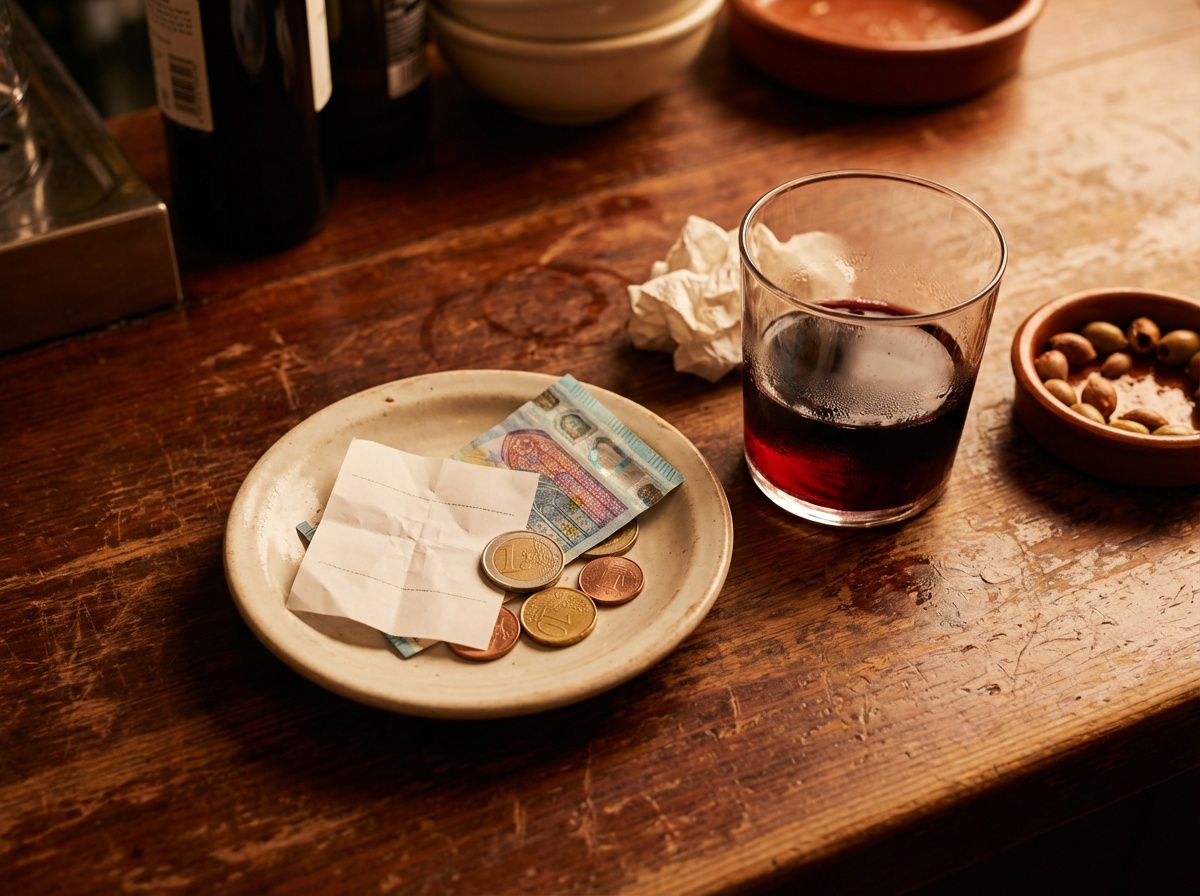
Tipping in Spain is not a percentage game. It’s a coin game.
If you leave 20% on a dinner bill in Madrid, the server will chase you down the street to return the change. They’ll assume you miscalculated. Spain pays its hospitality staff a real wage, not the American tipping-replaces-salary model, so the culture around propinas (tips) looks nothing like what most British or American travellers are used to. Round up. Leave the coins. Say gracias. That’s the baseline.
This guide breaks down exactly what locals do, what foreigners get wrong, and how much to leave in every situation, from a €12 menú del día to a private walking tour of the Barri Gòtic. All amounts are in euros, current for 2026.
Quick Answer: Do You Tip in Spain?
Yes, but rarely more than a few euros, and often nothing at all. Spanish tipping is optional and modest. Locals round up the bill or leave small change (20-50 céntimos) at a café or tapas bar. At a nicer sit-down dinner, 5-10% is generous. At casual spots, the menú del día, or a morning café con leche, most Spaniards leave nothing. Servers are paid a real monthly wage (Spain’s minimum is €1,184 across 14 payments in 2025), so tips are appreciation, not salary. Never feel pressured to tip US-style percentages. You’ll stand out as a foreigner, and not in a good way.
Why Spain Tips So Differently
In the US, tipping is how servers get paid. In Spain, it isn’t. A waiter in Madrid or Seville earns a salaried wage, holiday pay, social security, and the legally required 14 payments a year. That single fact explains everything else.
El País has covered this cultural gap for years. Spanish readers consistently tell the paper they find American-style tipping uncomfortable, even aggressive. They see it as a transactional performance, not genuine appreciation. A tip in Spain says “thanks for looking after us.” It doesn’t say “please help me pay my rent.”
Americans reading this will feel cheap. Don’t. You’re not being stingy. You’re being appropriate. Over-tipping can actually make servers uncomfortable, and in smaller towns it flags you as someone who doesn’t understand the country.
Restaurants: The Menú del Día vs the Nice Dinner
There are two completely different tipping situations at Spanish restaurants, and conflating them is the single most common foreigner mistake.
The menú del día (€12-17): This is the lunchtime prix-fixe menu served across Spain from Monday to Friday. Three courses, bread, a drink, and often coffee. No tip expected. None. Locals eat these meals daily and almost never leave extra. If the food was great and you feel moved, leave the loose coins from your change, maybe 50 céntimos or a euro. That’s it. Anything more looks performative.
Casual lunch or dinner (€20-35 per person): A neighbourhood restaurant, a decent paella spot, a marisquería. Round up to the nearest euro or leave €1-2 per person. A table of four spending €120 might leave €3-5 on the table. Nothing more is needed.
Nicer dinner or tasting menu (€50+ per person): This is the only situation where a percentage makes sense. Leave 5-10%, with 10% reserved for genuinely excellent service. On a €200 dinner for two, €10-20 is generous. Leave it in cash if possible, even when paying the bill by card. Card-tipping exists in major cities now but cash still reaches the server more reliably.
One hard rule: if the bill says “servicio incluido,” you’re done. No additional tip required. See the dedicated section below.
Tapas Bars and Cafés: The Coin Game
This is where Spaniards’ tipping culture is most visible, and most misunderstood by visitors.
At a classic tapas bar, locals do one of three things:
- Leave the copper coins (1, 2, 5 céntimos) from their change on the counter
- Round up the bill by 20-50 céntimos
- Leave nothing at all and walk out with a nod and “gracias”
A caña (small beer) and a ración of patatas bravas might come to €6.40. A local pays with a €10 note and leaves the 40 céntimos, or maybe rounds down to leave €1 coin on the bar. That’s a proper tip. That’s what “generous” looks like at a tapas bar.
The café con leche and croissant crowd is similar. Morning coffee costs €1.80-2.50 across most of Spain. Leaving the 20 céntimos coin is standard. Leaving a euro on a €2 coffee makes the barista look at you twice.
Don’t tip for takeaway. Don’t tip for bottled water or a pastry grabbed at the counter. The only service there is ringing up the till.
Taxis: Round Up, Nothing More
Tipping taxis in Spain is simple. Round up to the nearest euro. That’s the whole rule.
A €7.40 fare becomes €8. A €12.80 fare becomes €13. On a longer airport run (€35-40 from Barajas into central Madrid), round up to €40. Drivers don’t expect a percentage.
If the driver helps with heavy luggage or does something above the job, add an extra euro or two. Uber and Cabify offer a tip option in-app, but most local riders skip it. Nobody will think twice if you do the same.
Hotel Staff: Small Euro Amounts, Left in Cash
Hotels are where foreigners most often under-tip out of confusion. The amounts are modest but they matter.
- Porter or bellhop: €1 per bag, €2 if they bring multiple bags or deal with stairs. Hand it directly when they leave the room.
- Housekeeping: €1-2 per night of your stay. Leave it on the pillow or bedside table on your last morning, ideally with a small “gracias” note so it isn’t mistaken for forgotten change. Daily cleaners rotate, so leaving it all at the end works best.
- Concierge: Nothing for a simple dinner reservation. €5-10 if they pull strings for a hard-to-book restaurant, secure last-minute Alhambra tickets, or solve a real problem.
- Room service: €1-2 if a service charge isn’t already added. Check the tray slip.
- Doorman hailing a taxi: Not expected. A euro if it’s raining and they went out of their way.
At luxury properties (Mandarin Oriental, Rosewood Villa Magna, Hotel Arts Barcelona), amounts scale up slightly, but not by much. €2-3 per bag, €3-5 per night housekeeping.
Tour Guides: Cash, Always, Per Person
Private tour guides are one of the few situations in Spain where a US-style tip is both expected and appropriate, because most guides operate as freelancers and the booking platforms (GetYourGuide, Airbnb Experiences, Devour Tours) take a significant cut.
Free walking tours (the tip-based ones across Madrid, Barcelona, Seville, Granada): €10-15 per person is the standard good tip. €20 is generous. €5 is stingy for a 2-3 hour tour. Pay in cash, hand it over directly at the end.
Paid private food tours and half-day city tours: €5-10 per person on top of the booking fee, cash to the guide. If two of you booked a €120 food tour and the guide was excellent, €15-20 cash is a proper thank-you.
Drivers on full-day excursions: €5-10 per group, not per person. Different role, different tip.
Guides remember generous clients, and that matters when you’re on repeat trips. Spanish guide networks are smaller than travellers assume.
Service Charge and “Servicio Incluido”: What to Watch For
“Servicio incluido” written at the bottom of a bill means exactly what it looks like: service is included. You’ve paid the tip already, usually 10%, built into the final total. No additional tip is expected or welcomed.
This shows up most often at:
- Set-menu tourist restaurants in Las Ramblas, Plaza Mayor, and Seville’s old town
- Higher-end restaurants where a table of 6+ triggers automatic gratuity
- Hotel restaurants with half-board or full-board guests
- Some cruise-port restaurant menus aimed at American visitors
If you see “servicio incluido” and still want to leave something because service was exceptional, a few euros in cash on the table is fine. But you’re under no obligation. Read every bill before pulling out your wallet. Tourist spots in Barcelona’s Barri Gòtic and around Madrid’s Puerta del Sol increasingly add this quietly.
A separate trap: the “cubierto” or bread/cover charge (€1-3 per person). This is not a tip. It’s a line-item charge for bread, olives, or the table setting itself. Legal, common, and separate from any tipping decision.
City vs Country: Barcelona and Madrid Are Different
Tipping culture in Spain varies noticeably by geography. This matters if your trip covers both a major city and a pueblo blanco in Andalucía.
Barcelona and Madrid (tourist zones): Higher tipping expectations have crept in, particularly in Gòtic, El Born, Malasaña, and Sol. Servers in these areas work with foreign tourists daily and some do anticipate 5-10% from English-speaking tables. Card-payment terminals increasingly prompt for tips, a post-COVID trend imported from the US and UK. You don’t have to say yes. Most Spaniards tap “no propina” without a second thought.
Smaller Spanish cities (Valencia, Seville, Bilbao, Granada, Málaga): Traditional expectations hold. Round up, leave coins, 5% on a nicer dinner. Nothing more.
Rural Spain and pueblos: Tipping is genuinely rare. A venta in Andalucía, a sidrería in Asturias, a rural cider house in the Basque Country, you pay the bill and go. Leaving a large tip can actually be awkward, as it flags you as an outsider in a community where locals all know each other and nobody tips.
Canary and Balearic Islands: Closer to mainland Spanish norms, but resort zones (Magaluf, Playa de las Américas) have drifted toward UK and German tipping habits. Use your judgement based on who’s sat around you.
When NOT to Tip in Spain
A list of situations where tipping is either unnecessary or actively inappropriate:
- Takeaway coffee, bakery items, bottled water
- Fast food and counter-service chains (Pans, 100 Montaditos, VIPS)
- Supermarket checkouts
- Petrol station attendants
- Public transport (metro, bus, local trains)
- Pharmacies
- Hairdressers for a basic cut (a very small tip at a fancy salon is fine, €2-3, never more)
- Hotel front-desk check-in staff
- Delivery couriers on Glovo and Uber Eats (the app handles it)
- Any situation where “servicio incluido” appears on the bill
The underlying principle: tipping follows service. No service, no tip. Standing at a counter paying a cashier is not a tipped interaction anywhere in Spain.
The COVID-Era Card Tip Shift
Since 2021, card-payment terminals in Spain have slowly started mimicking US and UK prompts, offering preset tip percentages (5%, 10%, 15%) before final payment. This is new, and it’s mostly a Barcelona and Madrid phenomenon, concentrated in areas with heavy foreign foot traffic.
Spaniards generally decline these prompts. In 2024 surveys cited by El País, over 70% of Spanish respondents said they found card-tip prompts “incómodos” (uncomfortable) and felt they pressured customers into tips that aren’t culturally normal. If you want to leave something, cash is still the Spanish way. The server receives it directly and it stays off the pooled-tip system some restaurants run.
FAQ: Tipping in Spain
Do you tip in Spain?
Yes, but modestly. Locals round up bills or leave small coins (20-50 céntimos) at cafés and tapas bars. At restaurants, 5-10% is generous for a nicer dinner, and nothing is expected at a casual menú del día. Never tip US-style percentages.
How much do you tip at a restaurant in Spain?
For a casual lunch or dinner, round up to the nearest euro or leave €1-2 per person. For a nicer dinner (€50+ per person), 5-10% in cash is generous. At a menú del día, no tip is expected.
Do you tip at tapas bars in Spain?
Round up the bill or leave 20-50 céntimos in coins on the bar. Anything more is unusual. Many Spaniards leave nothing at all, especially at their regular local spot.
How much do you tip a taxi driver in Spain?
Round up to the nearest euro. A €7.40 fare becomes €8. For airport runs, an extra €1-2 on top of the rounded fare is generous, especially if the driver handled luggage.
How much do you tip hotel staff in Spain?
Porters: €1 per bag, €2 for multiple. Housekeeping: €1-2 per night of your stay, left on the pillow on your last morning. Concierge: nothing for a basic reservation, €5-10 for real problem-solving.
How much do you tip a tour guide in Spain?
Private walking tours and food tours: €5-10 per person in cash on top of the booking fee. Free walking tours: €10-15 per person is the proper tip. Drivers on day excursions: €5-10 per group.
What does servicio incluido mean?
It means the service charge is already included in your bill. No additional tip is expected. It commonly appears at tourist-area restaurants, large-group bookings, and some hotel dining rooms.
Is tipping different in rural Spain compared to Barcelona and Madrid?
Yes. Rural Spain barely tips at all: locals pay the bill and leave. Barcelona and Madrid tourist zones have drifted toward slightly higher expectations, including card-tip prompts on payment terminals. Use the big-city norms in those areas and the rural norms elsewhere.
The Bottom Line
Tipping in Spain is about small gestures, not percentages. Round up, leave the coins, pay in cash when you can, and save the 10% for dinners that genuinely deserve it. You’ll spend less than you would tipping American-style, and you’ll blend in better with the table next to you.
For more on navigating money in Spain, read our guide to paying in Spain: cash or card. For restaurant-specific etiquette beyond just the tip, see restaurant etiquette in Spain. And if you’re putting together a trip, our Spain on a budget guide shows exactly where the money goes, tips included.