
Tap water in Spain is safe to drink. This is true in every city and in the vast majority of towns across the country. Spain has modern water treatment infrastructure, and the tap water meets EU drinking water standards. The short answer to the question “is tap water safe in Spain?” is yes.
The longer answer involves some regional differences in taste and mineral content that are worth knowing, particularly if you are spending time in areas where the water tastes different from what you are used to.
The official position
Spain’s tap water is regulated by the Ministry of Health under the Royal Decree 3/2023, which transposed EU Directive 2020/2184 on drinking water quality. The water leaving treatment plants throughout Spain consistently meets these standards. Waterborne illness from tap water is not a documented public health problem in Spain.
When Spanish residents buy bottled water, they are typically doing so for taste preference rather than safety concerns. This is an important distinction — the widespread consumption of bottled water in Spain does not indicate a safety problem with the tap water.
Regional differences in taste
Tap water in Spain tastes different by region, driven by the mineral content of the local aquifers and reservoirs. These differences are aesthetic rather than safety-related.
Madrid: The tap water in Madrid is widely considered among the best in Spain. It comes primarily from the Sierra de Guadarrama reservoirs (the Comunidad de Madrid system), is soft, low in minerals, and has a clean, neutral taste. Madrileños are proud of their tap water and drink it routinely. Ask for “agua del grifo” at any restaurant and you will get Madrid tap water without comment.
Barcelona: The tap water in Barcelona has a higher mineral content and a slightly harder taste than Madrid. It comes from the Ter and Llobregat rivers, both of which carry more mineral sediment than the Guadarrama reservoirs. The water is safe but the taste is noticeably different. The city has invested in improved treatment and filtration since 2011, and the current water is significantly better than it was a decade ago. Many Barcelona residents still prefer bottled water for taste.
Seville and Andalucia: Tap water in Seville and most of Andalucia is safe and meets quality standards. In some areas with older pipe infrastructure (particularly in rural municipalities), there can be occasional taste issues from chlorination. In Seville city, the water is perfectly fine to drink.
The Canary Islands: Tap water on the Canary Islands is safe but may taste different from mainland Spain due to desalination processes used on the drier islands (Lanzarote, Fuerteventura, Gran Canaria). The desalinated water meets safety standards but some people find the taste less appealing than mainland tap water. Bottled water is widely used by residents and visitors on these islands.
The Balearic Islands (Mallorca, Menorca, Ibiza): Tap water meets EU standards but the mineral content is higher than the Spanish mainland average due to limestone aquifers. The water is safe; the taste is harder. Many residents filter or buy bottled water for preference.
Rural areas: In small rural municipalities with older distribution infrastructure, water quality can vary. If you are staying in a rural property and are uncertain, ask the owner. Travellers staying in hotels, apartments, and guest houses in any Spanish city or tourist area should have no concerns.
Ordering water at a restaurant
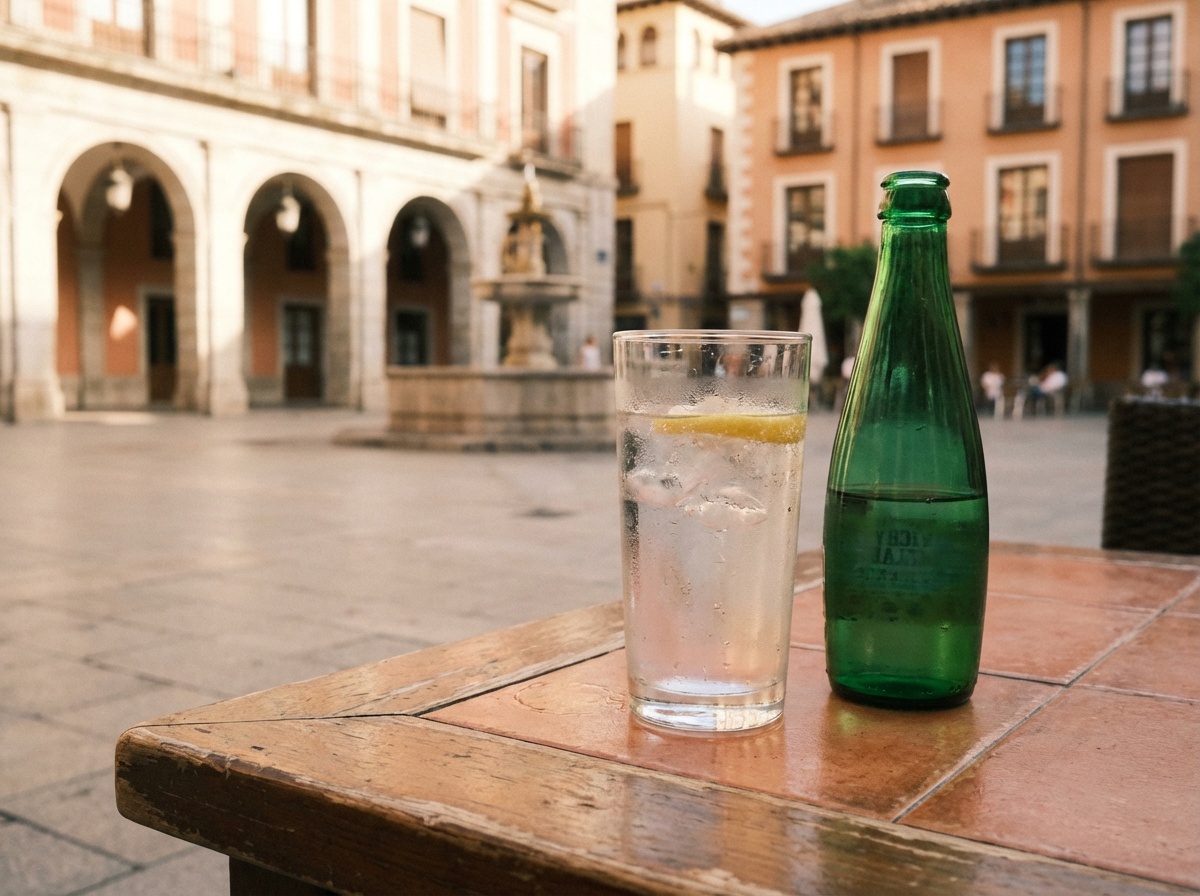
At Spanish restaurants, water is not automatically brought to the table — you order it. The default when you ask for water is bottled water (either still/natural or sparkling/con gas), which is charged for (€1.50 to €3.50 per bottle depending on the restaurant).
To get tap water, say “agua del grifo” (literally “tap water”). In most restaurants in Madrid and most parts of Spain, this is a completely normal request and is served without comment or the suggestion that it is somehow inferior. In some tourist-facing restaurants, particularly in Barcelona and the coastal resorts, staff may not offer it spontaneously — ask directly.
The menú del día (fixed-price lunch) includes a drink, and tap water counts as the included drink. Specify “agua del grifo” when ordering the menú if you want tap water.
Ice
Ice in Spanish bars and restaurants is made from tap water. Given that tap water is safe throughout Spain, ice is also safe. This is a common concern for travellers used to destinations where ice safety is a genuine issue — Spain is not one of those destinations.
Brushing teeth and cooking
Using tap water for brushing teeth, washing produce, and cooking is standard practice throughout Spain for both residents and visitors. There is no reason to use bottled water for these purposes in Spain.
Filtering
Many Spanish households use carbon-filter jugs (Brita and equivalent) not for safety but for taste — to remove the chlorine taste from tap water in areas with higher chlorination. If you are staying in a self-catering apartment for an extended period and find the tap water taste unappealing, a filter jug is the practical solution. Most supermarkets sell them.
Frequently asked questions
Is tap water safe to drink in Barcelona?
Yes. Barcelona tap water meets EU drinking water safety standards. The taste is harder and more mineral than Madrid’s tap water due to the river sources, but it is completely safe. Many Barcelona residents filter it for taste but this is a preference, not a necessity.
Is tap water safe in the Canary Islands?
Yes. On islands that use desalination (Lanzarote, Fuerteventura), the water has a different taste profile from mainland tap water but meets safety standards. On Tenerife and Gran Canaria, mountain spring water supplements the desalinated supply and the taste is generally better. Safe to drink on all the islands.
Should I drink tap water in Spanish restaurants?
You can. Ask for “agua del grifo” and most restaurants will provide it. Some tourist-facing restaurants may be reluctant, since selling bottled water is more profitable. A restaurant that refuses to serve tap water is not breaking any law but is not operating in the Spanish restaurant tradition, where tap water is a normal request.
Why do Spanish people buy so much bottled water?
Taste preference and habit, not safety concerns. Spain has one of the highest per-capita bottled water consumption rates in Europe despite having safe tap water throughout the country. This is a marketing and cultural phenomenon rather than a reflection of water quality.
Practical travel knowledge? See our guide to tipping in Spain and when Spaniards eat.
Found a correction or an update?
Email us at hello@spainfoodguide.com — we keep our entries current.
Run a restaurant in Spain you think we should know?
Get featured →