
Ordering wine in Spain is not complicated if you understand the conventions. Spanish wine lists follow a logic that is different from French or Italian lists — the regional classifications, the grape varieties, and the ageing terminology are specific to Spain and worth knowing before you sit down. This guide covers everything you need to order confidently in any Spanish restaurant or bar.
The ageing classifications
Spain uses a four-tier ageing classification that appears on labels and wine lists. Understanding these four terms tells you more about the style of the wine than the vintage year does.
Joven: Young wine. No required oak or bottle ageing beyond the minimum needed for stability. Typically released within a year of harvest. Fresh, fruit-forward, intended for immediate drinking. Jovenes are the wines most commonly served as house wine in Spanish bars and restaurants.
Crianza: Minimum 24 months ageing for red wine, with at least 6 months in oak. For white and rosé, 18 months total. A crianza has some oak influence but is still relatively approachable and fruit-forward. The most commonly listed tier on mid-range restaurant wine lists.
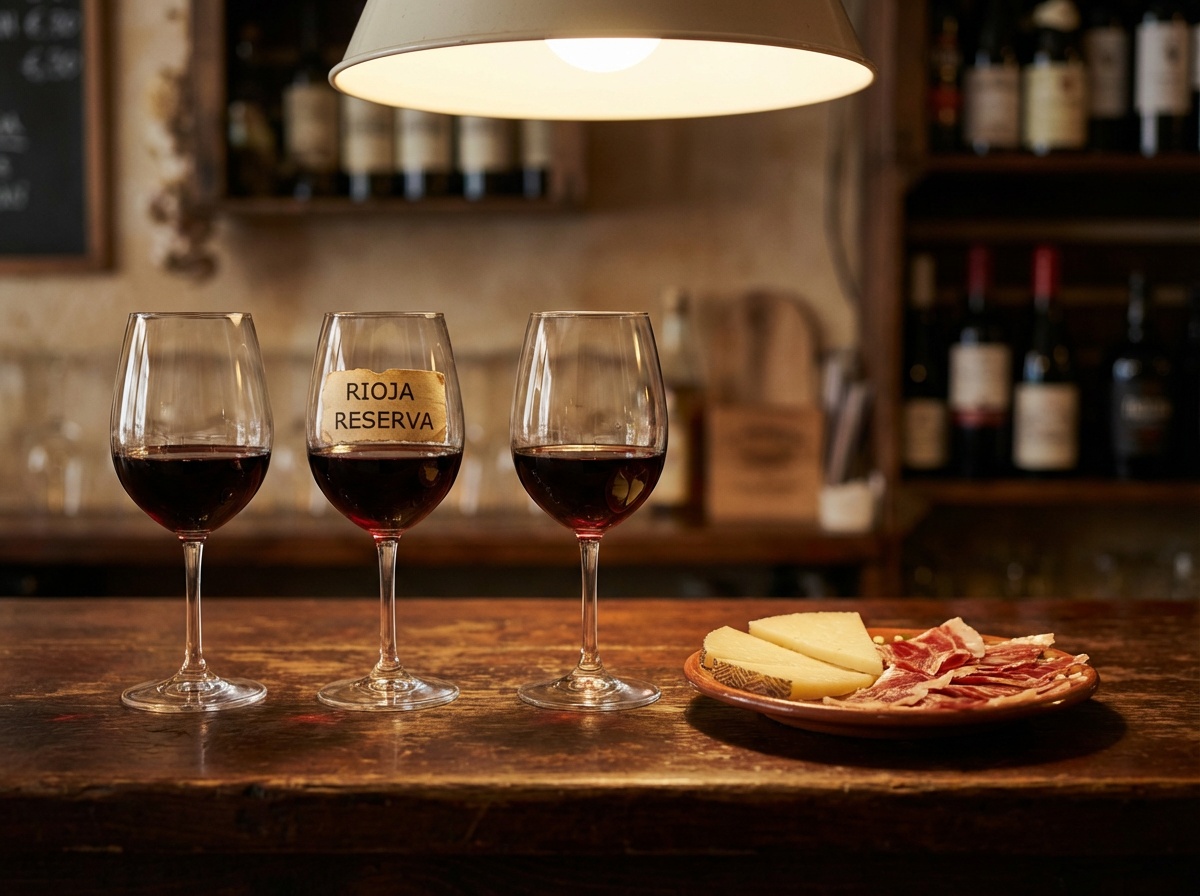
Reserva: Minimum 36 months ageing for red wine, with at least 12 months in oak and at least 12 months in bottle. For white and rosé, 24 months with at least 6 in oak. Reservas are more structured, complex, and cellar-worthy than crianzas. The premium tier on most restaurant lists.
Gran Reserva: Minimum 60 months for red wine, with at least 18 in oak and 24 in bottle. For white and rosé, 48 months with at least 6 in oak. Gran Reservas are the most aged and developed wines in the classification. They tend to be made only in exceptional vintages and from the best plots. The most expensive tier on any list.
These classifications apply specifically to wines from the DO (Denominación de Origen) system. Not all Spanish wine uses this classification — natural wines, wines from outside the DO system, and many modern producers label by grape variety and region without using the Joven/Crianza/Reserva/Gran Reserva terminology.
The major wine regions
Rioja: Spain’s most internationally recognised wine region, in the north along the Ebro river. The principal grape is Tempranillo, blended with Garnacha, Graciano, and Mazuelo. Rioja wines follow the ageing classifications rigorously. Older traditional producers (Muga, La Rioja Alta, Marqués de Murrieta) use more American oak, producing wines with vanilla and coconut notes. Newer producers use French oak or concrete, producing more fruit-forward wines. Rioja is the wine most people default to in Spain, which is not wrong — the region produces excellent wine — but there is more variety elsewhere.
Ribera del Duero: On the Duero river plateau in Castilla y León, at 850 metres altitude. The same Tempranillo grape as Rioja but called Tinto Fino locally. Higher altitude produces more concentrated, darker, more tannic wines than Rioja. Vega Sicilia is the most famous estate; Pesquera and Protos are more accessible. Ribera is the region that competes most directly with Rioja for prestige.
Priorat: A small DO in Tarragona, Catalonia, on ancient llicorella (slate and mica) soils. Garnacha and Cariñena grapes produce intensely concentrated, mineral, high-alcohol wines from very low-yielding old vines. Priorat is the only Spanish wine region besides Rioja to hold the DOCa (highest quality) classification. The wines are expensive and powerful. Álvaro Palacios’s Finca Dofí and L’Ermita are the benchmarks.
Rías Baixas: In coastal Galicia, in the northwest. The grape is Albariño: white, aromatic, with high natural acidity and stone fruit and citrus notes. Rías Baixas Albariño is Spain’s best white wine region for fresh, food-friendly whites. Essential with seafood — the pairing with percebes, nécoras, or grilled fish is one of the great Spanish food-wine combinations.
Jerez (Sherry): The fortified wine triangle around Jerez de la Frontera, Sanlúcar de Barrameda, and El Puerto de Santa María. The styles range from bone-dry fino and manzanilla (15% ABV, meant for immediate drinking once opened) through amontillado and oloroso to the sweet Pedro Ximénez. Sherry is the most undervalued wine in Spain. A glass of manzanilla with jamón and anchovies is one of the country’s great food pairings.
Penedès and Cava: In Catalonia. Penedès produces still wines from both Spanish varieties (Tempranillo, Garnacha) and international varieties (Cabernet Sauvignon, Chardonnay, Riesling). Cava is the Spanish method traditionelle sparkling wine made primarily in the Penedès from Macabeu, Xarel·lo, and Parellada. Good Reserva and Gran Reserva cavas offer serious quality at lower prices than comparable Champagne.
How to order in a restaurant
In a mid-range Spanish restaurant, the wine list will typically be organised by region. If you are eating fish or seafood: ask for a white from Rías Baixas (Albariño) or a Txakoli from the Basque Country. If you are eating red meat or a stew: ask for a Rioja Reserva or a Ribera del Duero. If you are eating jamón or anchovies at a bar: ask for fino or manzanilla.
The house wine (vino de la casa) at a good Spanish restaurant is not the bottom of the cellar. It is selected by someone who drinks it regularly and who wants you to come back. Ask what region it is from before ordering by the glass — this tells you whether the restaurant takes wine seriously.
Saying “un vino tinto / blanco / rosado” (a red / white / rosé) with the region you want is sufficient for ordering at a bar. For a restaurant, point at the list if you cannot pronounce the producer name — bar staff and sommeliers in Spain are used to this and will not make you feel foolish.
Ordering wine by the glass vs the bottle
At Spanish bars, wine by the glass (una copa de vino) is standard. The glass pour is smaller than in northern Europe — 125ml rather than 175ml or 250ml — and priced accordingly. At good bars, the by-the-glass selection changes based on what the bar has open and is a reliable way to try several regions in a single session.
In restaurants, a bottle is more economical if you are two or more people and plan to drink through a meal. The markup on bottles in Spanish restaurants is lower than in comparable French or British restaurants — a bottle that retails for €12 is typically listed at €20 to €25, not the 300% markup common elsewhere.
Frequently asked questions
What is the most popular wine in Spain?
Rioja is the most internationally recognised Spanish wine and remains the most commonly ordered in restaurants. Within Spain, regional preferences are strong — Galicia drinks Albariño, the Basque Country drinks Txakoli, Catalonia drinks Penedès and Priorat, Andalucia drinks Sherry. There is no single national preference.
What does Tempranillo taste like?
Tempranillo is Spain’s most planted red grape. At its best it produces wines with cherry, plum, and dried herb flavours, moderate tannin, and good natural acidity. The style varies considerably by region: Rioja Tempranillo is typically more elegant and oak-influenced; Ribera del Duero Tinto Fino is darker and more tannic; Toro Tinta de Toro (the same grape at high altitude) is fuller and more powerful.
What wine pairs best with Spanish food?
Fino or manzanilla sherry with jamón, anchovies, and fried foods. Albariño with seafood and fish. Rioja Crianza or Reserva with lamb, roast meats, and stews. Cava with light tapas and as an aperitivo. Priorat and Ribera del Duero with strong, aged cheese and cured meats.
More food and drink knowledge? See our guide to the vermut hour across Spain and the best jamón bars in Spain.
Found a correction or an update?
Email us at hello@spainfoodguide.com — we keep our entries current.
Run a restaurant in Spain you think we should know?
Get featured →