
Ibiza has two reputations that have almost nothing to do with each other. One is the global club tourism destination — the superclubs, the DJ residencies, the €30 drinks at 3am. The other is an island with an extraordinary food culture, beautiful agricultural land, a serious fishing tradition, and some of the best restaurant cooking in the Balearics.
The second Ibiza is real and accessible. It requires knowing where to look and a willingness to leave the strip of hotels and clubs along the coast near Ibiza Town and Sant Antoni. This guide is about the second Ibiza.
The food culture of the island
Ibiza’s indigenous food culture is Ibizenco — a distinct Balearic tradition that shares some elements with mainland Catalan cooking but is substantially its own. The island was relatively isolated until mass tourism arrived in the 1960s and the food traditions that developed over centuries without external influence are still present in the villages and the best local restaurants.
The defining Ibizenco dishes are built around local fish, pork raised on the island, wild herbs (rosemary, thyme, fennel) from the inland fields, and the almonds and figs that have grown here since Moorish occupation. The cooking is simple by restaurant standards — very good ingredients, minimal intervention, respect for the produce.
Bullit de peix
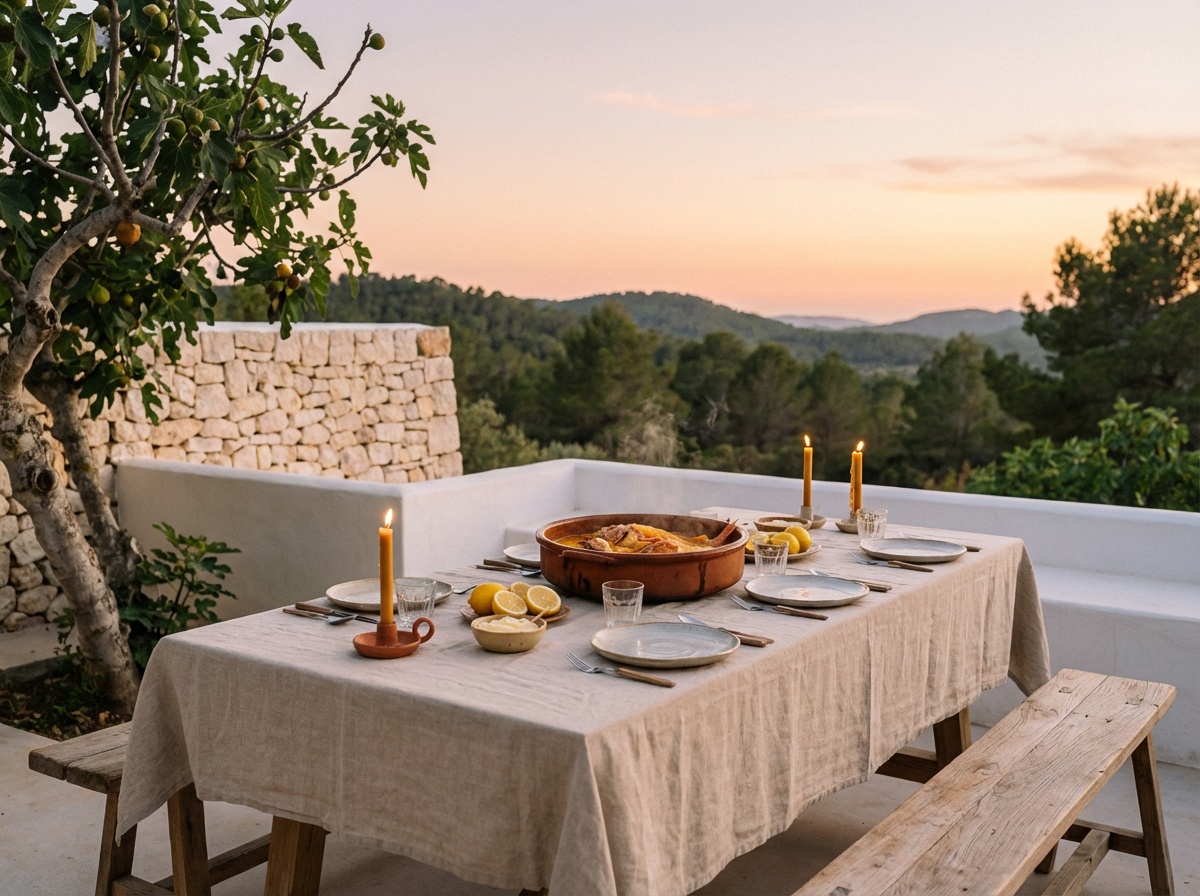
Bullit de peix is the signature dish of Ibiza. A two-course fish stew in the Ibizenco tradition: whole fish and large pieces of potato are simmered in a saffron-scented fish broth, then served in two parts — first the fish and potato, then the rice cooked in the remaining broth. The fish is typically whatever the boats brought in that morning: grouper, gurnard, sea bream, monkfish, or a combination.
The dish originated as fisherman’s food — the catch too damaged or too small to sell at market went into the pot, cooked with what was available on the boat. At a good Ibizenco restaurant, bullit de peix is made with premium fish and priced accordingly (€25 to €40 for two people). The broth-cooked rice (arròs a banda) that follows the fish is considered by many the best part of the meal — dark gold, intensely flavoured with saffron and fish stock, finished with alioli.
Where to eat bullit de peix:
Es Boldado, on the cliffs between Cala d’Hort and the Es Vedrà rock — a restaurant accessible only by a rough track that requires a 4WD or a willingness to walk, which filters the clientele effectively. The fish is from local boats and the bullit is the reason people make the journey. Book well in advance for dinner.
Restaurante El Carmen in Santa Eulària des Riu serves a reliable version in a less dramatic setting at a lower price point. Good for a Tuesday lunch when you have not booked two weeks ahead.
Sofrit pagès
A slow-cooked meat stew that is the inland equivalent of bullit de peix. Lamb, chicken, and sobrassada (the Balearic paprika-cured sausage spread), cooked with potatoes, saffron, and various wild herbs. The sobrassada melts into the cooking liquid and stains everything a deep orange-red. Served with bread and a simple salad. Available at the village restaurants in the interior — Sant Joan de Labritja, Santa Agnès de Corona — rather than the coastal restaurants that cater to tourists.
The village restaurants of the interior
The real Ibizenco food culture is in the interior villages, away from the coast and the clubs. These are not restaurants that have been discovered and marketed — they are places that have been feeding the farming and fishing communities of the island for generations and that continue to do so alongside whatever visiting trade finds them.
Can Caus (Santa Agnès de Corona): A farmhouse restaurant in the almond grove valley, serving traditional Ibizenco cooking using produce from the farm and the surrounding area. The sofrit pagès here is considered by local food opinion to be the best on the island. Lunch only. Book ahead.
Bar Costa (Santa Gertrudis de Fruitera): In the central village square, a bar that has been the meeting point for the local farming and arts community since the 1970s. The food is simple — bocadillos, jamón, local cheese, grilled meats — and the atmosphere is genuinely the island’s social life rather than a performance of it.
Es Caliu (Urbanización Es Canar): A grill restaurant specialising in meats cooked over wood. The lamb chops and the chicken, both from the island, are the things to order. The charcoal grill is visible from the dining room and the smoke is part of the experience.
The fish market and fresh produce
Ibiza Town’s fish market (La Lonja) operates in the mornings at the fishing port at the base of the old town. The boats come in before dawn and the catch is sold by auction from 6am, with the retail market opening to the public from around 8am. The selection reflects exactly what was caught the night before — on a good night, grouper, red mullet, John Dory, mantis shrimp, and various small fish. The prices are lower than at any restaurant and considerably lower than at the tourist-facing fish stalls in the market halls.
If you have access to a kitchen, buying from the Lonja market and cooking the fish simply — grilled over a wood fire with olive oil and lemon — produces a better meal than most restaurants on the island at a fraction of the cost.
What to drink
Ibiza does not have a significant wine production. The island’s drink culture is built around hierbas ibicencas — a herbal liqueur made from thyme, rosemary, and other wild plants, macerated in anise spirit. It is served as a digestif, either sweet (hierbas dulces) or dry (hierbas secas). The local tradition is to drink it at the end of a meal, which is also the correct approach — it is not a cocktail ingredient and not an aperitivo.
For wine, the island’s restaurants import primarily from the Penedès and Priorat in Catalonia and from the Rioja. Albariño from Rías Baixas is the correct white with any of the fish dishes.
Frequently asked questions
Is there good food in Ibiza beyond the clubs?
Yes — some of the best food in the Balearics. The Ibizenco cooking tradition built around local fish, pork, and wild herbs is genuinely excellent. The difficulty is finding it, since the tourist infrastructure overwhelms the local food culture in the coastal areas. Go inland, book in advance, and avoid any restaurant with photographs of food on the menu outside.
What is bullit de peix?
Ibiza’s signature dish: whole fish and potato simmered in saffron broth, served in two courses — first the fish and potato, then the rice cooked in the remaining stock. The arròs a banda (rice course) is considered by many to be the best part. Available at the better local restaurants along the coast and at Es Boldado for the most spectacular version.
What is hierbas ibicencas?
A herbal digestif liqueur specific to Ibiza, made by macerating thyme, rosemary, juniper, and other wild island plants in anise spirit. Available sweet or dry. Served cold after dinner. Every family on the island has a version and several commercial producers make good bottles (Marí Mayans is the best known). Buy a bottle from any supermarket on the island as a more honest souvenir than a club T-shirt.
More Balearic food? See our guide to Menorca’s lobster coast and where to eat in Mallorca.
Found a correction or an update?
Email us at hello@spainfoodguide.com — we keep our entries current.
Run a restaurant in Spain you think we should know?
Get featured →