
Mallorca is the largest of the Balearic Islands and the one with the most complex food culture — a combination of deep Mallorcan tradition, serious agricultural production, and a restaurant scene that has developed over decades of contact with European visitors who eventually demanded better than poolside paella.
The island has always had good food. The challenge has been finding it among the considerable quantity of tourist-facing mediocrity concentrated along the coastal resort strips. This guide points toward the genuine Mallorcan food culture and away from the places that exist solely to serve people who will not return.
The Mallorcan food tradition
Mallorcan cooking is built around three things: pork, olive oil, and sobrassada. The island has been producing pigs, pressing olives, and making cured products since before the Arab occupation (711-1229 AD), and the culinary traditions that developed over this long period are distinct from mainland Spanish cooking.
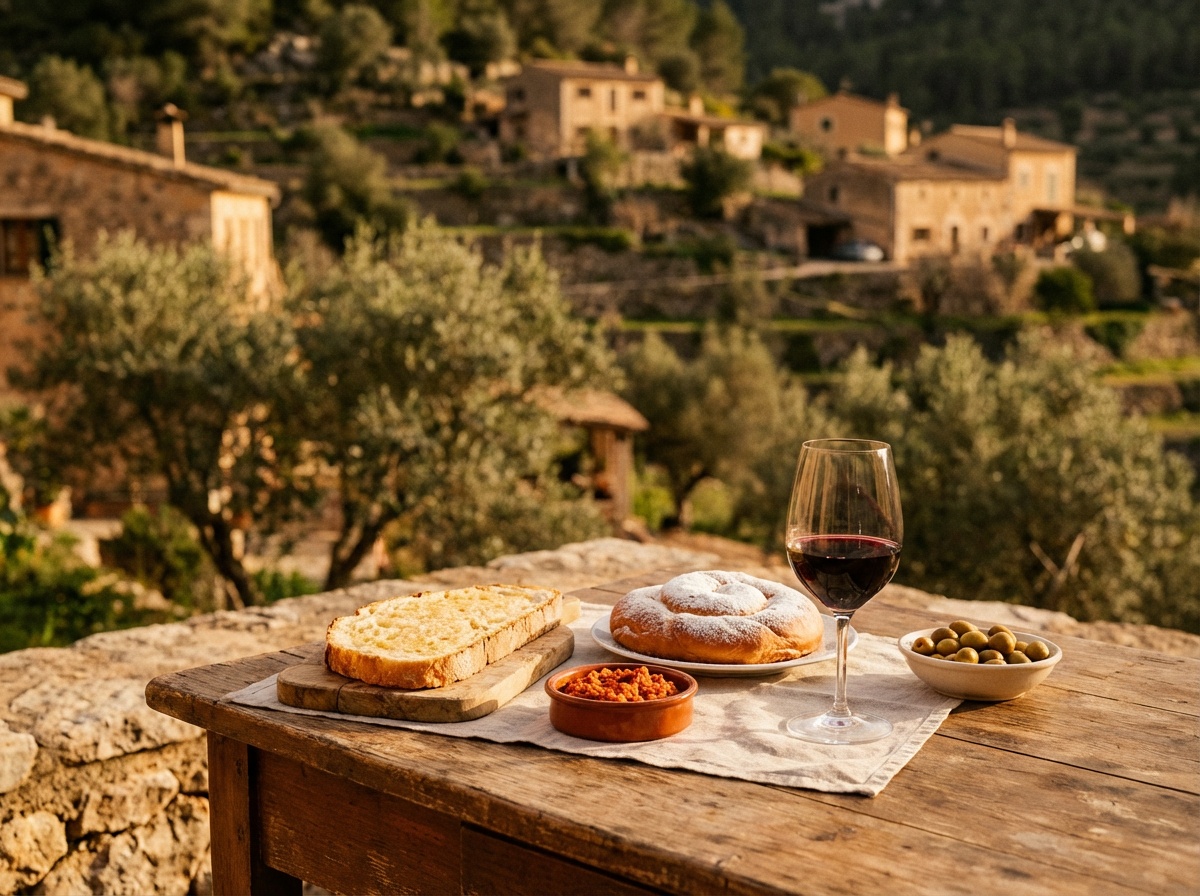
Sobrassada: The defining product of Mallorcan charcuterie. A spreadable cured sausage made from ground pork and generous quantities of pimentón (sweet and hot paprika), salt, and sometimes black pepper. The fat content is high and the consistency is soft enough to spread on bread. Mallorca’s black pig (porc negre) produces the most prestigious sobrassada — richer, more complex, and better textured than the version made from commercial white pig. Sobrassada amb mel (sobrassada with honey) is the canonical Mallorcan way to eat it — the sweetness of the honey against the fat and paprika is one of the island’s great simple pleasures.
Pa amb oli: The Mallorcan version of the Catalan pa amb tomàquet. Bread rubbed with olive oil (and sometimes tomato), eaten as a base for various toppings — sobrassada, cheese, jamón, anchovies, or simply alone with good olive oil and sea salt. The olive oil is critical: Mallorca produces excellent Arbequina and Mallorquina variety oils with a mild, fruity character. Pa amb oli is eaten at breakfast, as a snack, and as a starter at traditional restaurants.
Ensaïmada: The most internationally known Mallorcan food product — the spiral pastry made from saïm (lard), dusted with icing sugar. The large ensaïmadas sold at the airport and packed in distinctive round boxes are a genuine product and worth eating, but the best version is the fresh one from a good pastry shop on the morning of purchase. Forn des Teatre in Palma (Plaça Weyler) is the most cited address for the best ensaïmada on the island.
Where to eat in Palma
Mercat de l’Olivar: Palma’s main food market, in the centre of the city. The fish section is extraordinary — Mallorcan fishing boats land daily and the selection reflects the Mediterranean catch. The market bars serve fresh fish and seafood at lunch, making this one of the best places to eat in Palma for €15 to €20 per person. Go on a weekday morning for the best selection.
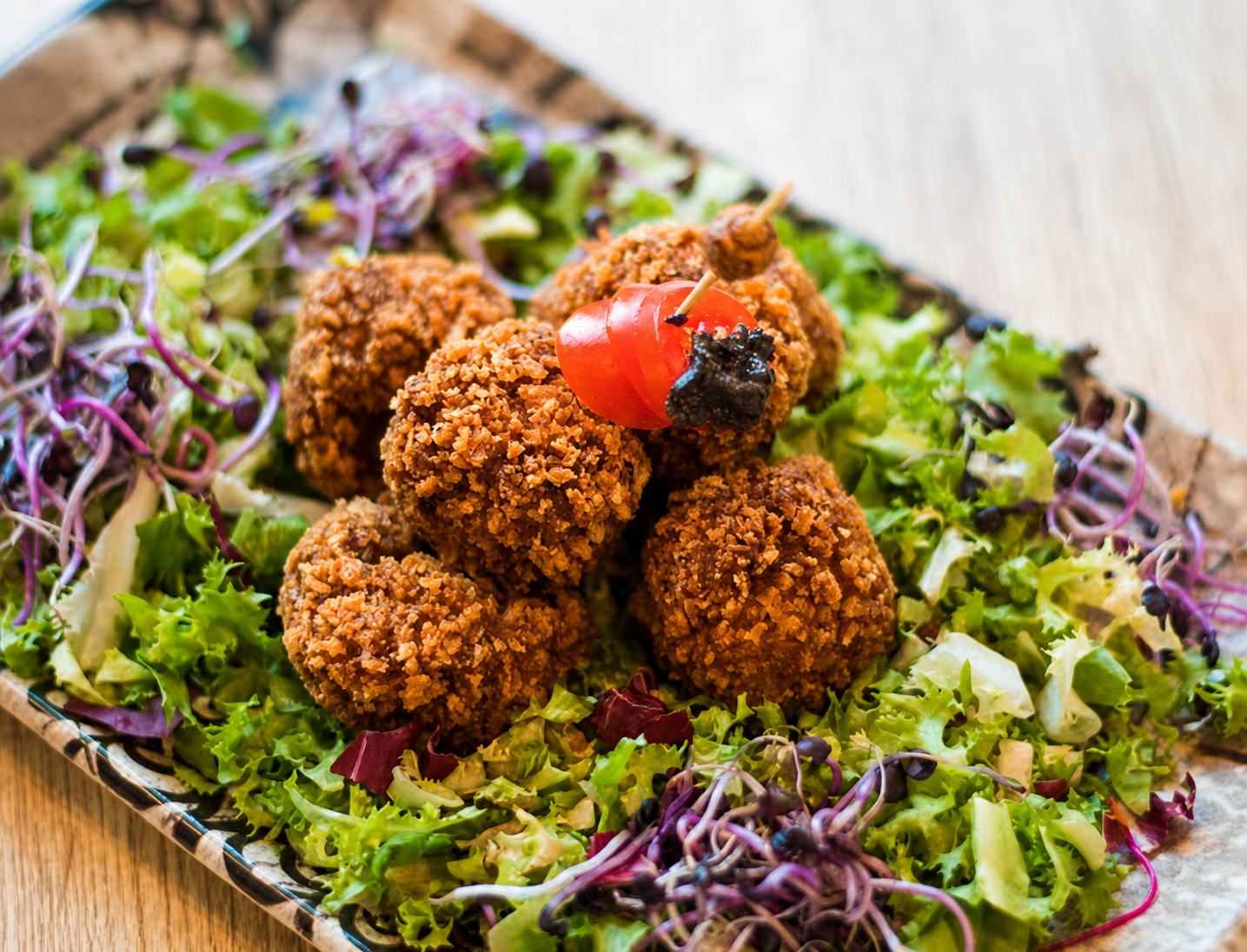
Bar España: On Carrer de Can Escursac in the old town. A neighbourhood bar that has been serving Mallorcan food to the local population since the Franco era. The pa amb oli here is made with the island’s own olive oil and served with a selection of cold cuts and cheese. The croquetas are made daily. The wine is Mallorcan (Binissalem DO). Prices are neighbourhood prices.
Marc Fosh: In the Hotel Convent de la Missió in Palma. The island’s most celebrated fine dining restaurant, run by a British-born chef who has spent twenty years developing a cooking style rooted in Mallorcan ingredients. The tasting menu changes seasonally and uses the island’s produce — local fish, carob, almonds, sobrassada, ensaïmada — in a contemporary format. Book well in advance.
La Bodeguilla: Carer de Sant Jaume, 3. A wine bar with an excellent list of Spanish wines and a small plates menu that treats Mallorcan ingredients seriously. The sobrassada croquetas and the tuna tartar with local olive oil are consistently good.
The interior: market towns and agricultural restaurants
The most authentic Mallorcan eating is in the interior market towns — Sineu, Inca, Llucmajor, Santanyí — where the weekly markets bring together the island’s agricultural production and where the restaurants serve local workers rather than tourists.
Sineu market (Wednesday): The most traditional weekly market on the island. Livestock, produce, ceramics, and food stalls concentrated in the town square. Buy sobrassada directly from the producer, taste the island’s cheeses, and eat at one of the market-day restaurants that open specifically for Wednesday lunch.
Celler Can Amer (Inca): A celler (wine cellar restaurant) that has been serving traditional Mallorcan cooking since 1700. The space — enormous wine barrels, stone walls, low ceilings — is unchanged. The food is the island’s traditional dishes: frit mallorquí (offal fried with potatoes, peppers, and fennel), arròs brut (a thick rice dish with meat and vegetables), and slow-cooked lamb. Reserve for Sunday lunch.
Es Molí d’en Bou (Sant Llorenç des Cardassar): One of the island’s reference restaurants for contemporary Mallorcan cooking. Chef Tomeu Caldentey was among the first Mallorcan chefs to apply modern technique to local ingredients. The tasting menu is expensive (€100+) but uses island produce with a precision that the more casual restaurants do not.
The wine
Mallorca has two DO wine regions: Binissalem in the centre of the island and Pla i Llevant in the east. The principal local grape varieties are Manto Negro (red) and Prensal Blanc (white), both specific to the island.
Manto Negro produces medium-bodied reds with cherry and herbal notes, high natural acidity, and a saline mineral quality from the limestone soils. Prensal Blanc produces whites of good natural acidity with stone fruit and citrus character. Both pair well with the island’s food — the acidity of Manto Negro works with the fat of sobrassada; the freshness of Prensal Blanc works with the island’s fish and seafood.
Bodegas Macià Batle in Santa Maria del Camí is the most visited winery on the island, producing reliable wines across all price points and running a good restaurant. Anima Negra in Felanitx produces more serious, smaller-volume wines that are considered among the island’s best.
Practical notes
Avoid the resort strip restaurants. The coastal restaurants in Magaluf, Arenal, and the main package holiday areas exist to serve people who want familiar food in an unfamiliar place. There is nothing wrong with this, but it has nothing to do with Mallorcan food culture. Travel 10 minutes inland from any resort strip and the restaurant quality improves immediately.
The market schedule. Weekly markets in different towns on different days provide the most direct access to the island’s producers: Sineu (Wednesday), Inca (Thursday), Llucmajor (Friday), Palma’s Mercat de l’Olivar (Monday to Saturday). Plan at least one market visit.
Frequently asked questions
What is the best food to try in Mallorca?
Sobrassada amb mel (sobrassada with honey on bread), pa amb oli with local olive oil, ensaïmada from a good pastry shop, arròs brut (the island’s thick rice stew), and frit mallorquí (offal with potatoes and peppers). These are the dishes that exist only or best in Mallorca.
Is Mallorca expensive for food?
At tourist-facing restaurants on the coast, yes — comparable to or more expensive than the Spanish mainland. At neighbourhood bars and market restaurants in Palma and the interior towns, prices are normal Spanish levels. The island’s food products (sobrassada, olive oil, wine) are sold at farm prices at the weekly markets and at the producers’ shops — significantly cheaper than buying imported versions at home.
What is arròs brut?
Literally “dirty rice” — a thick, soupy rice dish made with chicken, rabbit, pork, and vegetables in a dark, intensely flavoured broth. It is Mallorca’s answer to a one-pot rice stew and is the most warming and satisfying dish on the island’s traditional menu. Available at the celler restaurants and traditional Mallorcan restaurants in the interior.
More Balearic Islands food? Read our guides to Menorca’s lobster coast and eating well in Ibiza beyond the clubs.
Found a correction or an update?
Email us at hello@spainfoodguide.com — we keep our entries current.
Run a restaurant in Spain you think we should know?
Get featured →