
San Ginés is Madrid’s most famous chocolatería. Founded in 1894, open 24 hours, located in a narrow alley off Calle Arenal a few minutes from Puerta del Sol. It serves churros and chocolate. It is very good. It is also perpetually full of tourists, has a queue on weekend mornings, and exists in a slightly formalised version of what used to be a more spontaneous eating experience.
Madrid has been producing excellent churros and thick hot chocolate for considerably longer than San Ginés has been famous for it. The city has dozens of churrerías and chocolaterías that serve the same dish to a local clientele, charge the same or less, and require no queuing. This is a guide to those places, alongside an explanation of what makes the churro and chocolate experience worth seeking out in the first place.
What churros are and what makes them good
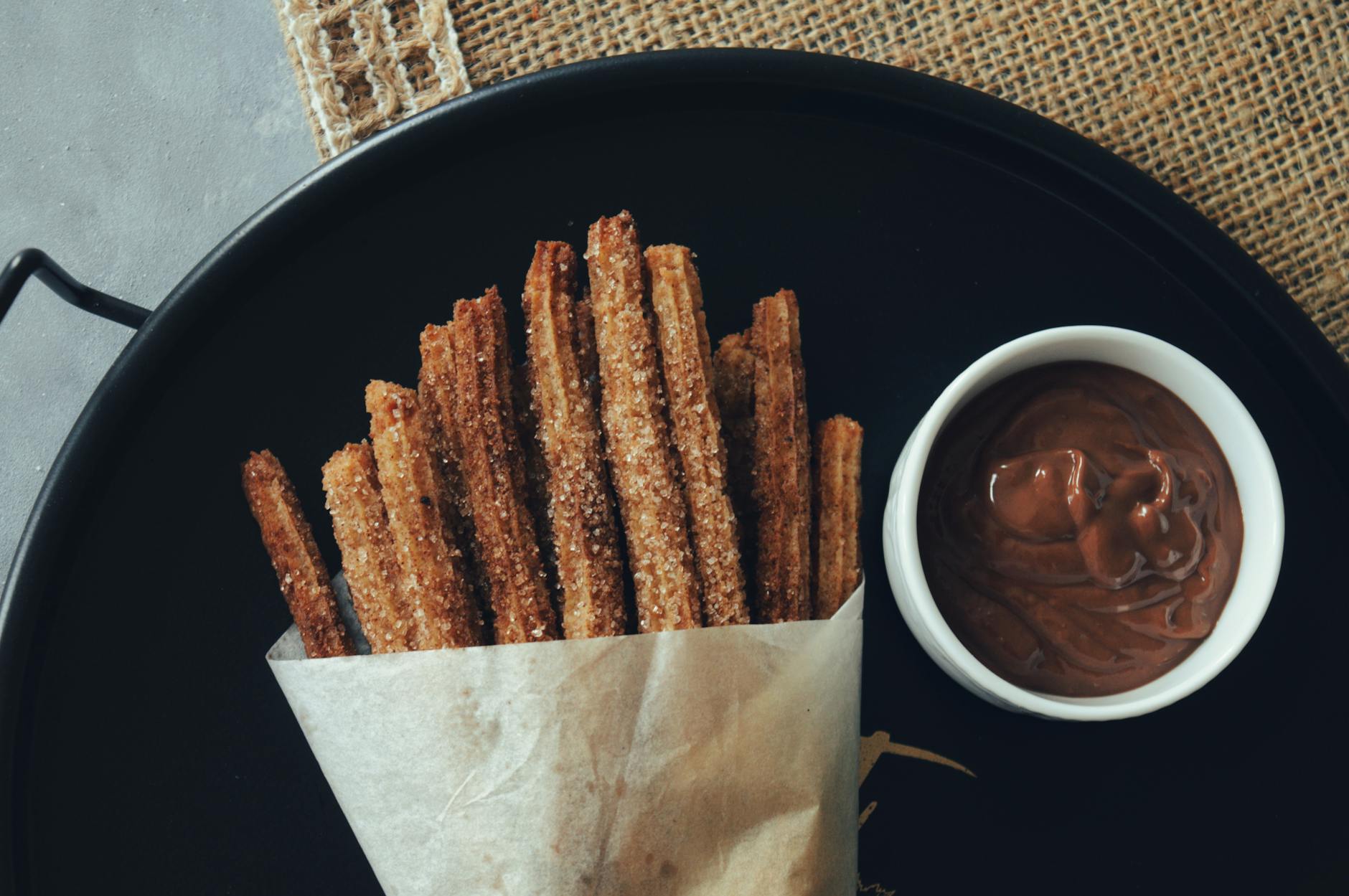
A churro is a fried dough pastry made from choux-style dough (flour, water, a pinch of salt) forced through a star-shaped nozzle into hot oil and fried until golden. The star shape creates ridges that crisp during frying while the interior stays soft. A good churro has a thin, shatteringly crisp exterior and a light, doughy interior. A bad churro has a thick, greasy exterior and a dense, heavy centre.
The porra is the Madrid version of a thicker, longer churro — a single straight piece about 25 centimetres long, with a larger diameter and a denser interior than the standard churro ring. Porras are the local preference in Madrid; churros are more associated with Andalucia and the rest of Spain. Both are served with chocolate.
The chocolate served alongside churros in Madrid is not a drink. It is a thick, dark, heavily cornstarch-thickened paste that coats a spoon completely and does not pour so much as flow slowly. The Spanish terminology for this is chocolate a la taza (chocolate in a cup) to distinguish it from drinking chocolate, which is thinner. The consistency should be close to a thick custard. If you can pour it freely, it is too thin.
The best churrerías in Madrid beyond San Ginés
Churrería La Mejor
On Calle de Fuencarral, 116, in the Chamberí district. Open from 7am for the breakfast trade and again from 6pm for the merienda (afternoon snack) crowd. The churros here are made to order, arrive hot from the fryer, and the chocolate is thick enough to hold a spoon upright. The clientele is almost entirely local. No queue on weekday mornings. Budget €3 to €4 per person.
Chocolatería Valor
Multiple locations in Madrid, run by the Valor chocolate company from Villajoyosa, Alicante. The chocolate here is made with Valor’s own recipe and is considered by many madrileños to be the best commercial chocolate a la taza available. The churros are consistently good. The Valor branches are slightly more café-like than the traditional churrerías but produce a reliable, high-quality version of the dish at reasonable prices.
Bar Melo’s
On Calle de Ave María, 44, in Lavapiés. Not primarily a churrería but a neighbourhood bar that fries exceptional churros from opening until mid-morning. Melo’s is famous locally for the zapatilla — a flatbread roll stuffed with jamón york and cheese — but the churros are among the best in the barrio. Very cheap (under €2 for a portion), very local, zero tourist traffic.
Horno San Onofre
On Calle de San Onofre, 3, near Gran Vía. A bakery that also operates as a churrería in the mornings and afternoons. The pastry production means the dough quality is higher than at a bar that makes churros as a sideline. The chocolate is made fresh in small batches throughout the morning. Slightly more expensive than the neighbourhood churrerías (€4 to €5 per person) but consistently excellent.
Cafetería Manuela
On Calle de San Vicente Ferrer, 29, in Malasaña. An old-fashioned café with original 1950s fittings, excellent coffee, and good churros and porras made in the traditional Madrid style. The chocolate is the correct thick consistency. Open from 6pm for the merienda crowd; the morning service is more coffee-focused.
When to eat churros in Madrid
There are three correct moments for churros and chocolate in Madrid:
Sunday breakfast: The most traditional context. After morning mass or a Sunday walk, families stop at a churrería for churros and chocolate. This is a weekly ritual in many Madrid households. The churrerías are busiest between 10am and noon on Sundays.
Merienda (afternoon snack): Around 6pm to 7pm, between lunch and dinner. Churros and chocolate as a mid-afternoon sustainer is particularly associated with school-age children but is eaten by adults without any self-consciousness in Madrid. The chocolaterías open specifically for this window.
After a night out: San Ginés built its 24-hour operation specifically for this purpose. After the clubs close at 5am or 6am, a churro and chocolate is the traditional conclusion to a Madrid night out. The dish’s combination of hot fat, sugar, and thick chocolate does something useful for the body at this hour that no other food quite replicates.
How to eat them correctly
Break a churro into a piece short enough to dip fully into the chocolate cup. Lower it until the churro is half submerged. Let the chocolate coat the exterior for two seconds. Eat in one bite, carefully — the chocolate inside the dipped portion will be very hot. Repeat. Do not attempt to drink the remaining chocolate after the churros are finished; it is too thick. Some people use a spoon for the remainder; others leave it.
Churros are dusted with sugar at some churrerías and not at others. The traditional Madrid porra is not sugared before serving — the sweetness comes from the chocolate. If your churros arrive unsugared and the chocolate is good, there is no deficit.
Frequently asked questions
Is San Ginés worth the queue?
San Ginés is genuinely excellent. The building, the history, and the quality of both the churros and the chocolate justify the visit. The question is whether it justifies the queue on a busy weekend morning. On a quiet weekday at 9am, there is no queue and the experience is as good as the reputation suggests. On Saturday at 11am, consider one of the alternatives.
What is the difference between a churro and a porra?
A porra is a larger, thicker, straighter version of a churro, specific to Madrid. The dough recipe is similar but the larger diameter means the interior is denser and the frying time longer. Porras are the dominant form in Madrid; churros (thinner, often ring-shaped) are more common in the rest of Spain.
Can you eat churros without chocolate?
Yes. Some people prefer them with café con leche, which provides a slightly less sweet, more acidic dunking medium. Others eat them plain with a dusting of sugar. Neither is wrong. The chocolate version is traditional and most churrerías expect you to order both together.
What time does San Ginés open?
24 hours, every day. The least crowded window is weekday mornings between 7am and 9am, when the breakfast trade is mostly local workers rather than tourists.
More Madrid classics? Read our guide to where to eat cocido madrileño and our look at Madrid’s late-night eating culture.
Found a correction or an update?
Email us at hello@spainfoodguide.com — we keep our entries current.
Run a restaurant in Spain you think we should know?
Get featured →