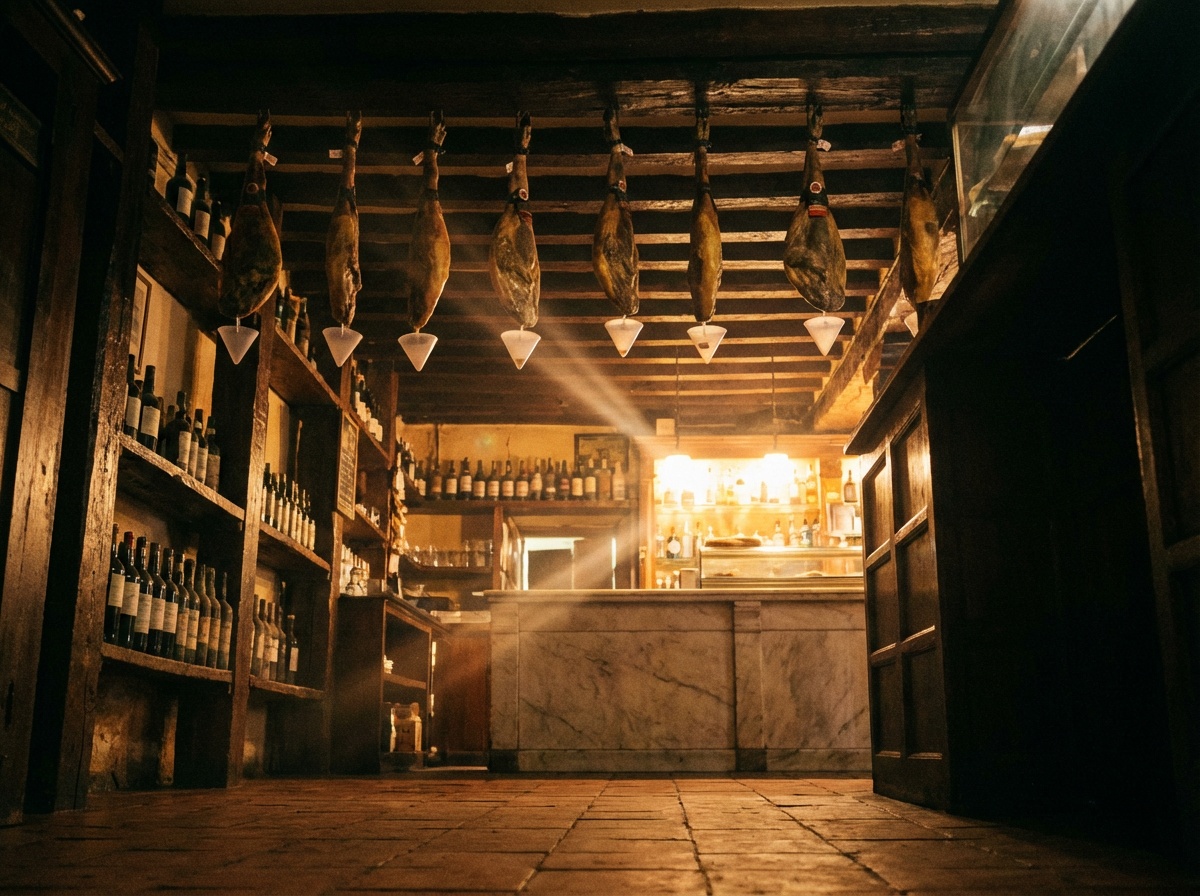

Jamón ibérico de bellota is the most celebrated food product in Spain. The acorn-fed black Iberian pig, raised in the dehesa oak forests of Extremadura, Huelva, and Salamanca, produces a ham with a flavour and texture that has no equivalent in any other cured meat tradition. Eating it at a dedicated jamón bar — standing at a marble counter while a cortador (carver) slices thin pieces directly from the leg — is one of the essential eating experiences in Spain.
This is a guide to the jamón bars worth seeking out across Spain, what to order, and how to understand what you are eating.
Understanding the grades of jamón ibérico
In 2014, Spain introduced a colour-coded label system for jamón ibérico that is the clearest way to understand what you are buying or ordering.
Black label (Jamón Ibérico de Bellota 100% Ibérico): The highest grade. 100% purebred Iberian pig, raised free-range in the dehesa, fattened exclusively on acorns (bellotas) during the montanera season (October to February). The pigs walk kilometres daily foraging for acorns, which builds muscle and produces the distinctive intramuscular fat marbling that makes the ham melt at room temperature. Minimum curing time 36 months. Price: €80 to €150+ per kilogram.
Red label (Jamón Ibérico de Bellota): At least 50% Iberian pig crossed with Duroc, free-range in the dehesa, acorn-fed during montanera. Similar quality to the black label but from a crossbred rather than purebred pig. Price: €50 to €90 per kilogram.
Green label (Jamón Ibérico de Cebo de Campo): At least 50% Iberian pig, free-range, fed on a combination of natural pasture and commercial feed. Not acorn-fed. Good quality but without the distinctive bellota flavour profile. Price: €30 to €60 per kilogram.
White label (Jamón Ibérico de Cebo): At least 50% Iberian pig, kept in conventional enclosures, fed commercially. The lowest ibérico grade. Still significantly better than jamón serrano. Price: €20 to €40 per kilogram.
Jamón serrano is a separate category entirely — cured white pig (typically Duroc or Large White), not ibérico. Good jamón serrano (Reserva grade, 15+ months curing) is an honest product and works well in sandwiches and cooking. It is not a substitute for jamón ibérico in the context of a dedicated jamón bar.
The best jamón bars in Spain
Madrid
Restaurante Sobrino de Botín (Jamón counter): The world’s oldest restaurant (per the Guinness record), on Calle de los Cuchilleros near Plaza Mayor. The jamón at the bar counter, eaten standing, is some of the best available in Madrid. Order black label bellota from Joselito or 5 Jotas and eat it before anything else.
Museo del Jamón: Multiple locations across Madrid. A chain, but an honest one — the jamón selection is extensive and correctly stored, the prices are reasonable, and the standing bar format is exactly the right way to eat it. The Carrera de San Jerónimo location near the Congreso is the most central. Do not attempt the museum name too literally; there is no museum.
Bar Palentino: On Calle de Eugenio Salazar in the Prosperidad neighbourhood. Off the tourist circuit, used by the local community, serving excellent jamón and simple tapas at neighbourhood prices. The cortador here has been cutting the same legs for twenty years.
Seville
El Rinconcillo: Calle Gerona, 40. Founded 1670. The jamón ibérico here is cut at the bar and the bill is chalked on the counter. One of the most atmospheric places to eat jamón in Spain, purely because of the building and the tradition.
Casa Morales: Calle García de Vinuesa, 11. A bodega (wine shop with standing bar) that has been selling wine and jamón since 1850. The jamón is from a single producer in Extremadura and changes based on the harvest. Eat it with a glass of manzanilla from the barrel behind the bar.
Barcelona
Bar del Pla (El Born): The jamón selection is curated and consistently sourced from quality producers. The pan con tomate alongside is made with Arbequina olive oil. One of the better places in Barcelona to eat jamón well.
Bodegas Sepúlveda (Poble-sec): The jamón here is from a specific Extremaduran producer that the bar owner sources directly. The wine list pairs excellently with the ibérico products. Not a dedicated jamón bar but treats it seriously.
San Sebastián and the Basque Country
Bar Nestor: Calle de la Pescadería, 11, in the Parte Vieja of San Sebastián. Most famous for the tortilla and the txuletón (aged beef), but the jamón ibérico selection here is among the best in the Basque Country. Order a plate at 1pm when the lunch service begins.
The producing regions
The four DO (Denominación de Origen) regions for jamón ibérico produce subtly different products.
DO Jabugo (Huelva, Andalucia): The most famous. The town of Jabugo and the surrounding Sierra de Aracena produce jamones of exceptional quality from pigs that forage in some of the most biodiverse dehesa in Spain. The 5 Jotas brand comes from here. The flavour tends toward more complex, slightly more intense than other regions.
DO Dehesa de Extremadura: Covering Cáceres and Badajoz provinces. The largest dehesa area in Spain. Slightly milder flavour profile than Huelva, longer curing times at many producers. Joselito, one of the two most prestigious brands, produces from this region.
DO Los Pedroches (Córdoba): The smallest DO, in the Sierra Morena north of Córdoba. Very traditional production methods, limited commercial availability, but some of the most respected small-producer jamones in Spain.
DO Guijuelo (Salamanca): In the mountains of Castilla y León. The altitude (1,000 metres) and cold winters produce a slower, longer cure than the Andalucian and Extremaduran regions. The flavour tends toward slightly more delicate and nutty. Covap and Julián Martín are reliable producers from this region.
How to eat jamón correctly
Jamón ibérico de bellota should be served at room temperature (20-22°C). Cold jamón suppresses the aromatics and makes the fat stiff rather than silky. If your jamón arrives from the refrigerator, wait five minutes before eating.
Eat it alone or with bread (without tomato or oil — the flavour of the jamón is the point). The correct accompaniment is a glass of cold fino or manzanilla sherry, whose acidity and salinity complement the fat without competing with it.
Eat it with your fingers if no utensils are provided. Pick up each slice individually and eat it whole. The experience of the fat melting against the warmth of your hand and then dissolving on the tongue is specifically what bellota jamón is about — this is not hyperbole, it is the physical chemistry of intramuscular fat at body temperature.
Frequently asked questions
What is the difference between jamón ibérico and jamón serrano?
Jamón ibérico comes from the black Iberian pig; jamón serrano from white pig breeds. Ibérico pigs raised on acorns in the dehesa produce meat with significantly more intramuscular fat marbling, a more complex flavour, and a softer texture than serrano. The price difference (2x to 5x) reflects a genuine quality difference.
What does bellota mean on a jamón label?
Bellota means acorn. Jamón ibérico de bellota comes from pigs that were fattened on acorns during the montanera season — the autumn and winter period when the holm oaks drop their fruit. Acorn feeding produces the distinctive nutty, complex flavour and the oleic-acid-rich fat that distinguishes bellota from lesser grades.
How much does good jamón ibérico cost in Spain?
At a dedicated jamón bar, a plate of hand-cut black label jamón ibérico de bellota costs €10 to €18 for a generous portion. At a supermarket, the same quality costs €80 to €150 per kilogram. The bar experience — watching it cut, eating it immediately — is worth the premium over buying it packaged.
More on Spanish food culture? Read our guide to how to order wine in Spain and the vermut hour across Spain.
Found a correction or an update?
Email us at hello@spainfoodguide.com — we keep our entries current.
Run a restaurant in Spain you think we should know?
Get featured →