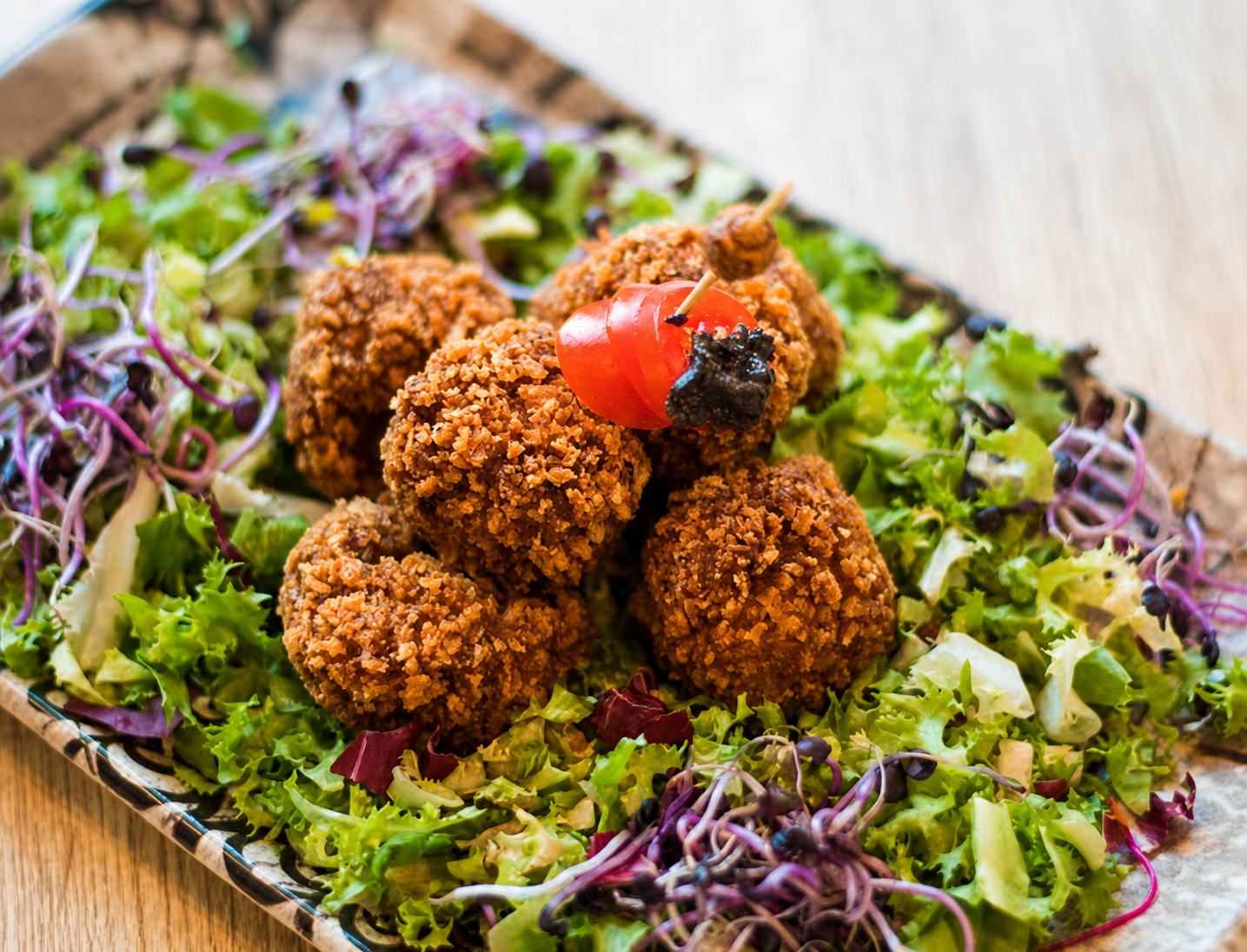
The bocadillo de calamares is a fried squid sandwich. Battered squid rings in a crusty white roll, sometimes with a squeeze of lemon, sometimes with aioli or a smear of tomato. That is the entire dish. It has been the defining street food of Madrid since at least the mid-20th century, costs between €3 and €5 depending on where you buy it, and is most correctly eaten standing up in or near the Plaza Mayor at lunchtime.
The fact that a city 300 kilometres from the nearest coastline made a seafood sandwich its defining street food is not as strange as it sounds. Madrid’s fish supply was historically one of the freshest in Spain due to the network of overnight mule and cart routes — later refrigerated trucks — that brought Atlantic and Mediterranean catch to the capital within hours. Madrileños have always eaten more and better fish than their inland location would suggest.
What makes a good bocadillo de calamares
Three components matter: the squid, the batter, and the bread.
The squid: Fresh squid (calamar), not frozen rings. The difference is visible — fresh squid has a slightly irregular ring size and a tender texture when fried; frozen squid produces uniform rings that are slightly rubbery. The squid should be rings of medium size, not the tiny chipirones (baby squid) that some bars use as a substitute. The flavour of calamar should be present but mild.
The batter: A thin, light coating of seasoned flour — not a thick beer batter, not a heavy breadcrumb coating. The batter should be almost translucent when fried, providing a thin crunch without dominating the squid. The frying oil must be hot enough that the batter sets immediately on contact, sealing the squid rather than absorbing oil. Correctly fried calamares are not greasy.
The bread: A crusty white roll (bocadillo bread, also called barra or telera depending on the region) with enough structural integrity to hold the squid without collapsing. The roll should be fresh enough that the crust breaks cleanly. Soft rolls dissolve under the squid; yesterday’s bread holds the heat of the squid against the dough for too long and becomes soggy. The bread should be lightly warmed or toasted before filling.
Where to eat bocadillo de calamares in Madrid
Bar La Campana
On Calle Botoneras, immediately adjacent to the Plaza Mayor. This is the most famous bocadillo de calamares bar in Madrid and has been operating in essentially the same format since the 1960s. The squid is reliably fresh, the batter is correct, and the queue on weekend lunchtimes is a reliable indicator. Cost: around €3.50. Eat standing at the counter or in the plaza outside.
Cervecería 100 Montaditos
The national chain serves a version at very low price (€1 to €2 per unit). The quality is acceptable but not exceptional — the squid is often frozen and the roll lacks the crunch of a fresh-baked barra. Mentioned here for completeness and because the price is genuinely low for people on tight budgets, not as a recommendation for the best experience.
El Brillante
On Plaza del Emperador Carlos V, near the Reina Sofía museum. A Madrid institution that has been serving bocadillos de calamares since 1952. The quality here is consistently good and the location — away from the Plaza Mayor tourist concentration — means you will be eating alongside local workers rather than tourists. The version with aioli is worth ordering over the plain version.
Bar Postas
On Calle Postas, one block from the Plaza Mayor. A traditional bar that does the bocadillo de calamares well and at slightly lower prices than the immediate Plaza Mayor frontage. Less famous than La Campana, equally good.
The Plaza Mayor context
The Plaza Mayor is surrounded by restaurants and bars that range from genuinely good to purely tourist-facing operations that trade on location. The bocadillo de calamares served at the bars immediately on the plaza itself — the ones with tables and waiters — is typically more expensive (€5 to €8) and lower quality than the bars on the surrounding streets.
The correct approach: buy your bocadillo from a bar on one of the streets feeding into the plaza (Calle Botoneras, Calle Ciudad Rodrigo, Calle Postas), then eat it in the plaza itself. You get the experience of the plaza and the quality of the off-plaza bars at the same time.
Variations and additions
With aioli: A generous smear of garlic mayonnaise is the most common addition. Adds richness and salt that work well against the neutral flavour of the battered squid.
With tomato: Some bars spread a thin layer of crushed tomato on the bread before adding the squid. Adds acidity and moisture.
With lemon: A squeeze of lemon juice over the squid before closing the roll. The acid brightens the flavour of the squid and cuts the oil from the frying. Optional but worth trying.
Mixed (mixto): Some bars offer a version with both squid rings and a fried green pepper in the same roll. The pepper adds a slightly bitter, smoky element.
When to eat it
The bocadillo de calamares is a lunchtime food in Madrid. The bars around Plaza Mayor serve them from noon onward, with peak demand between 1pm and 3pm on weekdays (when local workers eat) and 1pm to 4pm at weekends. The squid is freshest at the beginning of service — order at noon or 1pm rather than at 3pm when the oil has been in the fryer for three hours and the bread has been sitting since morning.
It is not a dinner food in Madrid — by 8pm the calamares bars have typically sold through their fresh squid and the evening service, where it exists, uses what remains.
Frequently asked questions
Why is bocadillo de calamares associated with Madrid?
Madrid developed a strong fried seafood tradition despite its inland location because of the efficient supply chains that brought Atlantic fish to the capital overnight. The bocadillo de calamares became the affordable lunchtime food of the city’s working population and has remained the most associated street food with Madrid for over half a century.
How much does a bocadillo de calamares cost in Madrid?
Between €3 and €5 at a traditional bar near Plaza Mayor. Tourist-facing restaurants charge €6 to €10 for a seated version with service. The standing-at-the-bar version from a traditional bocadillo bar is almost always better and always cheaper.
What is the best bocadillo de calamares in Madrid?
Bar La Campana on Calle Botoneras and El Brillante near the Reina Sofía are the two most consistently cited options. La Campana for the Plaza Mayor context; El Brillante for a slightly less touristy experience with equivalent quality.
Is bocadillo de calamares the same as calamares a la romana?
Calamares a la romana is the fried squid preparation itself — battered and fried squid rings served as a tapa on a plate. A bocadillo de calamares uses calamares a la romana as the filling for a bread roll. Same preparation, different format.
More Madrid street food? Read our guide to the best cocido madrileño in Madrid and our look at churros and chocolate beyond San Ginés.
Found a correction or an update?
Email us at hello@spainfoodguide.com — we keep our entries current.
Run a restaurant in Spain you think we should know?
Get featured →