
Carrer de Blai is a pedestrian street in Poble-sec, the neighbourhood tucked between Montjuïc hill and the Eixample grid on the western side of Barcelona. The street is approximately 200 metres long and contains around fifteen pintxos bars operating simultaneously, all of them with trays of small toasted bread pieces topped with various things lined up on the bar counter. It is one of the most concentrated bar-eating experiences in Barcelona and is specifically not the same as going to a pintxos bar in the Basque Country, which is important to understand before you arrive.
How Carrer de Blai works
The bars on Carrer de Blai operate on the Basque pintxos model: small pieces of toasted bread with toppings, displayed on trays on the bar counter, priced per piece. The difference from San Sebastián or Bilbao is the style of the toppings, the price point (€1 to €2.50 per piece versus €2.50 to €3.50 in the Basque Country), and the atmosphere, which is louder, younger, and more diverse than a traditional Basque bar.
You enter a bar, look at the trays of pintxos on the counter, take a plate, and select the ones you want by pointing or using tongs where provided. Some bars also have hot pintxos made to order — you call these out to the bar staff. You order your drink at the bar, pay at the end either per piece or by the number of toothpicks on your plate depending on the bar’s system.
Most people visit two or three bars over an evening. The format encourages movement — you eat five or six pintxos at one bar, drink a glass of wine or a caña, and move along the street to the next. The whole street is walkable end to end in two minutes and you can see into each bar before deciding where to stop.
The pintxos
The best pintxos on Carrer de Blai are the hot ones made to order. The cold displayed pintxos are fine but have often been sitting for an hour. Ask what the kitchen is making fresh, or look for the bars where bar staff are actively cooking at a small grill or plancha behind the counter.
Anchoa con pimiento: Cantabrian anchovy with roasted red pepper on bread. The anchovy should be fat and oil-cured, not the thin salty version. Available at several bars. Simple and consistently good when the anchovy is quality.
Bacallà gratinado: Salt cod gratin on bread, sometimes with a stripe of romesco sauce. A Catalan ingredient in a Basque format.
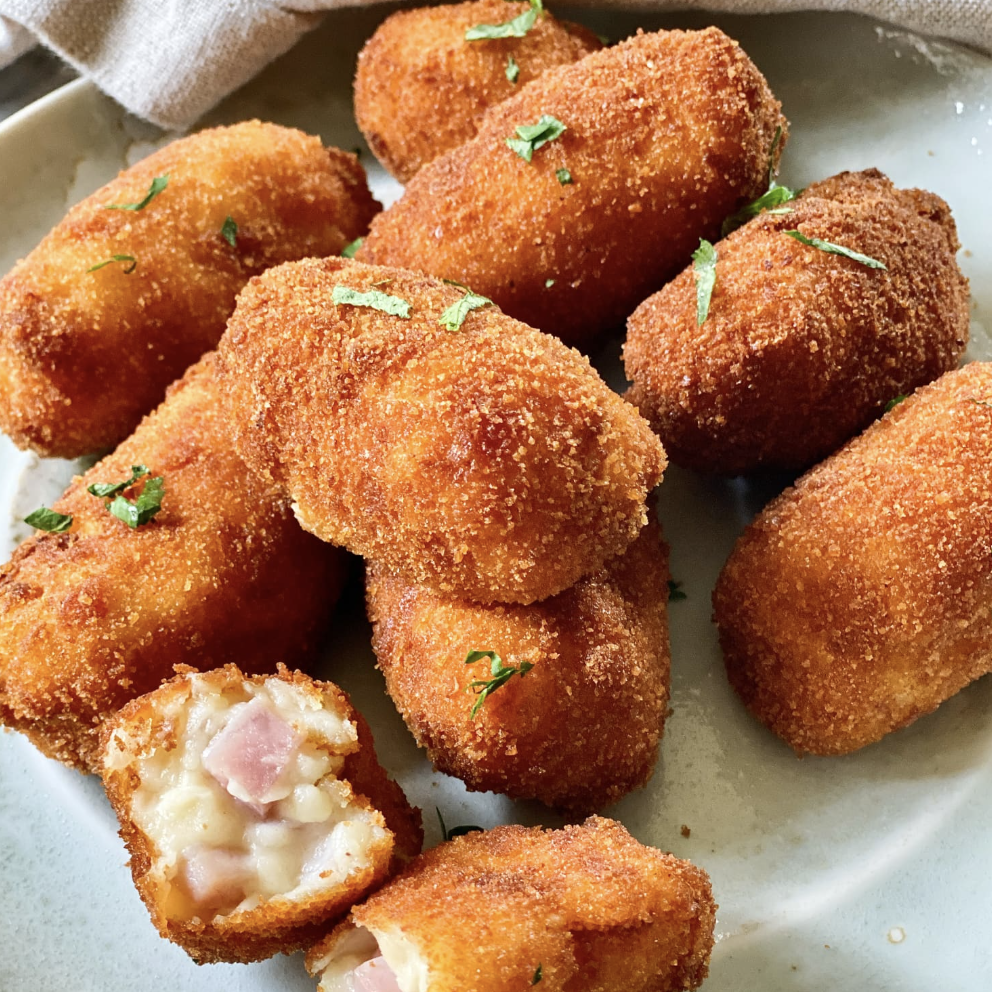
Croqueta: Small deep-fried croquette with jamón, bacallà, or cheese filling. The best croquetas on Blai are at the bars that fry to order — you can tell by the steam.
Ou ferrat: Fried egg on bread (ou ferrat is Catalan for fried egg), sometimes with truffle oil or a smear of sobrassada (Mallorcan cured sausage). A late-night option for the bars that keep the kitchen open until 1am.
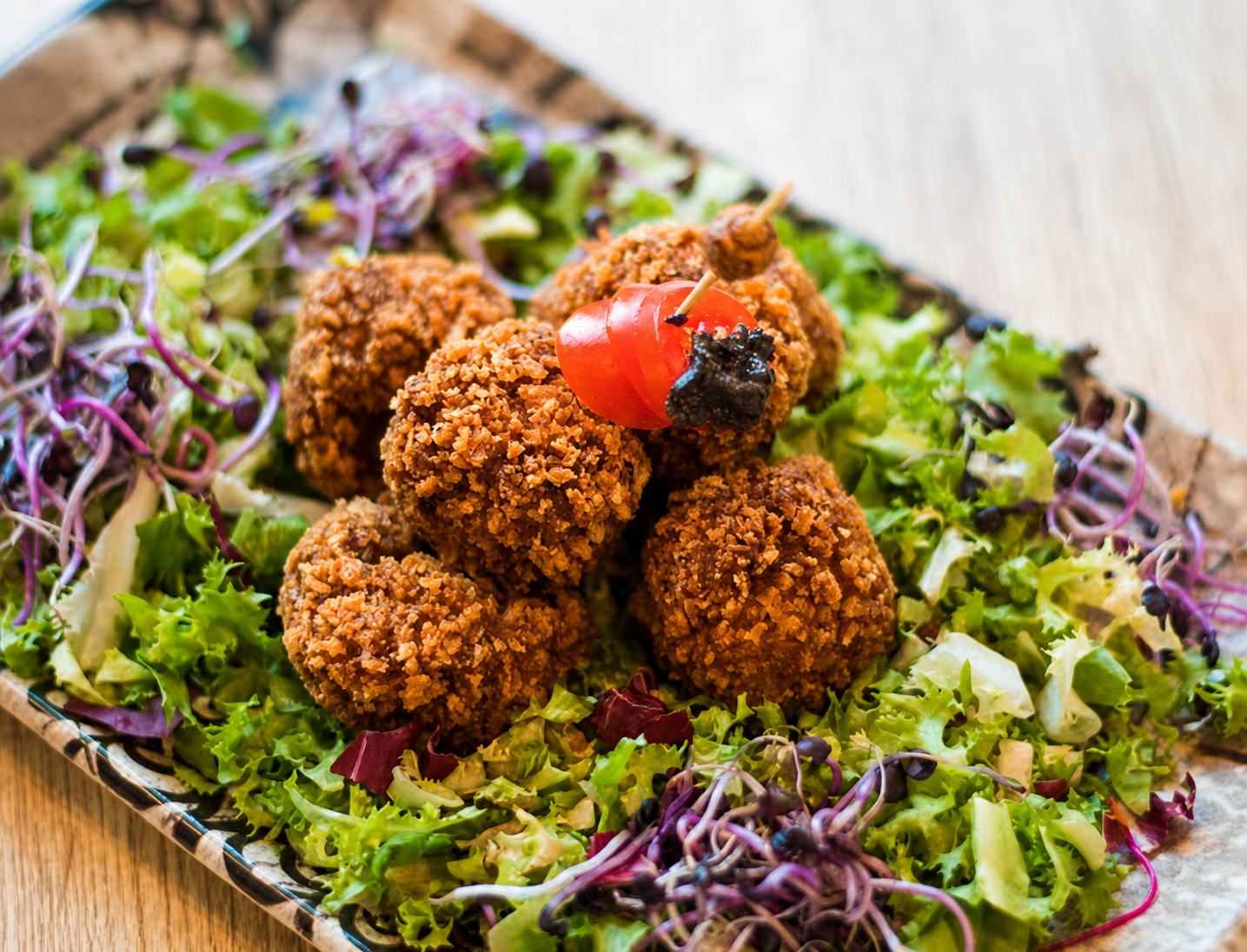
Bombas: Not a pintxo in format, but the Barceloneta/Barcelonés ball of mashed potato stuffed with meat, breaded and fried, served with two sauces — a garlicky aioli and a spicy tomato sauce. Several bars on Blai serve them as bar snacks alongside the pintxos.
Where to start
Bar Quimet: One of the older bars on the street, with a reputation for better-than-average pintxos quality. The kitchen takes more care with the hot options than some of the neighbouring bars.
Tasca El Corral: Slightly removed from the main concentration but worth the extra 30-second walk for the quality of the cured meats and the longer wine list.
La Tasqueta de Blai: Focused on quality rather than the volume game that some Blai bars play. The pintxos here are slightly more expensive (€2 to €3 each) but noticeably better made.
The honest answer is that bar quality on Carrer de Blai varies and the easiest way to navigate it is to walk the full length first, look at what is on the trays and what the kitchens are doing, and make your selections based on what looks freshest rather than which bar has the most people outside. Volume of customers is not a reliable indicator of quality on a tourist street.
Poble-sec beyond Carrer de Blai
Poble-sec has better restaurants than its Carrer de Blai reputation suggests. The neighbourhood is also home to several of Barcelona’s most-discussed restaurants of the last decade.
Bodega Sepúlveda: On Carrer de Sepúlveda, a serious wine bar with an excellent list of natural and minimal-intervention wines and good small plates. The opposite of Carrer de Blai in atmosphere — calm, thoughtful, and built for spending an evening with a bottle and some food.
Tickets: Albert Adrià’s tapas bar on Avinguda del Paral·lel, one of the most difficult restaurant reservations in Spain. The waiting list for Tickets is six months to a year. Worth attempting if you plan ahead — the kitchen is genuinely creative and the format (small plates, shared) suits the food well.
Bodega 1900: Also by the Adrià family, on Carrer de Tamarit. A vermouth bar and restaurant that recreates the Barcelona bodegas of the early 20th century with technically precise cooking behind the traditional facade. Easier to book than Tickets but still requires advance planning.
When to visit Carrer de Blai
Evening service from 7pm to midnight is the primary window. The street is at its best between 8pm and 10pm when the bars are full and the kitchens are at full capacity. Lunchtime service exists (noon to 3pm) but the atmosphere is quieter and some of the bars do not serve the full pintxos selection until evening.
Avoid Saturday night at 9pm if you dislike crowds — Carrer de Blai on a Saturday in summer is extremely full and the quality of the pintxos drops as the bars prioritise volume. Friday evening or Sunday evening are better choices for the same food with less pressure.
Getting to Poble-sec
Metro: Paral·lel station (Lines 2 and 3), then a five-minute walk to Carrer de Blai. The street runs perpendicular to Avinguda del Paral·lel and is easy to find from the metro exit.
Frequently asked questions
Is Carrer de Blai worth visiting?
Yes, with adjusted expectations. It is not San Sebastián — the pintxos are cheaper, less refined, and more variable in quality. But as a lively, affordable, walkable bar street where you can eat well for €15 to €20 per person including drinks, it is one of the better value food experiences in Barcelona.
How much does it cost to eat on Carrer de Blai?
Budget €15 to €25 per person for a full evening across two or three bars. Pintxos run €1 to €2.50 each; drinks €2 to €4. You can eat very well for €20 including wine if you are selective about which bars you choose and what you order.
What is the difference between pintxos and tapas?
Pintxos are a specific Basque bar food: small pieces of bread with toppings, often held together with a toothpick, displayed on trays and eaten standing at a bar. Tapas is a broader term for any small portion of food served with drinks in Spain. All pintxos are tapas; not all tapas are pintxos.
Is Poble-sec a good neighbourhood to stay in?
Yes. Poble-sec is central, well-connected by metro, less touristy than the Gothic Quarter and El Born, and has good independent restaurants and bars. It is five minutes from Montjuïc and ten minutes walk from the Raval and Sant Antoni.
More Barcelona food streets? Read our guide to the El Born tapas crawl and the Barcelona vermut trail.
Found a correction or an update?
Email us at hello@spainfoodguide.com — we keep our entries current.
Run a restaurant in Spain you think we should know?
Get featured →