
Barcelona Vermut Trail: 7 Bars for Sunday Aperitivo
Sunday in Barcelona has a rhythm. Markets close, shutters come down, and by noon the city folds itself into small tiled bars for the oldest ritual in Catalan hospitality: vermut. One drink, a handful of conservas, and two hours that stretch into four. The phrase for it is fer el vermut, which translates loosely as “doing the vermouth” but really means meeting friends, eating from small plates, and letting the afternoon take care of itself.
This guide is the working trail. Seven bars across the Born, Poble Sec, Gràcia, Raval and the Eixample, all open on Sundays, all serving una de vermut straight from the siphon. What to order, how to order it, what to eat alongside it, and why the Catalans got into this habit in the first place. No fluff, no “hidden gems” that everyone already knows. Just the places worth walking to, the snacks worth ordering, and the small vocabulary that turns you from tourist into regular in about thirty seconds.
Quick Answer: What Is Sunday Vermut in Barcelona?
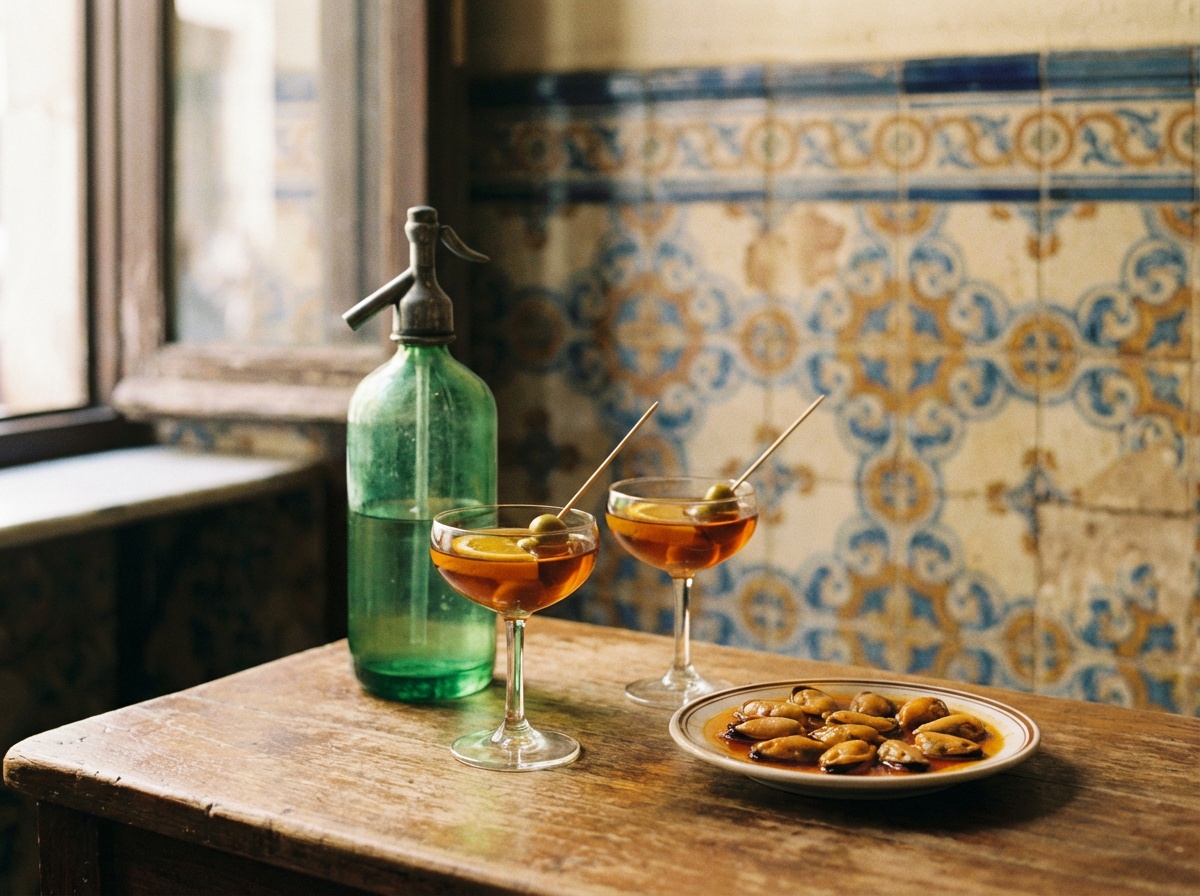
Vermut in Barcelona is the Sunday midday drink, taken between noon and 2 pm before lunch. You order una de vermut, which is a glass of draft red vermouth poured from a siphon, topped with a splash of soda, an olive and a slice of orange. Alongside it come conservas (tinned mussels, cockles, anchovies), patatas bravas, boquerones, or a bomba. It is not aperitif theatre. It is the everyday Catalan way of starting the weekend’s main meal.
Why Sunday at Noon, and Why It Matters
Vermut is not happy hour. It is not a cocktail moment. It is a social contract older than most of the buildings it happens in. In Barcelona, it has a fixed window, usually noon to 2 pm on Sundays, though many bars extend to Saturdays and weekday midday. The rhythm is simple: you meet at the bar, you stand at the counter or squeeze around a marble-topped table, you drink one or two vermuts, you eat three or four small plates, and then you go somewhere else for lunch. Or you stay. Nobody minds.
The key word is fer. To “do” the vermouth. Not to have a drink, not to grab one. To perform a small ritual with other people. That distinction explains why these bars look the way they look. Narrow, tiled, a little cramped, designed for conversation at close range rather than for sprawling. The light is dim. The music, if any, is low. The bartender knows everyone who walked in before you.
Spanish vermouth itself was industrialised in Reus, Tarragona, in the early 1900s. Yzaguirre launched in 1884. Miró followed in 1914. By the 1920s Reus was the home of Spanish vermouth, exporting to the rest of Europe and supplying every bar in Catalonia with the dark, bitter, botanical red that now sits in every siphon across Barcelona.
How to Order Like a Local
The whole language of the vermut bar fits on a single index card. Learn these six lines and you can walk into any place on this list without hesitating.
- Una de vermut : “One vermouth.” The draft one, from the siphon. This is what you want.
- De grifo : “From the tap.” If you want to be specific, this is the version poured fresh, not bottled.
- Con sifón : “With a splash of soda.” Usually automatic, but it never hurts to confirm.
- Una caña : “A small beer,” if the second person at the table wants beer instead.
- Para picar : “To snack.” Followed by pointing at the blackboard or the tins on the shelf.
- La cuenta, cuando puedas : “The bill, whenever you can.” No rush. Never ask for the bill fast in Spain.
A classic draft vermut arrives in a small rocks glass or coupe, poured from a siphon the bartender works by hand. It comes amber-red, sweet on the nose, bitter on the swallow, topped with a single ice cube, a green olive skewered on a cocktail pick, a thin slice of orange, and sometimes a mussel or a boqueron (white anchovy) balanced on top. Prices across Barcelona run 3 to 4.50 euros a glass. Anything above 5 euros and you are paying for the neighbourhood, not the drink.
The 7 Bars
1. Bodega La Puntual, Born
A standing favourite in the Born, La Puntual sits on Carrer de Montcada, the same street as the Picasso Museum, and runs the kind of Sunday vermut service locals plan their week around. Draft vermouth comes out of a siphon behind a marble counter stacked with conservas. The back room is a working bodega, long wooden tables and tiled walls, and on a busy Sunday every seat fills by 12:15. Order the vermut de la casa, a plate of mejillones en escabeche (mussels in spiced vinegar), and the tortilla de patatas if you need a base. Expect 3.80 euros for the vermut and 4 to 6 euros for each small plate. The Born location means it is walkable from the Gothic Quarter, Santa Caterina market, and El Xampanyet, which are three stops on any serious trail.
2. Quimet i Quimet, Poble Sec
If there is a temple to the conserva, it sits on a narrow corner in Poble Sec. Quimet i Quimet opened in 1914 and has barely changed. Shelves rise from floor to ceiling, stacked three deep with tinned seafood, wine bottles, liqueurs, and dust that looks like it has been there since the civil war. You stand. There are no tables. The house speciality is the montadito, a small bread round topped with layered ingredients the owner composes from the tins on the shelf, yoghurt, salmon, honey, truffle, whatever makes sense that day. Order una de vermut, two montaditos, and an Asturian cider if you stay longer. Crowded by 12:30, a crush by 1. Get there early or accept the crowd as part of the price.
3. Bar Celta Pulpería, Born
Galician-run, which means the vermut here sits alongside pulpo a feira (Galician octopus on wooden plates with paprika, olive oil and coarse salt), pimientos de Padrón, and empanada gallega. Celta is small, loud, tiled in white and green, and the Catalan-Galician crossover attracts a younger, mixed crowd. Vermut comes draft and cheap, around 3 euros, and you can stretch the meal by ordering one plate of octopus for the table. Open Sundays, packed by 1 pm. Cash helps move things faster.
4. Bar Bodega Quimet, Gràcia
Not the same Quimet. Bar Bodega Quimet opened in 1912 in Gràcia, on Carrer de Vic, and has served the neighbourhood for more than a century. The bar pours its own-label vermut directly from barrels lined up along one wall, a near-vanished tradition in Barcelona. Ask for vermut de barrica and it arrives darker and more herbal than the industrial draft. Pair it with a plate of anxoves del cantàbric (Cantabrian anchovies) on buttered toast and a small escalivada (roasted aubergine and pepper salad). Gràcia is quieter on Sundays, which makes Bar Bodega Quimet the slower, more contemplative stop on the trail. Perfect if you want to actually hear the conversation at your own table.
5. Morro Fi, Eixample
Morro Fi is the new wave. Opened in 2011 in the Eixample by three friends with a blog about vermut, it sparked the contemporary revival across Barcelona and now has its own-label vermouth bottled and sold across the city. The bar itself is tiny, white-tiled, bright, and sits on Carrer del Consell de Cent. Una de vermut here means the house blend, served with a slice of orange, an olive, and often a plump berberecho (cockle) balanced on top. Small plates lean towards the classical: patatas bravas, boquerones en vinagre, anchoas from the Cantabric coast. Expect 3.50 euros for the vermut and another 15 for a decent spread for two. Closed some Sundays, so check the Instagram before you walk over.
6. La Confiteria, Raval
The prettiest bar on the list. La Confiteria sits on Carrer de Sant Pau in the Raval, inside a nineteenth-century confectioner’s shop that kept every original fitting: carved wooden counters, gilt mirrors, stained-glass panels, hand-painted ceilings. The vermut is excellent, draft, about 4 euros, and the snacks include salted nuts, olives, and bombas on request. It tilts more cocktail bar than bodega, especially at night, but Sunday midday is when it remembers its vermut heritage and fills with locals ordering one glass at the counter before heading to lunch. Go for the room alone. Stay for the vermouth.
7. El Xampanyet, Born
Open since 1929 on Carrer de Montcada, a few doors from Bodega La Puntual. El Xampanyet is the most famous vermouth bar in the Born, and it earns the reputation. The specialty is actually house xampanyet (a lightly sparkling cava-style wine), but the vermut is pulled from a siphon behind the counter and is the reason most regulars come back. The tiled walls are covered in old Catalan ceramics, the counter is permanently three-deep, and the anxoves (anchovies in vinegar and oil) are the best in the city for the price. Cash only, no reservations, closed Sunday night but open Sunday lunch. Order at the bar, eat standing, stay thirty minutes, leave before the 1:30 crush.
What to Eat: The Snack Grammar
Vermut without snacks is a cocktail. Vermut with snacks is a meal. The Catalan vermut table follows a small, fixed grammar. Learn the six items below and you can order in any bar on the trail.
- Conservas : Tinned seafood, served in the tin or on a plate. The classics are mussels in escabeche, cockles (berberechos), razor clams (navajas), and Cantabric anchovies. Look for Olasagasti, Ortiz, and Cuca on the shelf behind the bar. A good tin costs 6 to 14 euros and feeds two.
- Patatas bravas : Fried potato cubes with spicy tomato and allioli. Every bar has them. Good ones are crisp outside, fluffy inside, and arrive with the two sauces on the side rather than smothered on top.
- Boquerones en vinagre : White anchovies marinated in vinegar, garlic and parsley. Served cold, eaten on bread or a cocktail pick. Clean, sharp, perfect with the bitter edge of the vermouth.
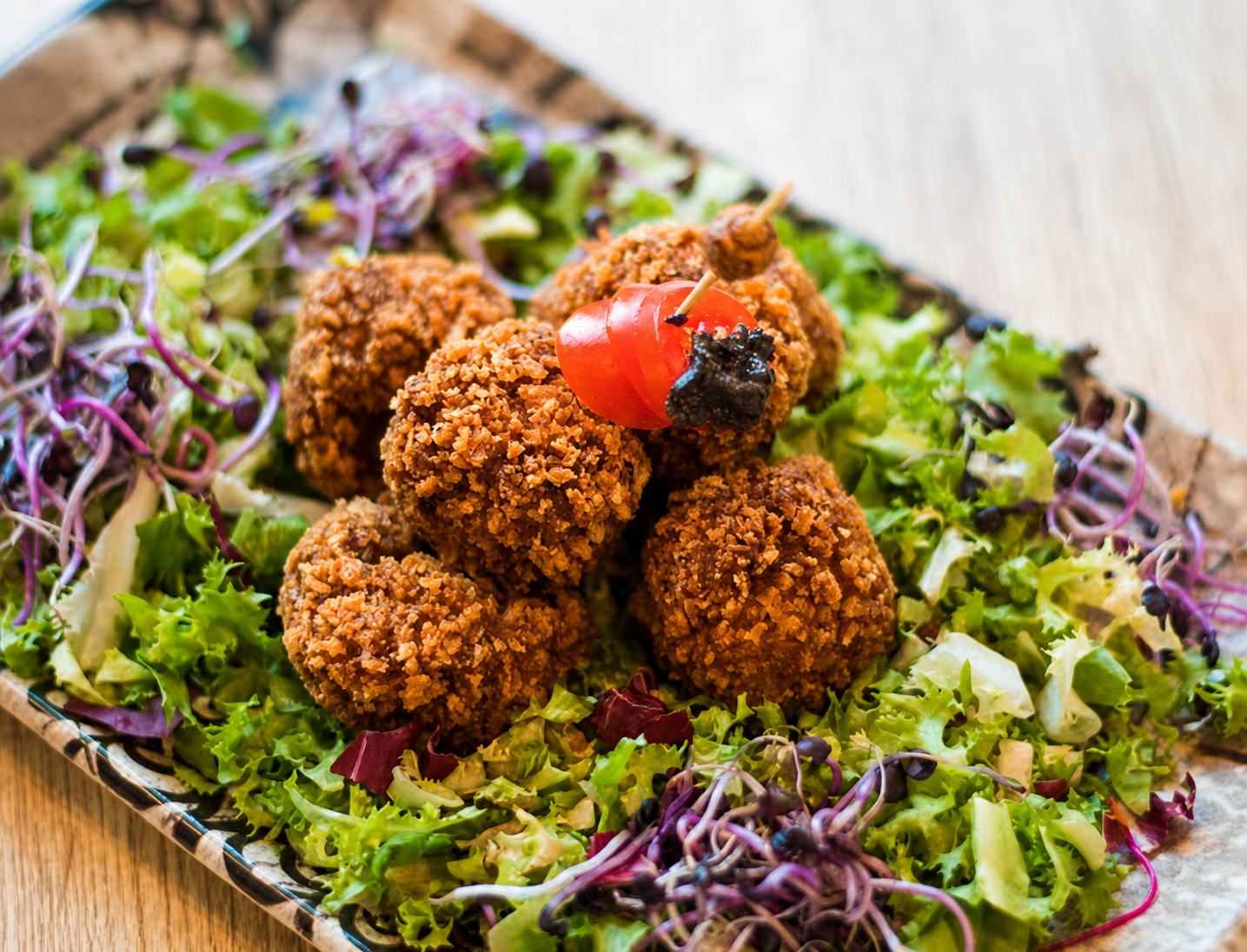
- Bomba : A Barceloneta invention from the 1950s. A potato croquette the size of a cricket ball, stuffed with spiced beef, deep fried, topped with brava sauce and allioli. Meant to represent a bomb, hence the name, hence the kick.
- Tortilla de patatas : Spanish potato omelette. A thick wedge at room temperature, sometimes with onion. A base layer if you are planning to drink two vermuts.
- Montaditos : Small bread rounds with layered toppings, specialty of Quimet i Quimet but found across the trail.
Common Mistakes to Avoid
The vermut bar has a few unspoken rules. Break them quietly and nobody cares. Break them loudly and you get the slow service.
- Do not ask for the vermut shaken or on ice. It is poured from a siphon with a single ice cube. That is the final form.
- Do not treat it as an aperitif. It is the start of lunch, not a pre-dinner warm up. Ordering one at 6 pm marks you as someone who has read the wrong guide.
- Do not rush the bill. You never flag down a bartender. You wait. You drink slower. You make eye contact when you are ready. Rushing is the opposite of the ritual.
- Do not skip the snack. A vermut without a plate next to it is incomplete. Even if you only order olives and an orange slice, there should be something.
- Do not order a second one fast. One glass, twenty minutes, conversation. That is the pace. Two glasses in fifteen minutes gets you a look.
Frequently Asked Questions
What time is vermut hour in Barcelona?
The classic window is Sunday 12 pm to 2 pm, before the main midday meal. Many bars also serve vermut Saturday midday and on weekday lunches, but Sunday is when the ritual is strongest and when the bars fill with locals rather than tourists.
How do I order vermouth like a local?
Say una de vermut. That gets you the house draft vermouth, poured from a siphon, with soda, orange, olive and sometimes a mussel on top. You do not need to specify the brand. The bar has one house pour and that is what una de vermut means.
How much does a vermut cost in Barcelona?
A draft glass runs 3 to 4.50 euros across most neighbourhoods. Tourist-heavy spots on the Rambla can charge 6 to 7, which is overpriced. A good snack plate adds 4 to 12 euros. Two people can eat and drink well for around 30 euros.
Where does Spanish vermouth come from?
Reus, in the Tarragona province of Catalonia. Yzaguirre launched there in 1884, Miró followed in 1914, and by the 1920s Reus was the industrial centre of Spanish vermouth production. Modern Catalan producers like Myrrha and the house blends at Morro Fi continue the tradition.
Which bar is best for first-timers?
Bodega La Puntual in the Born. It is central, open Sunday midday, has a full snack menu, serves classic draft vermut at fair prices, and sits on the same street as El Xampanyet for easy second stops. The vibe is welcoming rather than intimidating.
Can I do the vermut trail in one Sunday?
Two bars is the realistic maximum. Vermut is slow by design. Trying to hit all seven in one day breaks the ritual and your stomach. Pick a neighbourhood, Born or Poble Sec or Gràcia, and do two bars back to back with a walk in between.
Do I need reservations?
No. Vermut bars almost never take reservations. You walk in, stand at the counter or wait five to ten minutes for a table. El Xampanyet, Quimet i Quimet and La Puntual are busiest after 12:30 on Sundays, so arrive by noon if you want space.
One Sunday, Two Bars, No Rush
The trail works best as a short list, not a checklist. Pick a neighbourhood, arrive at noon, order una de vermut and a plate of mussels, and let the bar do what it was built to do. Then walk ten minutes and do it again somewhere else. That is the ritual. Locals are not racing the clock. They are filling two hours with good company, sharp drinks, and small plates that cost less than a coffee in most capital cities. Come back next Sunday. The bar will be there. The siphon will be full.
Found a correction or an update?
Email us at hello@spainfoodguide.com — we keep our entries current.
Run a restaurant in Spain you think we should know?
Get featured →