
The best tapas in Seville are not in the Santa Cruz quarter. They are across the river, in a neighbourhood that has spent five centuries refusing to consider itself part of the main city. Triana is where the sailors lived, where the flamenco dancers were born, where the bullfighters trained and the ceramics workers fired their tiles. It is louder, more chaotic, and more alive than anywhere else in Seville. And its tapas bars are extraordinary.
This guide walks you through a proper Triana tapas crawl: the bars worth going to, the dishes you need to order, and the unwritten rules that separate the people who know from the people who got here from a listicle.
Why Triana is different from the rest of Seville
Cross the Isabel II bridge from the city centre and you step into somewhere that functions by different rules. Triana was historically separated from Seville not just by the Guadalquivir River but by official policy. For centuries, Roma people were required to live here, outside the city walls. Sailors, potters, bullfighters and flamenco performers filled the narrow streets. The neighbourhood developed its own identity so fiercely that locals still call it “the independent republic of Triana.”
The name comes from the Roman emperor Trajan, born in nearby Italica. During the 10th century, a castle was built here under Muslim rule. When Spanish explorers began crossing the Atlantic in the late 15th century, many of Columbus’s crews were trained at Triana’s School of Seafarers. The riverside ceramic workshops that once supplied tiles to Seville’s churches still operate today, and the neighbourhood’s streets are lined with azulejo work.
All of this produces something tangible in the tapas bars. The atmosphere here is louder, more physical, and more spontaneous than in central Seville. You stand at the bar. You order in Spanish. Someone’s grandmother is in the kitchen. Flamenco sometimes starts by itself in a corner. The food is direct, plentiful, and priced for people who eat here every day.
The crawl: eight bars to visit in order
A Triana tapas crawl works best starting near Plaza de Santa Ana and working south through the back streets to Calle Castilla, then finishing along the river on Calle Betis. Allow three to four hours.
Bar Santa Ana
Start across from the 13th-century Iglesia de Santa Ana, Triana’s most important church. Bar Santa Ana has been feeding the neighbourhood for decades and still pulls genuine locals at every hour. The tortilla de patatas is done correctly: set on the outside, still soft in the middle, served warm. Order the espinacas con garbanzos alongside it. Spinach and chickpea stew sounds austere, but this version uses a majado of fried bread, garlic, and toasted cumin that turns it rich and warming. A beer and two tapas: around €6.
Sol y Sombra
Three minutes south on Calle Castilla, Sol y Sombra is covered in bullfighting memorabilia. Set the aesthetics aside and order the rabo de toro. Oxtail braised for three hours in red wine, tomatoes, peppers, and beef stock until the meat falls from the bone. The pork cheek in wine reduction is also worth ordering if you have room.
Paco España
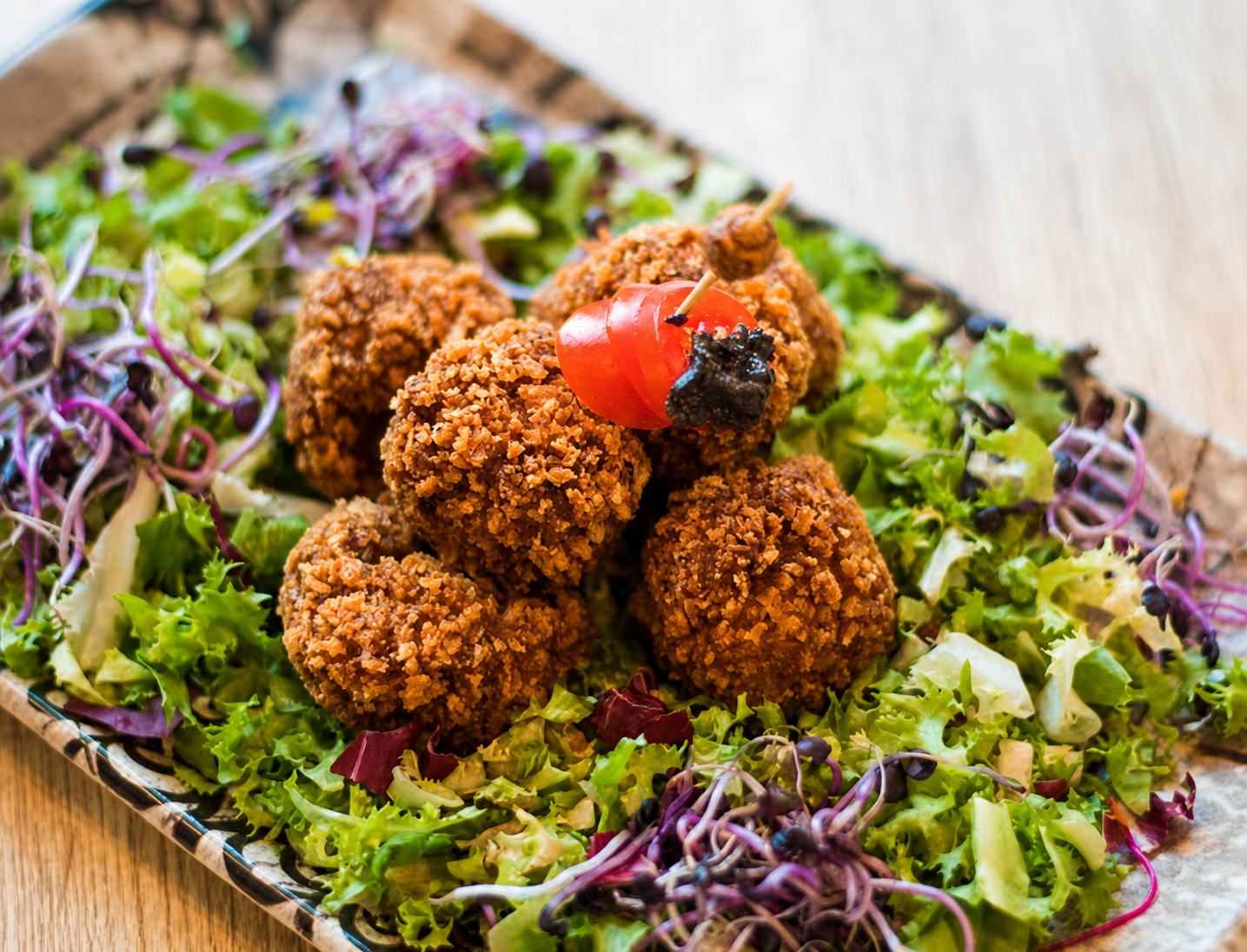
On Calle Alfarería, this family-run bar has the owner’s mother still involved in the kitchen. The gambas al ajillo croquetas are the dish to order: shrimp cooked in garlic, folded into bechamel, breadcrumbed and fried until they hold their shape but collapse when you bite in. Two croquetas and a glass of fino sherry: around €5. The montaditos with pringá are worth having if you have not eaten pringá yet. Small open sandwiches piled with the slow-cooked mixture of chorizo, morcilla, tocino and pork simmered for hours in puchero broth.
Bodeguita El 24
Calle Castilla, 18. A dive bar in the best possible sense. No decoration beyond what has accumulated over decades. The wine comes from large barrels behind the counter. The selection of montaditos is listed on a board and changes daily. Locals order quickly and in clusters, leaning across each other to pass plates down the bar. Get a small glass of manzanilla and eat standing up. Two montaditos and a small glass of wine: €4.50.
Casa Ruperto
A neighbourhood bar with accumulated character. Ask for los pajaritos. Small fried quail, seasoned with salt and nothing else, served immediately from the fryer. This is the confidence of a kitchen that knows its ingredients are good enough to need no decoration.
Blanca Paloma
Calle Pagés del Corro, 86. By the time you arrive here, it will likely be packed. This is where the neighbourhood eats on a Friday evening. Arrive before 9pm for any chance of bar space. The aubergine stuffed with prawns is the dish that makes people walk across the city: roasted aubergine filled with chopped prawns, tomato sofrito, and a small amount of cream, returned to the oven until the top colours. Order one per person. The anchovies with lemon work well as a counterpoint to the richness of everything else.
La Antigua Abacería
Part delicatessen, part tapas bar. The shelves are stacked with tinned fish, local wines, and Iberian cured meats. Sherry is poured directly from the barrel. A good place to slow down and eat something more considered: hand-sliced Iberian jamón, manchego with quince paste, the best local olive oil you can find. The staff know the provenance of everything they stock.
Bar Amarra
Calle Pagés del Corro, 43. If you have room, this bar is worth adding for the tortillita de camarones. These shrimp fritters are a speciality of the Cádiz coast and this kitchen makes them thin and lacy rather than thick and doughy, with small pink shrimp visible throughout the batter. Eaten hot from the fryer with a cold beer, they are one of the genuinely pleasurable things you can eat in Seville for under €5.
The dishes you need to know
Pringá is the definitive Seville tapa. Slow-cooked chorizo, morcilla, tocino, and various pork cuts simmered together in puchero broth until the fat and the meat and the blood sausage have all merged into a spreadable paste. Served on small pieces of toast. Rich, smoky, and deeply savoury.
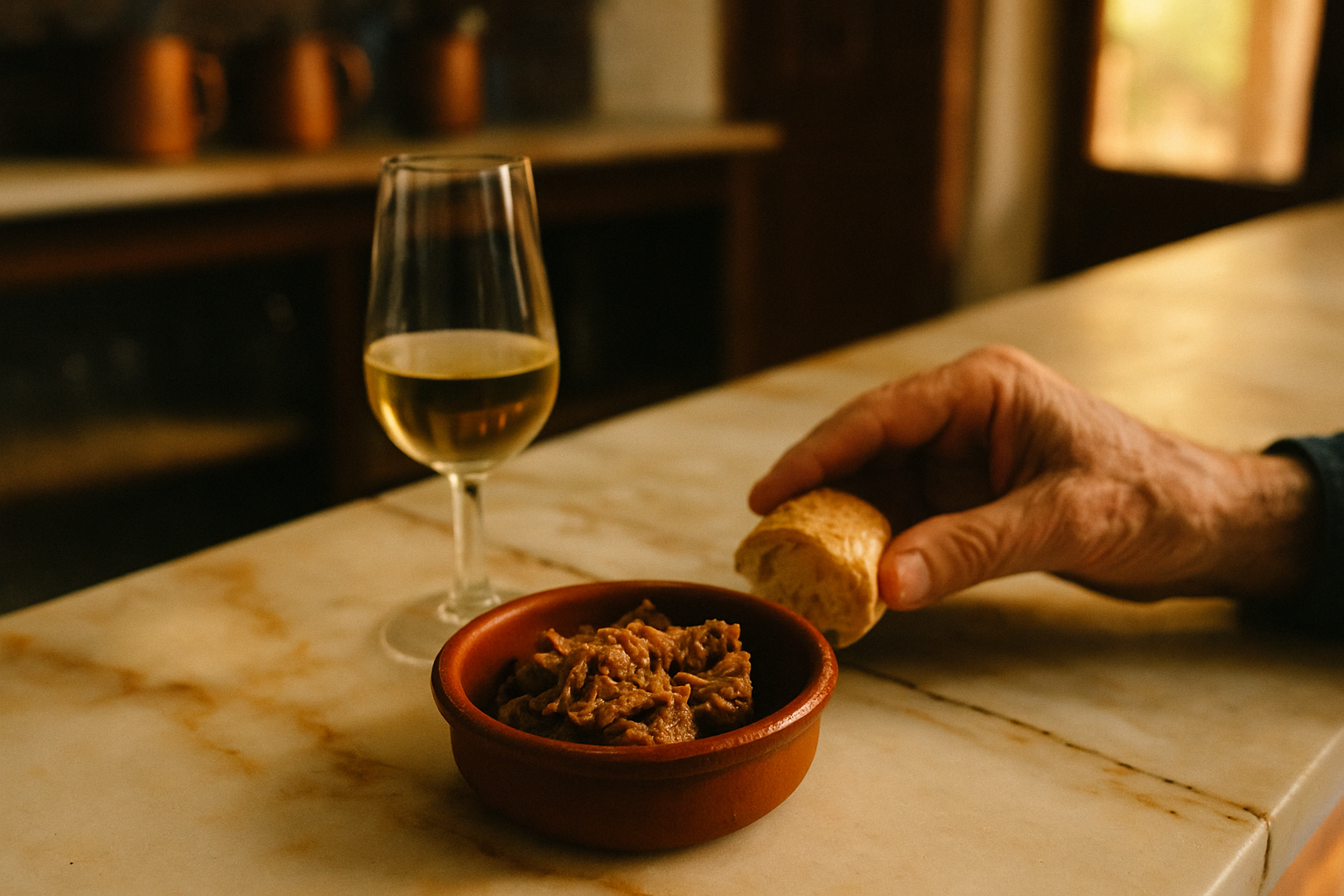
Espinacas con garbanzos are spinach and chickpeas cooked with a spiced paste of fried bread, cumin, garlic, and paprika. A legacy of both Moorish and Sephardic Jewish cooking. Always served in a small clay pot with breadsticks for dipping.
Rabo de toro is braised oxtail stew. Long-cooked, wine-heavy, gelatinous from the collagen in the bone. Triana serves it year-round.
Tortillita de camarones are shrimp fritters from the Cádiz tradition. Thin and crisp, made with flour and fresh shrimp and fried in olive oil. Closer in texture to a Japanese tempura than to a croqueta.
Fino and manzanilla are the two dry sherries to order. Fino is nutty and dry. Manzanilla is saltier and lighter, from Sanlúcar de Barrameda on the coast. Both are served cold and cost around €2 a glass.
Practical tips for your Triana crawl
When to go: Thursday to Saturday evenings from 8pm work best. Midday from 2pm is excellent for a slower lunch crawl. Sunday afternoons have a specific domestic energy: families eating together, fewer tourists, slower pace.
How much to budget: A proper crawl hitting six to eight bars costs €20 to €25 per person including drinks. Individual tapas cost €2.50 to €5. A glass of wine or beer costs €1.50 to €3. There is no tipping culture at tapas bars.
How to order: Find space at the bar, wait for eye contact with the bartender, and order one or two things at a time. Most Triana bars do not have English menus. Point if you need to. Nobody minds.
Getting there: Cross the Isabel II bridge on foot from the city centre. Eight minutes from the edge of the Arenal district. Bus Line 05 stops on Calle Pagés del Corro. From Santa Justa train station, take the metro to Plaza de Cuba and walk 11 minutes northwest toward the river.
Frequently asked questions about Triana tapas
What is the best tapas bar in Triana, Seville?
Blanca Paloma on Calle Pagés del Corro is widely considered the best for classic Triana tapas. The aubergine stuffed with prawns and anchovy dishes are exceptional. Sol y Sombra is the pick for braised meat. Bar Santa Ana is the safest first stop.
Is Triana worth visiting for food compared to central Seville?
Yes, without question. Tapas bars in central Seville, particularly around Santa Cruz, are more expensive and more tourist-oriented than those in Triana. Triana’s bars are patronised by the people who live there. The neighbourhood is fifteen minutes on foot from most major sights.
What is pringá and where is it from?
Pringá is a Sevillian tapa made from the leftover meats of puchero stew: typically chorizo, morcilla, tocino, and slow-cooked pork, shredded and mixed together while warm, then served on small pieces of toast. It originates in domestic Andalusian cooking and is specific to Seville and the surrounding region.
How long does a Triana tapas crawl take?
A proper crawl hitting six to eight bars takes three to four hours at the correct Spanish pace: one or two items per bar, a drink, ten minutes standing and talking, then moving on. The bars listed here total less than 2 kilometres of walking.
Are tapas in Triana free with drinks?
No. Tapas in Seville are not free. This is a common misunderstanding from visitors coming from Granada, where bars serve small free tapas with drinks. In Seville, tapas are ordered separately. A standard tapa costs €2.50 to €5.
What sherry should I drink in Triana?
Order fino or manzanilla. Both are bone-dry, chilled, and light enough for a multi-bar crawl without overwhelming the food. Manzanilla has a slightly saline quality that works particularly well with fried fish and seafood. Both cost around €2 per glass.
The bottom line
Triana is where the people who actually live in Seville go to eat. The bars are older, louder, and more direct than what you find in the tourist centre. The food is the product of a neighbourhood that has been feeding itself well for centuries without needing to advertise the fact. Cross the bridge, find the bar with the most locals in it, order the pringá, and stay for at least one more round than you planned.
Ready to explore more of Seville? Read our guide to eating in Santa Cruz without the tourist traps, or find out everything you need to know about rebujito at Feria de Abril.
Found a correction or an update?
Email us at hello@spainfoodguide.com — we keep our entries current.
Run a restaurant in Spain you think we should know?
Get featured →