
Gran Canaria: Fishing Villages, Gofio and Atlantic Wine
Gran Canaria is not a beach island with food on the side. It is a working kitchen built on a volcano in the middle of the Atlantic, where fishermen still unload vieja and cherne onto the same harbour tiles their grandfathers used, where a valley thirty minutes from the capital grows coffee and wine on the same terraced slope, and where two of the Canary Islands’ four MICHELIN stars now sit inside Las Palmas city limits. This is food shaped by isolation, by African winds, by volcanic rock, and by a stubborn refusal to become Tenerife.
This guide walks the island the way locals eat it. Start in the capital with market lunches and a two-star tasting menu. Move down the coast to the fishing villages where the daily catch is still cooked over a plancha by the guild that pulled it from the water. Climb inland to Agaete for wine and coffee grown in the same patch of soil, and finish in Teror for chorizo and a black pudding sweetened with sugar and anise.
TL;DR: Eating Gran Canaria in three moves
- Las Palmas capital. Mercado del Puerto for oysters and vermouth. Deliciosa Marta and Que Leche for the modern Canarian mid-range. Muxgo for one MICHELIN star, Poemas by Los Hermanos Padron for two.
- Fishing villages. Puerto de Mogan, Arguineguin and Agaete all run a Cofradia de Pescadores restaurant, the fishermen’s guild kitchen, where the catch moves from boat to plate in under two hours.
- Inland. Agaete valley for Bodegas Los Berrazales, the only vineyard in Europe that also grows commercial coffee. Teror for chorizo de Teror and morcilla dulce, the sweet black pudding Sunday markets run on.
Budget four days. Hire a car. Eat late.
Why Gran Canaria tastes different
Gran Canaria sits 150 kilometres off the coast of Morocco and 2,000 kilometres from Madrid. Its food was shaped by that distance. The Michelin Guide for Canarias now recognises a Canarian cooking identity distinct from mainland Spain, built on volcanic soils, African trade winds, and a UNESCO-listed grain called gofio that was ground by the Guanches long before the Spanish arrived.
Three things set the island’s table. The sea is deep and cold, so the fish is leaner and the stews are richer. The volcanic soil holds water for tough vines and produces Listan Negro and Listan Blanco grapes you cannot grow anywhere else in Europe. And the altitude range, from sea level to 1,949 metres at Pico de las Nieves, lets one island produce bananas, avocados, coffee, wine, almonds and high-mountain sheep cheese within a 40-minute drive.
The result is a food culture that punches far above its 850,000-person population. Four MICHELIN stars across the archipelago in 2025. A protected Denomination of Origin for island wine since 2006. A cheese, queso de flor, that is coagulated with thistle flowers and nothing else.
Las Palmas: the capital kitchen
Las Palmas de Gran Canaria is a port city first and a beach city second. Eating here follows the geography: start at the harbour, work inland through the old town, and climb to the modern dining in the Ciudad Jardin and Santa Catalina neighbourhoods.
Begin at Mercado del Puerto, the 1891 cast-iron market building near Playa de Las Canteras. Tapas stalls and oyster bars run a permanent midday vermouth hour. Order a dozen oysters from the Galician producer, a glass of Bandama Listan Blanco at 3.50 euros, and a plate of chicharros fritos, small fried mackerel the locals eat with their fingers. The market shares its DNA with Valencia’s Mercado Central but runs on seafood instead of paddy rice.
For the modern Canarian mid-range, book two tables.
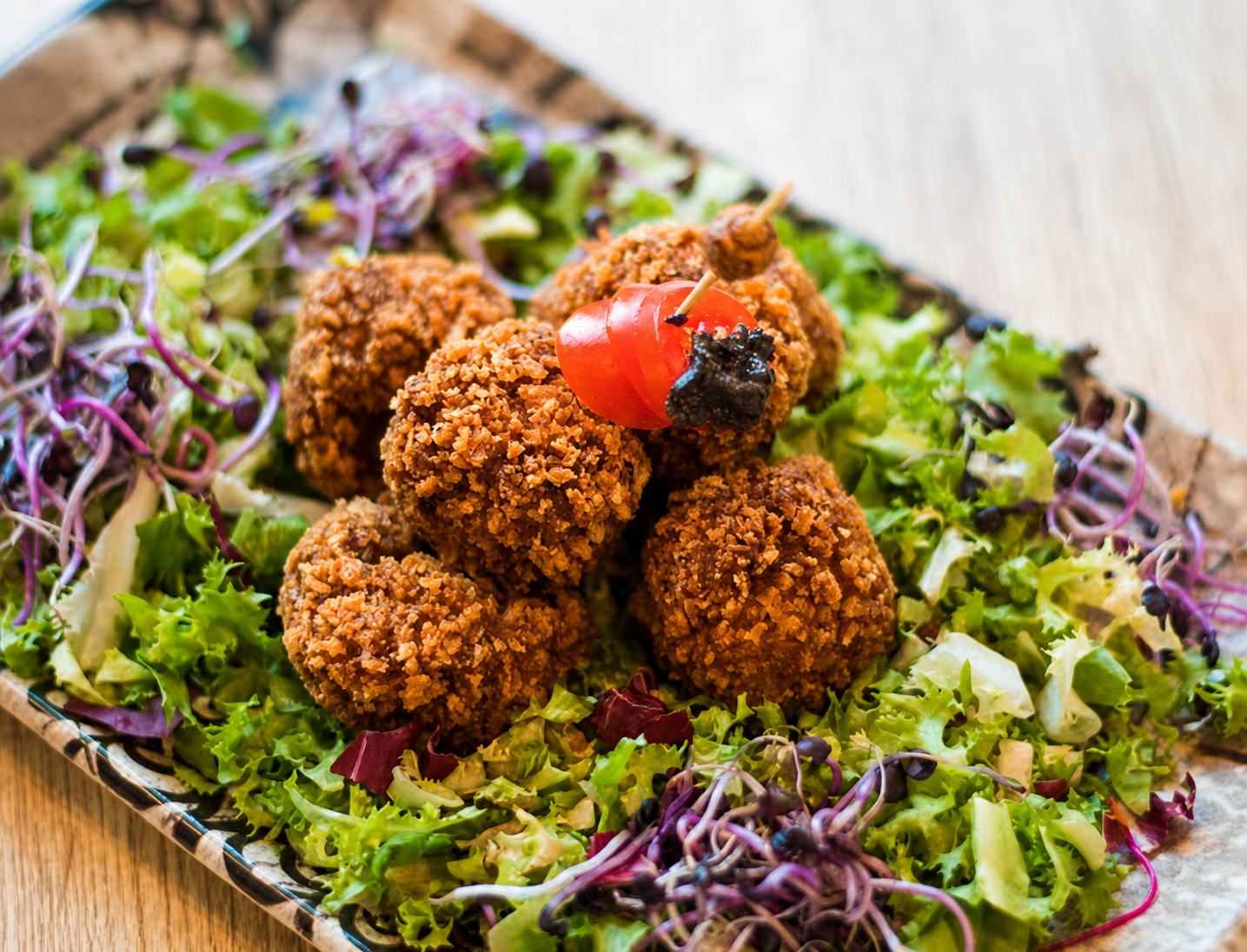
Deliciosa Marta in Triana is the city’s unofficial best-kept secret, a 20-seat room run by chef Marta Rodriguez. The menu rewrites local classics: a ropa vieja croqueta, vieja sashimi with gofio crumble, a Tenerife black pig cheek braised in Malvasia. Mains run 22 to 28 euros. Book a week out.
Que Leche on Calle Torres is the sibling operation, louder, younger, and harder to reserve. The name is Canarian slang. The tuna tartare with avocado and kimchi mojo is one of the best plates on the island for under 20 euros.
At the top of the city, Muxgo holds one MICHELIN star. Chef Borja Marrero runs a strict kilometre-zero kitchen, most of it sourced from his own farm in Tejeda up in the caldera. The 12-course tasting menu is 98 euros. Expect things like goat from the farm, hand-ground gofio, and a cheese course built entirely from his own dairy.
The island’s current showpiece is Poemas by Los Hermanos Padron inside the Santa Catalina hotel. Juan Carlos and Jonathan Padron moved their two-star operation from Tenerife to Gran Canaria in 2023, and the restaurant held its two MICHELIN stars in the 2025 guide. The 18-course tasting is 185 euros, with a wine pairing that leans hard on Canarian producers. Book a month ahead. Ask for the corner table.
Fishing villages: the Cofradia circuit
The south and west coast of Gran Canaria still runs on the fishing guild. The Cofradia de Pescadores is a legal cooperative owned by the boats themselves, and the three main ports each run a small restaurant at the back of the quay that sells whatever came in that morning. The menu changes every day. The prices are set by the guild. The experience is as close to eating what a fisherman eats as a traveller is going to get.
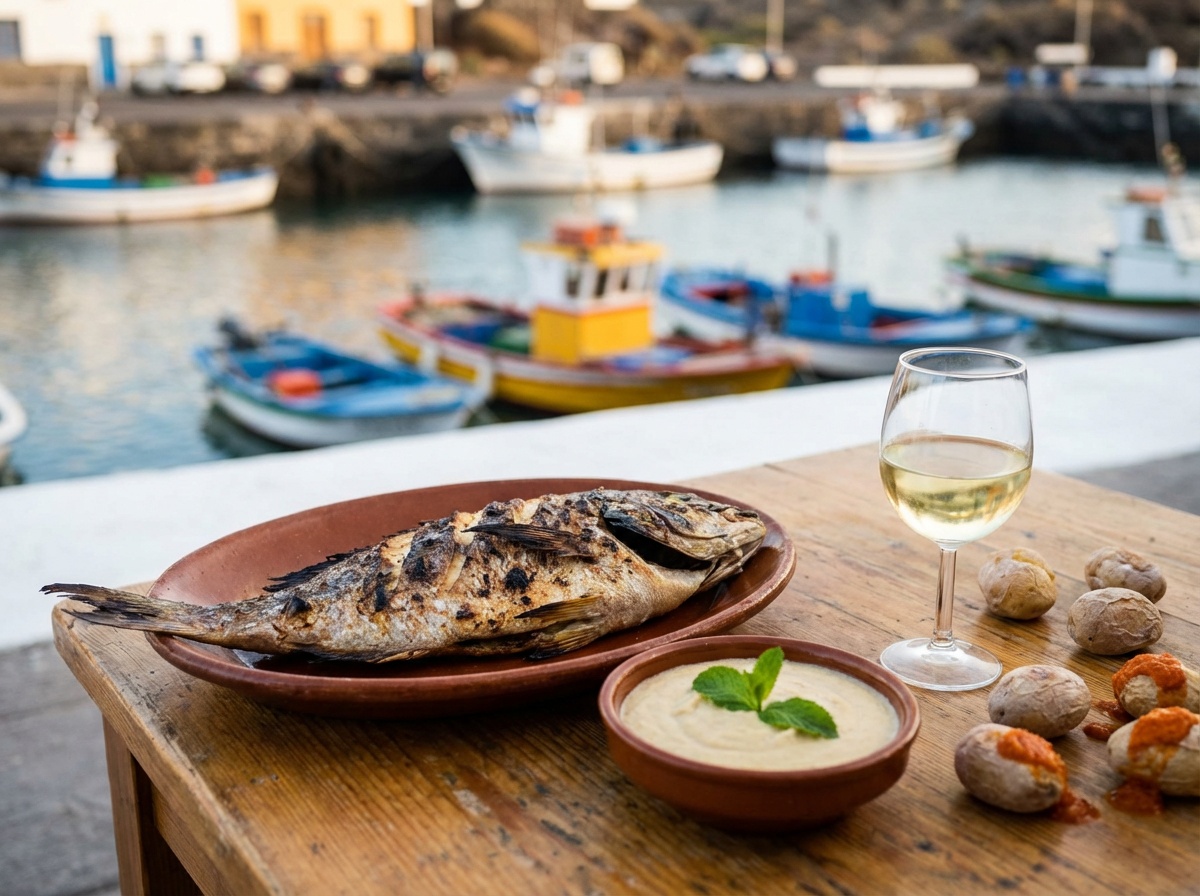
Start in Puerto de Mogan, the postcard harbour on the southwest tip. Locals call it “Little Venice” because of the canals linking the marina to the old fishing port, and the ground-floor whitewashed houses. Skip the tourist restaurants on the main waterfront. Walk to the Cofradia kitchen on the back quay. Order vieja a la espalda, the island’s signature parrotfish butterflied and grilled skin-up on a hot plancha. It arrives with papas arrugadas, mojo rojo and mojo verde, and a small bowl of gofio escaldado. A full plate runs 16 to 22 euros depending on the day.
Drive 12 minutes east to Arguineguin, a working fishing town with almost no tourist-facing restaurants. The Cofradia here opens for lunch only, Monday to Saturday, and is the most local-feeling of the three. The house order is caldo de pescado, a clear fish broth with slivers of cherne and a dab of mojo, followed by whatever sits on the ice counter by the door. The fishermen themselves eat here after the 11am auction. Go at 1:30pm.
Finish the circuit on the northwest coast in Agaete, in the Puerto de las Nieves harbour. The seafront restaurants are better than Mogan and more developed than Arguineguin. The Cofradia here sits between two old chapel walls and runs on a reservation list of locals. Two streets back, family-run Casa Fernando and El Perola have been serving sancocho canario every Friday for forty years, a salt-cod stew served with sweet potato and a mojo that changes with the cook.
Three villages, three guild restaurants, three different rhythms. A full day drive covers all three with time for swimming.
Agaete valley: coffee and wine in one glass
Behind the Agaete harbour, a narrow ravine climbs inland for 12 kilometres. This is the Agaete valley, a microclimate created by the African trade winds hitting the northwest face of the island and dropping their moisture on a 300 to 900-metre terraced slope. It is the only place in Europe that grows commercial coffee.
Bodegas Los Berrazales is the family operation at the top of the valley. Victor Lugo and his father farm eight hectares of vines alongside a half-hectare of Arabica coffee, plus oranges, mangoes and avocados on the lower terraces. The 25-euro tasting includes four wines, a coffee flight from their own beans, and a plate of local goat cheese and orange marmalade from the farm. Book ahead. The road in is tight.
The wines are worth the detour. The Listan Negro red is light, volcanic and earthy, somewhere between a Beaujolais and a young Etna Rosso. The Listan Blanco white is saline and citrus-driven, a natural match for vieja. They also make a Moscatel dessert wine that pairs with bienmesabe, the almond-and-honey paste the locals eat with a spoon.
The Denominacion de Origen Gran Canaria covers the whole island, but Agaete is the heartland. A dozen producers farm vines between 300 and 1,000 metres on volcanic soil. Most of the production stays on the island. The bottles you taste in the valley are the bottles you drink in Las Palmas that evening.
Teror and the inland market
Head northeast from Agaete into the highlands and the road climbs into Teror, a town of 12,000 people that has hosted a Sunday market every week since the sixteenth century. The market runs from 8am to 2pm around the Basilica de Nuestra Senora del Pino, and locals drive in from across the island to buy two things.
Chorizo de Teror is the first. A paprika-heavy, soft-textured spreadable pork sausage, closer to sobrasada than to the firm Castilian chorizo most visitors know. The Protected Designation of Origin applies only to producers inside the municipality. Spread it on bread, eat it with a glass of Listan Negro. Three generations of Teror families make their own version.
Morcilla dulce is the second. Gran Canaria’s sweet black pudding is a strange, wonderful thing. Pork blood, pork fat, raisins, almonds, sugar and anise, cooked in the casing until it sets. It is served in slices with a small cup of coffee, or crumbled over roast sweet potato. First-time eaters find it confusing. Second-time eaters buy a vacuum pack to take home.
Finish the market with a slice of queso de flor, the DOP sheep and cow’s milk cheese from the Guia region coagulated with thistle flowers instead of animal rennet. It is vegetarian, slightly bitter, and one of only three cheeses in Europe made this way. A quarter-wheel is 8 to 10 euros.
Dishes to know before you eat
A short glossary worth memorising. These are the plates you will see on every serious menu, and the ones that separate a visitor’s lunch from a local one.
- Sancocho canario. The Sunday stew. Salt-cured cherne or corvina, sweet potatoes, regular potatoes, pella de gofio (a gofio dumpling), red and green mojo on the side. Served family-style.
- Ropa vieja canaria. Shredded beef and chickpea stew, heavier than the Cuban version that borrowed the name. Often served with fried egg on top.
- Vieja a la espalda. Parrotfish butterflied and grilled skin-up on a plancha. The island’s signature fish.
- Gofio escaldado. Toasted corn or wheat flour whisked into hot fish broth with mint and onion, eaten with a raw onion wedge and a spoon. Gofio is on UNESCO’s list of intangible heritage.
- Bienmesabe. Almond-and-honey dessert paste, eaten with a spoon or over ice cream. Literally translates as “tastes good to me.”
- Queso de flor. Thistle-coagulated sheep and cow’s milk cheese from Guia. DOP since 1999.
- Papas arrugadas. Small potatoes boiled whole in heavily salted water until the skins wrinkle. Served with red and green mojo.
- Mojo rojo and mojo verde. The island’s two sauces. Red is paprika, garlic, cumin, oil. Green is coriander or parsley, garlic, oil. Every plate gets both.
Common mistakes visitors make
Four things go wrong in a typical week on the island, every one of them fixable.
First, staying in the south and never driving north. The resort strip between Maspalomas and Puerto Rico is the tourist economy. Las Palmas, Agaete, Teror and the fishing villages are the real island. Hire a car on day one.
Second, eating in the marina-front restaurants in Puerto de Mogan. The Cofradia kitchen is 200 metres away, costs half as much, and serves better fish. Walk past the menu boards with photos on them.
Third, ordering paella. It is not a Canarian dish. Order sancocho, ropa vieja, or rice with rabbit from the highlands if you want rice.
Fourth, skipping the wine. Canarian wine is the single most surprising part of the trip for most visitors. The island grows grapes that phylloxera never reached, which makes its vines some of the oldest ungrafted rootstock in Europe. Drink local, drink white first, climb to the reds at dinner.
FAQ
What are the best fishing village restaurants in Gran Canaria?
The three Cofradia de Pescadores kitchens in Puerto de Mogan, Arguineguin and Agaete serve the daily catch at fixed guild prices. Expect vieja a la espalda, caldo de pescado and sancocho canario for 16 to 22 euros a main. Arguineguin is the most local, Mogan the most scenic, Agaete the most developed.
Which Gran Canaria restaurants have MICHELIN stars in 2025?
Two. Muxgo holds one star under chef Borja Marrero, with a kilometre-zero menu sourced from Tejeda. Poemas by Los Hermanos Padron holds two stars inside the Santa Catalina hotel in Las Palmas, making it the highest-rated restaurant in the Canary Islands archipelago.
What is gofio and how do Canarians eat it?
Gofio is toasted and ground corn, wheat or barley flour, ground by the Guanches before the Spanish arrived and now UNESCO-recognised intangible heritage. Canarians eat it three ways: whisked into hot fish broth as gofio escaldado, as a dumpling called pella de gofio inside sancocho, or dusted over ice cream and bananas for breakfast.
Can I really drink wine and coffee from the same valley in Gran Canaria?
Yes. The Agaete valley on the northwest coast is the only place in Europe that grows commercial coffee, and Bodegas Los Berrazales is the single vineyard that farms both. A 25-euro tasting covers four wines, a coffee flight and a cheese plate. Book ahead.
What is a Cofradia de Pescadores restaurant?
A Cofradia is a legal fishermen’s cooperative. Most Gran Canaria fishing villages run a small cooperative restaurant at the back of the harbour where the day’s catch is sold at guild prices and cooked simply on a plancha. The menu depends on what the boats brought in that morning.
How many days do I need to eat Gran Canaria properly?
Four. Day one, Las Palmas and the capital. Day two, the Cofradia circuit from Mogan to Arguineguin to Agaete. Day three, the Agaete valley wine and coffee tasting. Day four, Teror Sunday market, followed by a MICHELIN-star dinner in Las Palmas. Rent a car. Eat the late lunch, skip the early dinner.
The takeaway
Gran Canaria rewards the traveller who books the car, skips the resort strip, and builds the trip around three things: the harbour at Puerto de Mogan, the valley at Agaete, and the tasting counter at Poemas. The island will not beg you to notice it. Its food is too quiet for that. But sit down at a Cofradia kitchen with a glass of Listan Blanco and a plate of vieja a la espalda, and the case makes itself.
Found a correction or an update?
Email us at hello@spainfoodguide.com — we keep our entries current.
Run a restaurant in Spain you think we should know?
Get featured →