
Barcelona has a breakfast culture that most visitors never encounter because they eat where they stay or stop at the first café they see near the hotel. The city’s residents breakfast at specific types of places that are not hard to find but require knowing what to look for.
This is how Barcelonans actually eat breakfast, where they do it, and what they order.
The Catalan breakfast
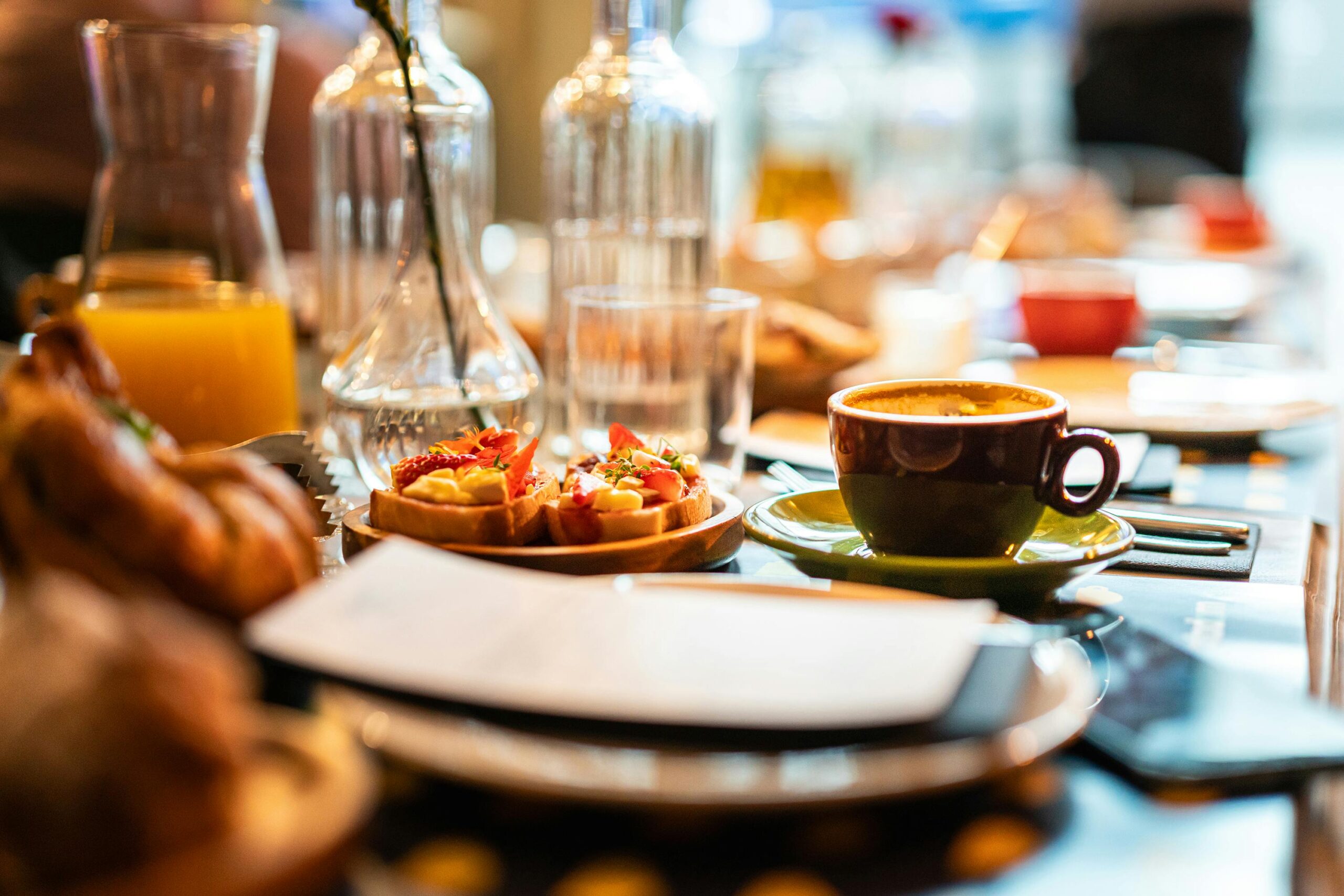
The standard Barcelona breakfast is modest by northern European standards. A cortado (café con leche in smaller quantities) or a café amb llet (Catalan: coffee with milk), served with one of three things: a croissant, an ensaïmada, or pa amb tomàquet (bread rubbed with tomato and olive oil). This is eaten standing at a marble bar counter, takes fifteen minutes, and costs between €2.50 and €4.
The ensaïmada is the most distinctly Catalan morning pastry: a coiled spiral of very light, slightly sweet dough dusted with icing sugar, airy in texture and mild in flavour. It originated in Mallorca and spread to the mainland. The best versions are made fresh daily and have a delicate flakiness that factory versions lack. A good ensaïmada with a coffee is the correct Barcelona breakfast.
Pa amb tomàquet for breakfast appears at the more traditional bars, particularly in working-class and residential neighbourhoods away from the tourist centre. Toasted bread, rubbed with tomato and olive oil, is eaten with a coffee and sometimes with a slice of jamón or cheese alongside. It is savoury, filling, and energising in a way that a pastry is not.
Where locals actually eat breakfast
Granja Viader
On Carrer d’en Xuclà in the Raval, Granja Viader has been operating since 1870. It is the oldest surviving granja (milk bar) in Barcelona and the place where suís — hot chocolate with a whipped cream float — was invented. The breakfast here is traditional Catalan: ensaïmada, croissant, or toast, with coffee or hot chocolate. The room is tiled, slightly worn, and staffed by people who have been there long enough to know the regulars. Come between 9am and 11am.
Bar Calders
On Carrer del Parlament in Sant Antoni, the neighbourhood that has quietly replaced El Born as Barcelona’s most active food area. Bar Calders has a large sunny terrace, excellent coffee, and serves the kind of breakfast that a local professional eats on their way to work: cortado, toast with tomato, possibly an egg dish on weekends. It gets busy after 10am. Arrive before then or accept a short wait for a terrace table.
Federal Café
On Carrer del Parlament, near Bar Calders. An Australian-influenced café that serves very good brunch-style breakfasts alongside the standard Catalan options. The avocado toast exists here and is better than it has any right to be. The coffee is excellent. This is where Barcelona’s internationally-minded residents eat on weekday mornings and where the queue forms on weekend mornings. Come early or come after 11.30am when the first wave has left.
Bar Marsella
Not a breakfast bar, but a reference point: the oldest continuously operating bar in Barcelona (since 1820), on Carrer de Sant Pau in the Raval. It opens at 10pm. Worth mentioning only because people confuse it with the granja tradition — it is not a morning place. The absinthe here is old stock that has been on the shelves for decades. Come late, not early.
La Pepita
A sandwich shop on Carrer de Montserrat in the Gràcia neighbourhood that opens early and serves excellent breakfast bocadillos (filled rolls) alongside the standard coffee and pastry options. The neighbourhood around Plaça de la Vila de Gràcia has some of the best local-resident breakfast culture in the city, with several small cafés that have been serving the same neighbourhood for decades.
Els Quatre Gats
On Carrer de Montsió in the Gothic Quarter. Famously the meeting place of Modernista artists including Picasso in the 1890s. The breakfast here is correct and the setting is extraordinary — high ceilings, original Modernista furniture, artworks on the walls. More expensive than a neighbourhood café (a coffee and croissant costs around €7) but the experience is worth the premium once. Come at 9am before the lunch tourists arrive.
The coffee
Barcelona’s coffee culture is more developed than most Spanish cities, partly because of the city’s connection to Italian design and culture and partly because of the specialist roasters that have opened in the last decade. The standard coffee order at a traditional bar is:
Café con leche / Cafè amb llet: Half espresso, half hot milk. The most common morning coffee in Spain. Ask for it at a marble bar counter and it arrives in a glass, which is the correct vessel.
Cortado / Tallat: Espresso cut with a small amount of hot milk. Stronger than café con leche, appropriate for mid-morning when you need the coffee rather than the volume.
Café solo: Espresso, no milk. What the bar staff drink themselves.
At specialist coffee bars (there are several in Gràcia, Sant Antoni, and Poblenou), filter coffee, V60, and other preparation methods are available. These are not traditional Barcelona coffee culture but the quality is high.
Churros for breakfast
Churros are not a daily breakfast in Barcelona. They are a weekend treat, eaten on Sunday mornings or after a late night, from a dedicated churrería or a churros stand. The Barcelonan version is thinner than the Madrid version and eaten with melted chocolate rather than thick hot chocolate for dipping.
Churrería La Lluna on Carrer dels Banys Nous in the Gothic Quarter is a long-established option. Any Sunday morning, the churrerías in the Barceloneta and Eixample neighbourhoods have queues of local families that indicate quality.
What time is breakfast in Barcelona
Working Barcelonans eat a first breakfast at home (coffee only, or coffee with a biscuit) between 7am and 8am, then stop at a bar for a second breakfast mid-morning, between 9.30am and 11am. This is the breakfast that tourists miss: the mid-morning bar stop that functions as a break and a social ritual as much as a meal.
Weekend breakfast extends until noon or 12.30pm, which is why the good breakfast bars are busy on Saturday and Sunday mornings until midday. Lunch in Barcelona begins at 1.30pm at the earliest, so there is no pressure to clear the breakfast tables early.
Neighbourhoods for breakfast
Sant Antoni: The best neighbourhood for a contemporary Barcelona breakfast. Carrer del Parlament and the surrounding streets have a high density of good cafés and the most active local morning culture in the city.
Gràcia: More residential, slightly more traditional. The plazas (Plaça de la Vila de Gràcia, Plaça del Sol) have good surrounding cafés and a Sunday morning atmosphere that is one of Barcelona’s pleasures.
Barceloneta: The beach neighbourhood. The breakfast bars here open early for the local fishing and early-morning crowd. Pa amb tomàquet with anchovies or jamón at 8am, looking toward the sea, is an excellent way to begin a day.
Gothic Quarter and El Born: Concentrated tourist areas where the breakfast quality varies significantly. The best bars are on the side streets; avoid anywhere with photographs of food on the menu board outside.
Frequently asked questions
What do Spanish people eat for breakfast in Barcelona?
A coffee (café con leche or cortado) with a croissant, ensaïmada, or pa amb tomàquet. The typical Barcelona breakfast is small, quick, and eaten at a bar counter. Many residents have only coffee at home in the morning and eat a second breakfast at a bar between 9.30am and 11am.
What is an ensaïmada?
A spiral pastry from Mallorca, light and slightly sweet, dusted with icing sugar. The dough is made with saïm (lard), which gives it its name and its distinctive flakiness. Fresh ensaïmades are significantly better than packaged versions — at a good granja or pastry counter, they are made the same morning.
Where is the best coffee in Barcelona?
For traditional café culture: Granja Viader in the Raval, any marble-counter bar in Sant Antoni or Gràcia. For specialty coffee: multiple roasters have opened in Sant Antoni, Gràcia, and Poblenou in the last decade. The neighbourhood café is more representative of how Barcelonans drink coffee than any specialist bar.
Is brunch popular in Barcelona?
Brunch has established itself in Barcelona over the last decade, primarily in Sant Antoni, the Eixample, and Gràcia. Federal Café and several similar spots do it well. Traditional Barcelona residents consider brunch foreign but it has become embedded in weekend food culture for the city’s younger professional population.
More Barcelona food? Read our guide to the El Born tapas crawl and the Barcelona vermut trail.