
Madrid does not sleep. This is a fact about the city that every guide book mentions and that turns out to be more literally true than you expect. The restaurants that open at 9pm and run until 1am are one layer. The bars that open at midnight and run until 5am are another. The churrerías that open at 6am for the people leaving those bars are a third. Between them, Madrid offers a continuous eating circuit that runs from dinner through to breakfast without a gap.
This is a guide to eating late in Madrid — not just the hours, but the specific places and the logic of the late-night food circuit.
The Madrid dinner timeline
Dinner in Madrid begins at 9pm. Not 7pm, not 8pm. Restaurants fill between 9.30pm and 10.30pm. By Spanish standards this is late; by Madrid standards it is simply when dinner happens. Kitchens close between 11.30pm and midnight at most restaurants. If you arrive at 11pm at a traditional Madrid restaurant, you will be seated and fed without comment.
The late part of late-night eating in Madrid begins after dinner — from midnight onward. At this point, the eating options shift from full restaurant service to bar food: tapas, raciones, small plates, bocadillos. The bars that operate midnight to 5am in Madrid have kitchens, and those kitchens produce food that is specifically calibrated for the hour.
Where to eat at midnight
Taberna La Carmencita
On Calle de la Libertad, 16, in Chueca. Madrid’s oldest taberna (founded 1854) that still operates evening and late-night service. The kitchen runs until well past midnight and serves traditional Madrid dishes — rabo de toro, huevos estrellados (fried eggs with potatoes and jamón), and croquetas — alongside a wine list of respectable depth. The dining room looks as it has for a century: tiled walls, dark wood, soft lighting. Not a late-night bar in the chaotic sense — a proper restaurant that happens to serve until late.
Estado Puro
On Plaza de Cánovas del Castillo, near the Reina Sofía museum. A tapas bar associated with chef Paco Roncero that serves modern Spanish small plates until late. The kitchen quality is noticeably above the average late-night bar and the location, on one of the city’s better plazas, makes it a good option for a last proper meal before moving on to the bar circuit.
Casa Toni
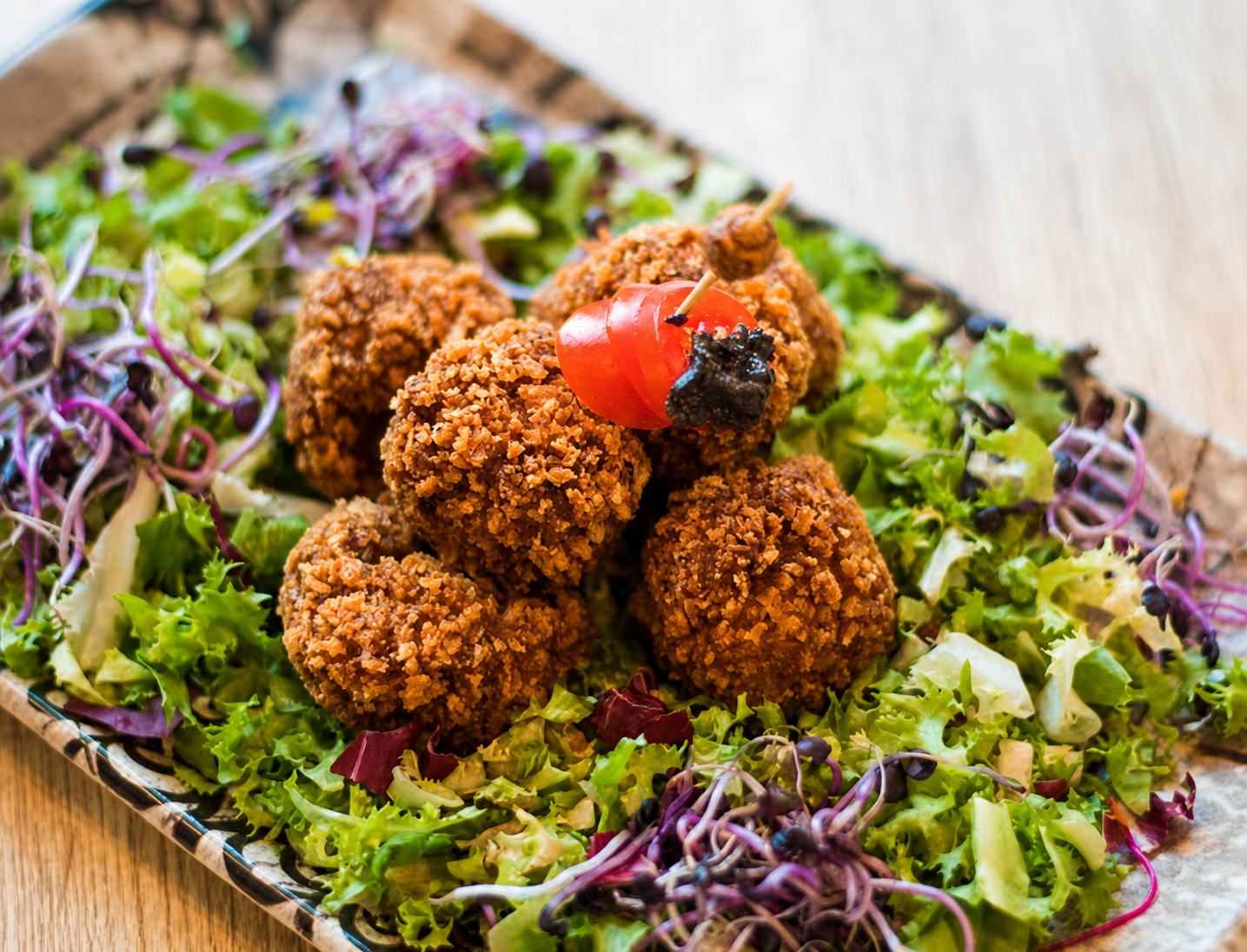
On Calle de la Cruz, 14, near Sol. A traditional bar that has been serving the same menu — patatas bravas, boquerones en vinagre, champiñones al ajillo (garlic mushrooms), and calamares — to the same neighbourhood for decades. It runs late on weekends and is one of the honest old places in a part of central Madrid that has otherwise changed considerably. The patatas bravas are the correct version: fried potato cubes with a spicy sauce on top, not the alioli-drenched version that has spread from Valencia.
The 2am to 4am circuit
Between 2am and 4am, the eating options are more specific. The restaurants have closed. The bars that serve proper food at this hour are a smaller subset of what was available at midnight. The food becomes simpler and more direct.
Bocadillos: Fried squid sandwiches (bocadillo de calamares) are available at several bars near Sol and the nightlife zones until 3am or 4am. The quality at this hour is lower than at lunchtime — the squid is often from the second or third batch of the day — but the combination of hot fried food and bread at 3am serves a specific function that gastronomy does not need to govern.
Patatas bravas and raciones: The bars in Malasaña, Chueca, and Huertas that stay open until 5am almost all have a food menu that includes the standard bar food canon: patatas bravas, croquetas, jamón, tortilla. The kitchen quality varies and at 3am the kitchen has been running for eight hours. Order the simplest things — cold cuts, cheese, bread — and you will eat better than if you attempt something that requires active cooking.
El Tigre: On Calle de las Infantas, 30, in Chueca. A bar famous for giving away enormous quantities of free tapas with each drink order — the caña arrives with a plate of fried food, bread, and whatever the kitchen is doing that evening. The quality of the free tapas is low. The quantity is extraordinary. Open until very late at weekends and genuinely useful at 2am when the goal is food of any kind rather than food of distinction.
Post-club eating: 4am to 7am
The post-club eating circuit in Madrid is dominated by two options: churros and chocolate, and bocadillos at the 24-hour bars near the major nightlife zones.
Chocolatería San Ginés (Pasadizo de San Ginés, off Calle Arenal): Open 24 hours. The most famous option and genuinely excellent. The churros are fried to order and the chocolate is the correct thick consistency. At 5am on a Saturday, the clientele is entirely people leaving clubs and bars, which is exactly the context the place was built for.
El Brillante (Plaza del Emperador Carlos V): Also open early and famous for its bocadillo de calamares. The post-club squid sandwich, eaten at a standing counter at 6am with a glass of orange juice, is a Madrid tradition that requires no further justification.
The bakeries: By 6am, the early-opening bakeries in every neighbourhood are producing fresh bread. A warm baguette bought directly from a bakery at 6am, eaten plain or with a piece of jamón from the 24-hour supermarket on Calle Fuencarral, is the simplest and most satisfying version of late-night eating in the city.
The neighbourhoods for late-night eating
Huertas: The densest concentration of bars with late kitchens in central Madrid. Calle de las Huertas and the surrounding streets run at full capacity until 4am on weekends.
Malasaña: The bohemian neighbourhood north of Gran Vía, with a mix of old neighbourhood bars and newer operations. Calle de la Palma and Calle del Pez have several bars that serve food until 3am or 4am.
Chueca: The LGBTQ+ neighbourhood, which runs later than most parts of Madrid on weekends. The bars on Calle de Hortaleza and Calle de Fuencarral have kitchens that operate until at least 3am.
La Latina: Quieter than the above after midnight but has several late-opening tabernas and bars that serve traditional food until 1am or 2am.
Frequently asked questions
What time do restaurants close in Madrid?
Most traditional restaurants stop seating between 11.30pm and midnight. Bars with kitchen service run later — until 1am or 2am at most, 3am to 4am at the late-night bars in Huertas, Malasaña, and Chueca.
What do Madrileños eat after a night out?
Churros and chocolate is the most traditional post-club food in Madrid. Bocadillo de calamares is the alternative. Both are available at 5am and 6am at specific places near the city’s main nightlife zones.
Is it safe to eat late at night in Madrid?
Yes. Madrid’s late-night food circuit operates in well-lit, populated areas. The neighbourhoods most associated with late eating — Huertas, Malasaña, Chueca — are busy until dawn on weekends. Normal urban awareness is appropriate, as in any major city at 3am.
Can you eat dinner at 11pm in Madrid?
Yes, without difficulty. Arriving at a Madrid restaurant at 11pm on a weekday will be met with normal service. On a weekend, you may be eating alongside tables that arrived at 9.30pm and are still on their second bottle of wine. This is standard Madrid dinner service, not an anomaly.
More Madrid food? Read our guide to the best churros and chocolate in Madrid and the La Latina Sunday vermut circuit.
Found a correction or an update?
Email us at hello@spainfoodguide.com — we keep our entries current.
Run a restaurant in Spain you think we should know?
Get featured →