
El Born is Barcelona’s medieval commercial quarter, built on a grid of narrow streets between the Gothic Quarter and the Barceloneta beach. For the last two decades it has been the neighbourhood most associated with Barcelona’s serious bar eating — the place where the city’s food culture shifted from traditional Catalan cooking toward something more eclectic and precise, without losing the fundamental Spanish commitment to eating at a bar with a drink in your hand.
A tapas crawl through El Born is not a tourist activity. It is what Barcelona residents do on Friday evenings and Sunday afternoons. The format is straightforward: walk slowly, stop often, order two or three things at each bar, move on before you are tempted to order too many more. The goal is variety across several places rather than a full meal in one.
How an El Born tapas crawl works
Start around 7pm, which is when Barcelona’s evening eating begins in earnest. The bars in El Born fill between 8pm and 10pm. Starting at 7pm gives you the best spots at the bar, the freshest plates, and the energy of a neighbourhood coming alive for the evening before it becomes impossible to move.
Plan three to five stops over two to three hours. Order two to three plates at each stop. Drink one glass per stop — cava, vermut, a caña of local beer, or a glass of natural wine depending on the bar. Move when you feel like moving, not when a timer goes off. The crawl structure is a guide, not a schedule.
The bars
Bar del Pla
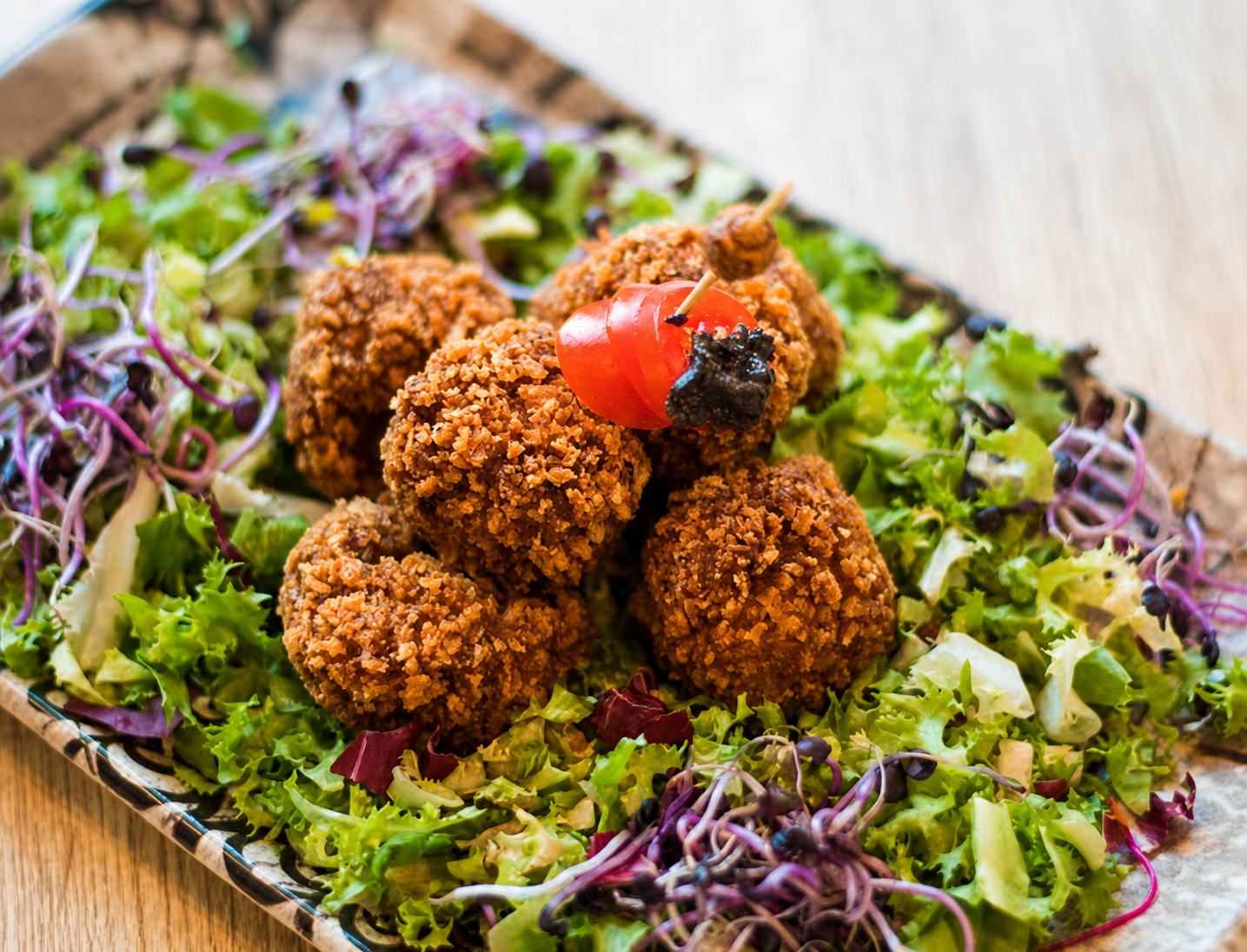
On Carrer de la Montcada, one of the most beautiful medieval streets in Barcelona. Bar del Pla serves Catalan tapas with a precision that the neighbourhood’s other bars do not always match. The croquetas de bacallà (salt cod croquettes) are the best in El Born. The cap i pota (slow-cooked calf’s head and trotters in tomato sauce) is the dish that most people skip because it sounds challenging and most locals order because it is excellent. The vermut on tap is good. The wine list is short and well-chosen.
El Xampanyet
The most famous bar in El Born and one of the most famous in Barcelona. On Carrer de Montcada since 1929. They serve their own house cava, which is slightly sweet and not the style that serious cava drinkers order, but which is correct for this bar in this context. The anchovies are the dish to order here: fat Cantabrian anchovies in olive oil on bread. The bar fills early. Come at 7pm or accept that you may be standing in the street looking in through the window.
Bar Brutal
A natural wine bar on Carrer de la Princesa that has become one of the reference points for Barcelona’s natural wine scene. The wine list runs to several hundred bottles from small producers across Spain, France, and Italy. The food is serious: charcuterie, excellent cheese, and a small kitchen menu that changes frequently. Come here when you want to slow down, sit at a table, and drink a proper bottle rather than a glass at the bar.
Paradiso
A cocktail bar hidden behind a pastrami sandwich shop on Carrer de Rera Palau. Walk through the sandwich counter and the fridge door to find a narrow bar doing serious cocktails. This is not traditional tapas — it is a Barcelona interpretation of what a bar can be. The pastrami sandwiches from the front section are genuinely good. The cocktails are technically excellent. Come here for the end of the crawl when you want something different.
La Vinya del Senyor
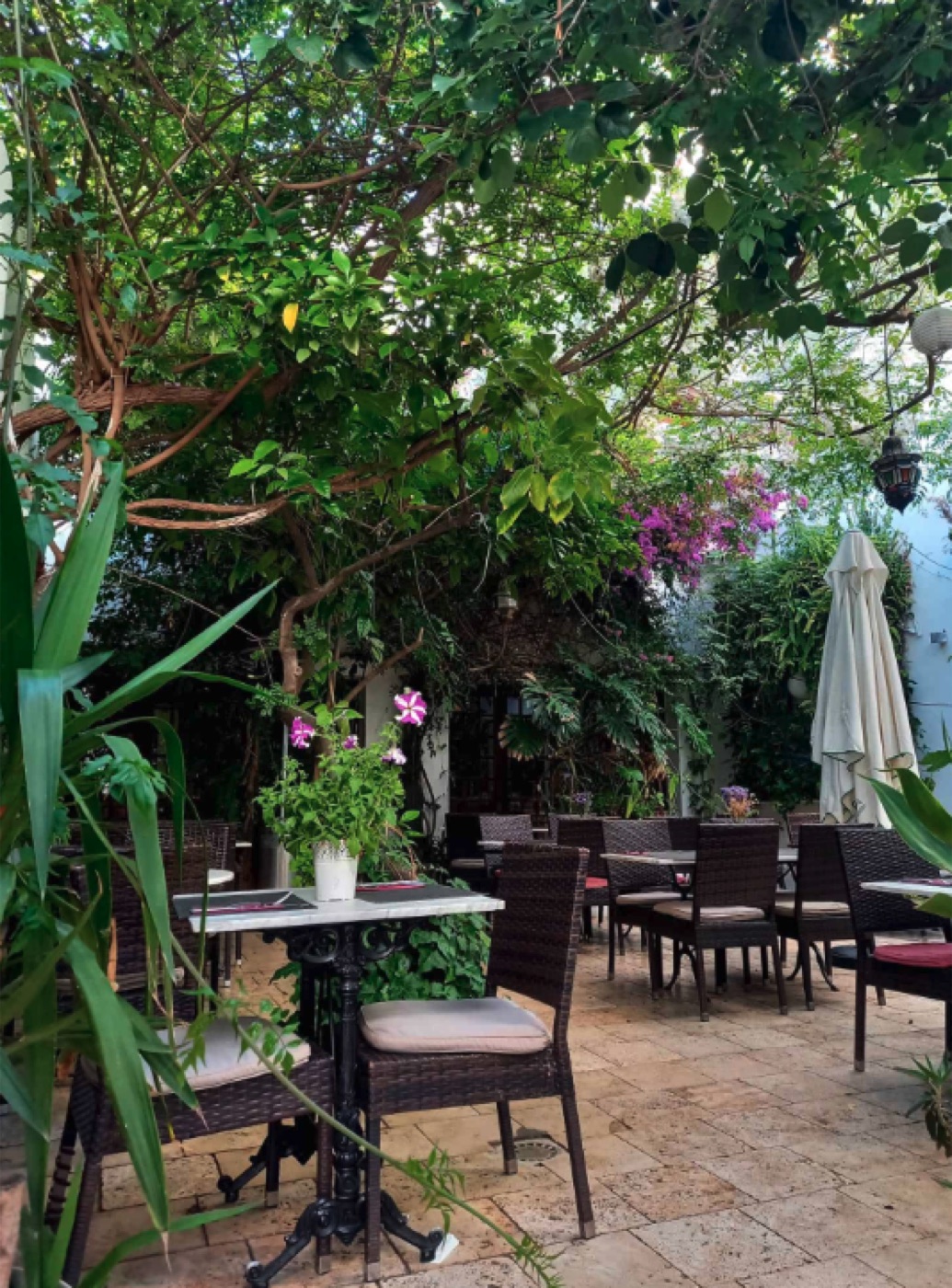
On Plaça de Santa Maria, directly facing the Gothic church of Santa Maria del Mar. A wine bar with one of the best wine lists in the neighbourhood and a terrace that, if you arrive early enough to get a table, provides the best seat in El Born. The food is secondary to the wine — small plates designed to accompany rather than dominate. Order the cheese board and a glass of something from Priorat or Penedès.
Euskal Etxea
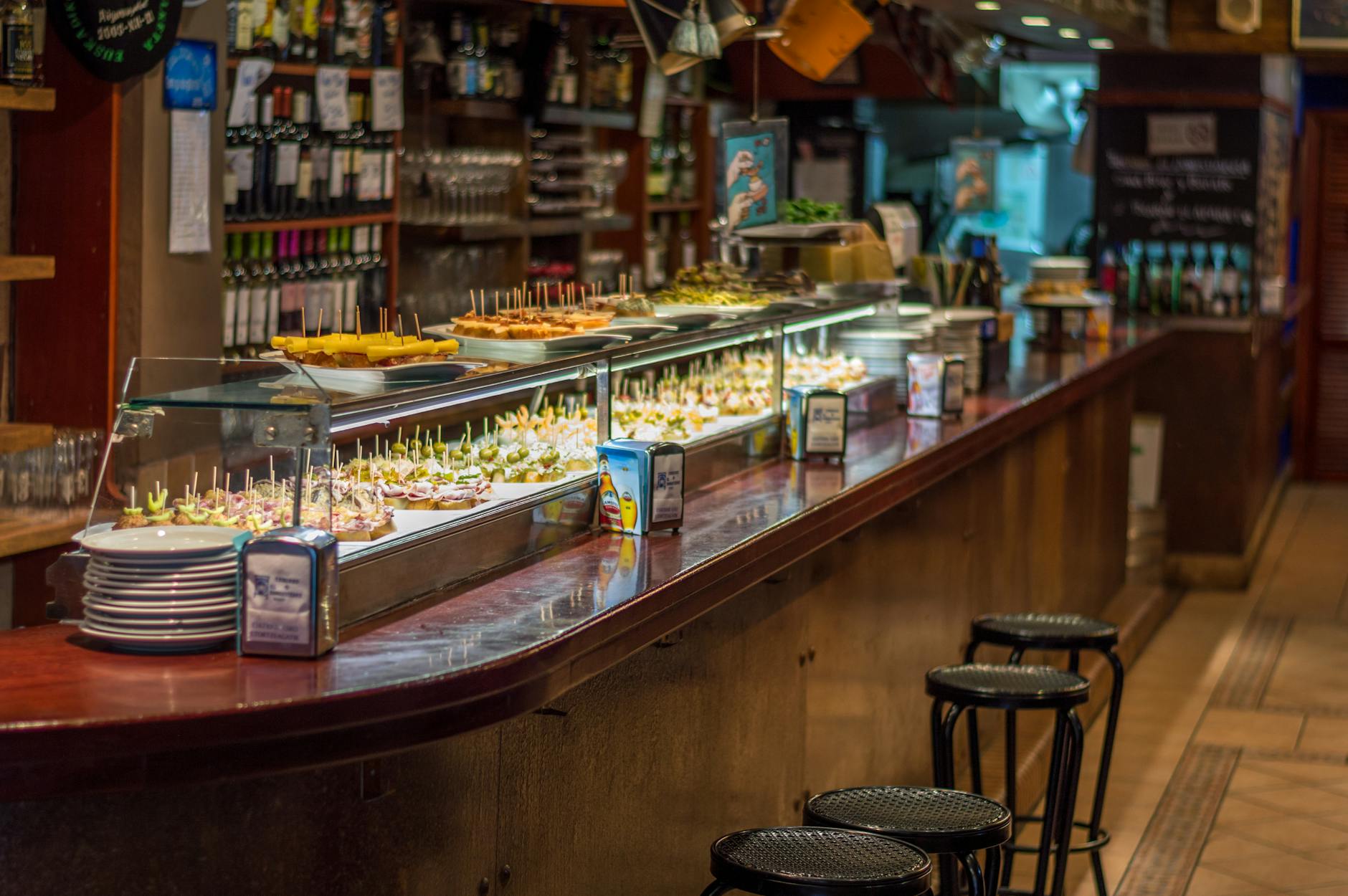
The Basque cultural centre on Placeta de Montcada, which runs a pintxos bar open to the public. If you have been to San Sebastián you will find the pintxos here lower quality than the Basque original — that is expected, the ingredients are different at this distance. But the format is correct: lined trays of small toasted bread with toppings, order by pointing, pay by the piece (€2.50 to €3.50 each). Useful for understanding the difference between Catalan montaditos and Basque pintxos in the same city.
What to order across the crawl
Build variety across your stops. If you eat croquetas at the first bar, order something different at the next. A coherent El Born crawl might look like this:
Stop 1 (Bar del Pla): Croquetas de bacallà, pan con tomate, glass of vermut on tap.
Stop 2 (El Xampanyet): Anchoa en aceite on bread, glass of house cava.
Stop 3 (La Vinya del Senyor or Bar Brutal): Cheese or charcuterie, glass of wine.
Stop 4 (Euskal Etxea or wherever you end up): Two or three pintxos, a final caña.
This is four stops, roughly eight to ten plates across the group, and four drinks each over two to three hours. It is a complete evening without being a full restaurant dinner.
Pan con tomate: the Catalan baseline
Pan con tomate (pa amb tomàquet in Catalan) is the fundamental Catalan bar food. Bread rubbed with half a tomato, drizzled with olive oil, sometimes rubbed with garlic, served with or without toppings. Every bar in El Born serves it. It is the thing you order when you arrive at a new bar and are waiting for the kitchen to send something more substantial. It costs €2 to €4 for a portion.
The correct technique when making it yourself: use ripe tomatoes (the flesh must be soft enough to break against the bread), toasted bread with enough texture to hold the tomato juice without going soggy immediately, and good olive oil — ideally Arbequina, the principal Catalan variety, which is mild and fruity rather than peppery. The bread should be rubbed firmly enough that the tomato flesh smears into the surface, not just painted on top.
When to go and what to avoid
El Born is busy every evening but particularly on Friday and Saturday. Sunday afternoon is excellent — the neighbourhood operates at a slower pace and several of the better bars have more relaxed weekend afternoon service. Avoid the restaurants on Carrer del Parlament (technically Eixample, not El Born, but nearby) that have outdoor terraces and photographs of food on their menus.
Passeig del Born, the main promenade of the neighbourhood, is lined with bars and restaurants of variable quality. Some of the bars on the Passeig are good; some exist purely for tourist traffic. Walk off the Passeig onto the side streets — Carrer de Montcada, Carrer del Rec, Carrer de la Princesa — and the ratio of honest bars to tourist operations improves immediately.
Frequently asked questions
Is El Born good for tapas in Barcelona?
El Born is one of the best neighbourhoods in Barcelona for bar eating. It has the highest concentration of serious independent bars in the city and is compact enough that a crawl covering four or five stops is easy on foot. The quality drops near the main tourist routes; the side streets are where the better places operate.
What is the difference between tapas in Barcelona and tapas in Seville?
Barcelona’s bar food is more eclectic and internationally influenced than Seville’s. In Seville, the tapas tradition is rooted in specific Andalucian dishes — pringá, espinacas con garbanzos, jamón ibérico — and the bars have served the same dishes for generations. In Barcelona, the same bar culture exists but the kitchens draw from Catalan tradition (croquetas, pa amb tomàquet, cap i pota), international influence (natural wine, modern small plates), and Basque tradition (pintxos in some bars). Both are excellent. They are just different.
What is the best bar in El Born Barcelona?
El Xampanyet for atmosphere and Catalan anchovies. Bar del Pla for the best food. Bar Brutal for natural wine. The answer depends on what you are optimising for.
What time do bars open in El Born?
Most bars open at noon for lunch service and again at 6pm or 7pm for evening service. Some bars close between 4pm and 6pm. The evening service builds from 7pm and peaks between 9pm and 11pm. For the best experience, arrive at 7pm when the bars are filling but not yet full.
Exploring more of Barcelona’s food neighbourhoods? Read our guide to pintxos on Carrer Blai in Poble-sec and our look at where Barcelonans eat breakfast.
Found a correction or an update?
Email us at hello@spainfoodguide.com — we keep our entries current.
Run a restaurant in Spain you think we should know?
Get featured →