
24 Hours Eating in Granada: A Tapa-by-Tapa Food Guide
You get one day in Granada. You want to eat the way locals eat, not the way the Alhambra queue eats. This guide walks you hour by hour through a real Granadino food day, naming the bars, the dishes and the rules that make this city different from anywhere else in Spain. The headline act: order a drink, get a tapa, pay nothing extra. That tradition still holds in Granada. It has faded almost everywhere else. Build your day around it and Granada becomes one of the cheapest, most delicious cities in Europe to eat your way through. Everything below is a working itinerary, morning churros to 1 a.m. flamenco-cave dinner, mapped across the four neighbourhoods that matter: centre, Realejo, Albaicín and Sacromonte.
The Quick Version: TL;DR
Granada is the last Spanish city where a drink still buys you a free tapa. Start with chocolate and churros at Café Fútbol. Detour to Santa Fe for a pionono. Mid-morning, tapa-crawl the Realejo (Bar Los Diamantes, Taberna La Tana, Bodegas Castañeda). Lunch on plato alpujarreño or remojón granadino. Afternoon, climb the Albaicín for habas con jamón with an Alhambra view. Golden hour, head up to Sacromonte for a cave dinner with zambra flamenco. Late night, one final tapa crawl around Plaza Nueva. Budget €40-60 for the whole day, drinks included.
Why Granada Eats Differently
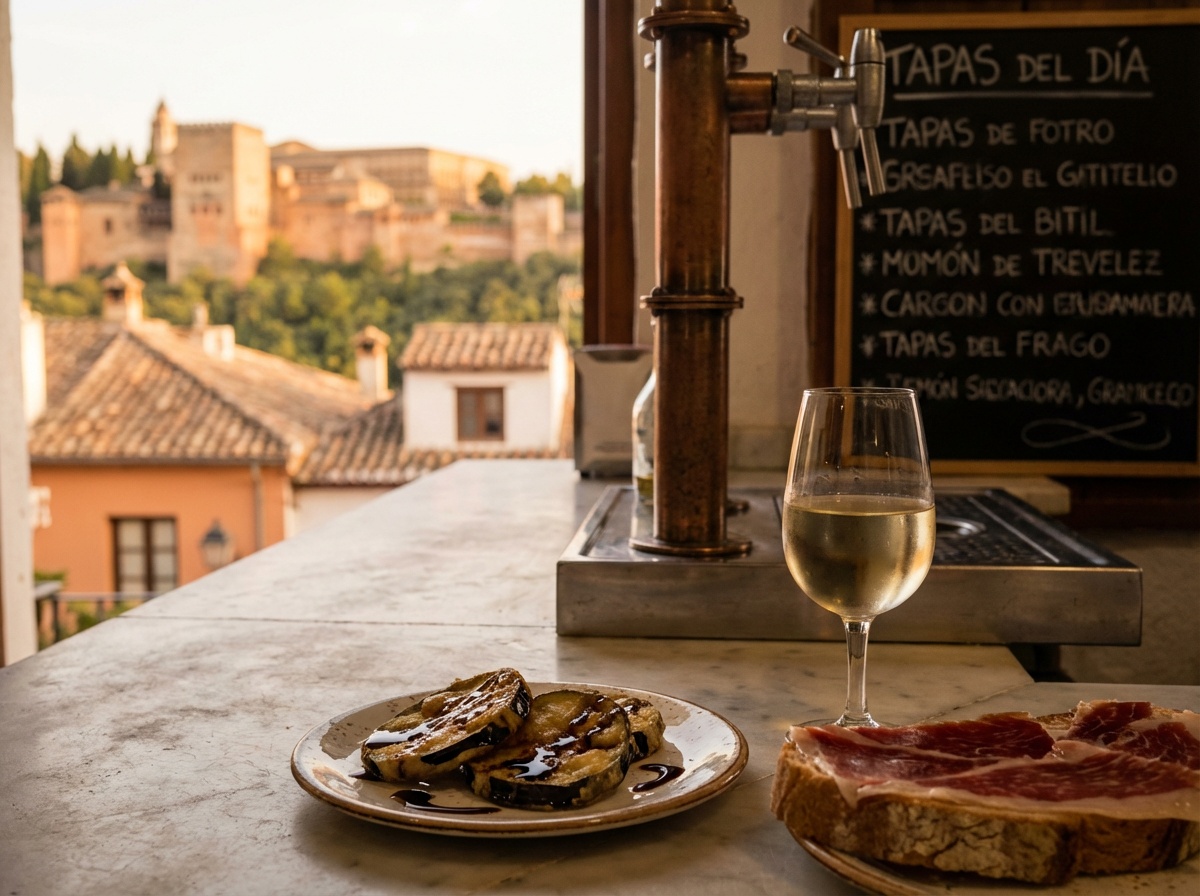
Most of Spain killed the free tapa sometime around the 1990s. Granada never did. Order a caña (small beer) or a copa de vino and the bar brings you a plate. The first round usually gets you olives, crisps, maybe a slice of tortilla. The second and third escalate: a small serving of paella, a plate of migas, fried aubergine with cane molasses. In busy spots, a drink plus tapa costs between €2.50 and €3.50. Three rounds and you have dined.
No one knows exactly why Granada kept the tradition. The popular story credits King Alfonso XIII, who supposedly requested a slice of ham to cover his sherry on a windy day in Cádiz. The more realistic answer is that Granada is a poor, student-heavy city where the free tapa became a competitive weapon between bars. Whatever the cause, it survived. According to Time Out’s 2026 Granada guide, the city now has more bars per capita than almost anywhere in Andalusia, and the tapa remains the unit of measurement.
The practical rule: don’t order the tapas listed on the menu. Those are raciones, and you pay full price. Just order the drink. The tapa arrives unbidden. The bartender decides what you get. In some bars, a second drink means a second, better tapa. Regulars know to pace themselves.
Morning: Chocolate, Churros and a Detour for Piononos
A Granadino breakfast is not a bowl of granola. It is hot chocolate thick enough to stand a spoon in, a twisted ribbon of fried dough and a coffee to follow. Head to Café Fútbol on Plaza de Mariana Pineda. The Suárez family opened the café in 1903 and have run it through four generations. The chocolate is slow-melted and almost pudding-thick. Order a chocolate con churros (€4-5) and you will not need to eat again until 2 p.m. The interior is three floors of worn wood, tiled columns and vintage photos. Mornings before 11 a.m. are peaceful. After that, families arrive for merienda.
If you have a second stomach, take a 20-minute drive or a cheap bus to Santa Fe, the Andalusian town where Isabella and Ferdinand signed the contract that sent Columbus west. Santa Fe is home to the pionono, a thumb-sized cylinder of syrup-soaked sponge topped with torched cream. Casa Isla has made piononos from a recipe dating to 1897, and they still sell them in the same town square. One bite, one shot of espresso, that’s the format. A box of six costs around €10.
Back in town, if Santa Fe is too far, stop at Pastelería López-Mezquita or any city-centre cafetería and order a tostada con tomate y aceite. Toasted bread, grated tomato, olive oil, salt. €2.50. Simple, correct, the default Andalusian breakfast.
Midday: The Realejo and Albaicín Tapa Crawl
Between 1 p.m. and 3 p.m., Granada eats standing up. You should too. Start in the Realejo, the old Jewish quarter that curls up the hill below the Alhambra.
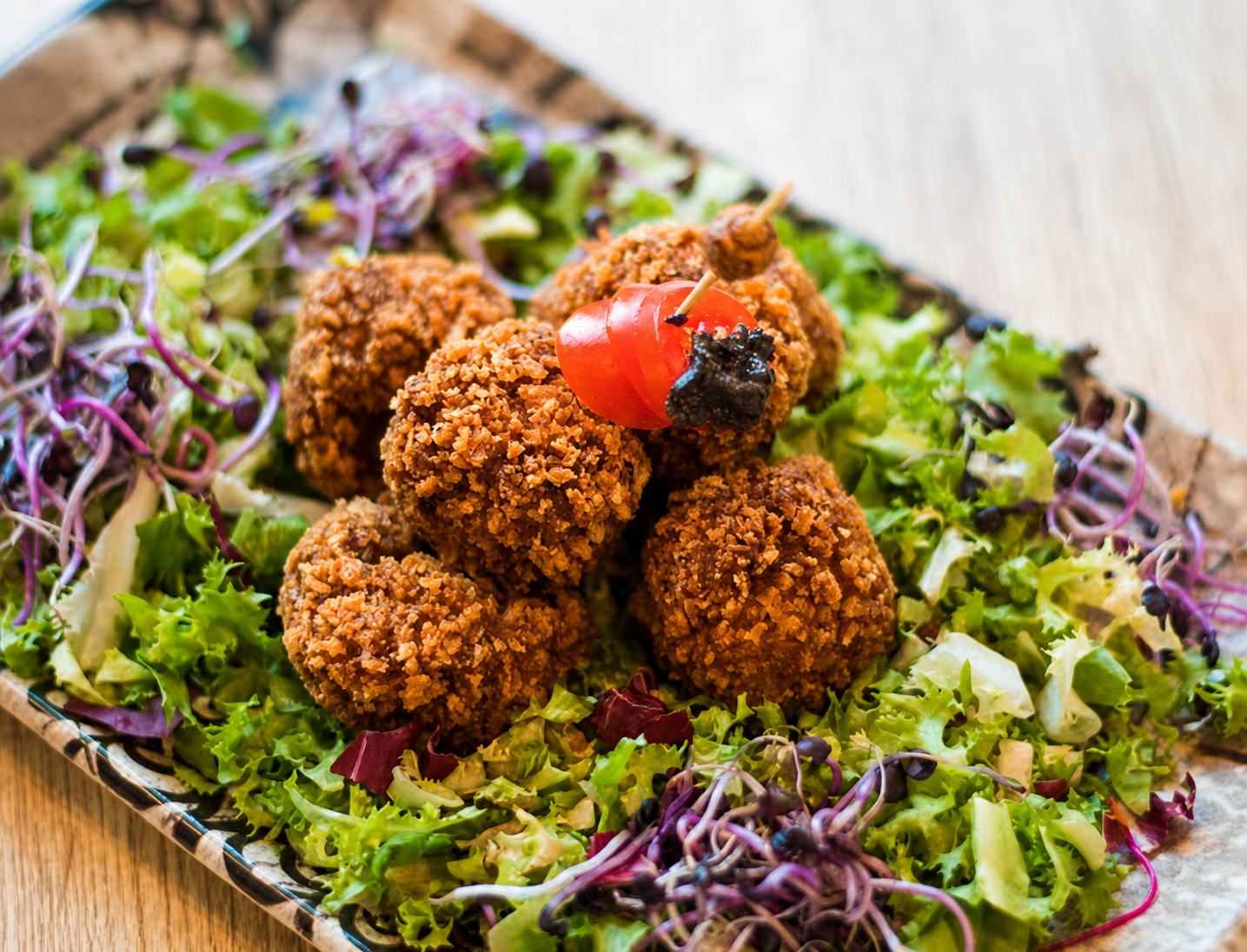
Bar Los Diamantes (there are now several locations; the original on Calle Navas is the one that matters). Fried fish bar. The tapa that arrives with your first beer is usually boquerones, calamares or fried aubergine. Order a second drink and you move up to prawns or a small plate of grilled octopus. Lean against the counter. Eat with your fingers. Expect noise. This is the blueprint for a Granada tapas bar.
Bodegas Castañeda on Calle Almireceros. Opened in 1927, still anchoring Plaza Nueva. Jamón ibérico legs hang over the counter. The house vermouth on tap is the move. The tapa tends towards cured meat and cheese. The counter crush is the point. Twenty minutes, one round, move on.
Taberna La Tana on Calle Placeta del Agua, deep Realejo. Run by Jesús and Luisa González Martín, who inherited the bar from their mother. Over 700 wine labels, 80 available by the glass. La Tana is where you upgrade from beer to a glass of Ronda red or a local vino de la costa. The tapas here are plated with intention: a small slice of pâté, a pickled anchovy, a spoon of stewed chickpeas. Anthony Bourdain shot a segment here. Arrive early, the bar is tiny.
Cross the River Darro and climb into the Albaicín. Bar Aixa on Plaza Larga serves the honey-glazed aubergine locals treat as a benchmark. Los Diamantes II on Plaza Nueva overflows onto the square. El Higo specialises in a more creative tapa. Rest at the Mirador de San Nicolás long enough to see the Alhambra, then descend. You have eaten four tapas, drunk four drinks, paid about €14.
The Moorish Heritage Plates
Granada was the last Moorish kingdom in Iberia, surrendering in 1492. Food kept the memory. Three dishes to hunt down on any serious eating day:
Tortilla Sacromonte. An omelette, technically, but not like any tortilla you know. The classic version folds lamb brains, sweetbreads and sometimes jamón de Trevélez into beaten eggs. The dish dates to the 16th century, invented in the Sacromonte monastery where cooks, according to legend, used whatever parts of a stolen lamb the thieves had left behind. Brains and offal. Today many bars offer a modernised version with chorizo, peas and potato instead. Traditionalists still eat it on 17 January, the feast of San Antón, patron saint of animals.
Habas con jamón. Broad beans sautéed with cured ham, olive oil, garlic and sometimes a soft-fried egg on top. Unpretentious, filling, best in spring when the beans are fresh. Most good tavernas in the Albaicín put it on the menu from March to June.
Berenjenas con miel. Fried aubergine batons drizzled with miel de caña, which is sugarcane molasses, not actual honey. The sweet-savoury combination is a direct Moorish inheritance. It is on every serious menu in the city. Bar Aixa’s version is often held up as the model.
None of these plates cost more than €10. All three tell the story of Granada in a way no Alhambra audio guide can.
Long Lunch: Plato Alpujarreño and Remojón Granadino
If you want a proper sit-down lunch between 2 p.m. and 4 p.m., order one of two regional classics.
Plato alpujarreño is the mountain plate from the Alpujarra villages south of the city. A clay dish loaded with patatas a lo pobre (potatoes slow-cooked with green pepper, garlic and olive oil), topped with a fried farm egg, morcilla, chorizo and slices of jamón de Trevélez. Jamón de Trevélez is aged up to 36 months at 1,500 metres in the Sierra Nevada, and carries a protected designation. Expect €14-18 for a full portion. Taberna La Tana and Restaurante Chikito both do credible versions. The plate is unapologetically heavy. One is enough for two people.
Remojón granadino is the opposite. A cold salad of orange segments, salted cod, black olives, spring onion, hard-boiled egg and a hard pour of extra virgin olive oil. It is Moorish in origin, winter food that now appears year-round. The sweetness of the orange against the salt of the cod is the whole point. €8-10 as a starter. Bodegas Castañeda and El Trillo up in the Albaicín both make it well.
Pair either with a glass of vino de la costa, the light white wine grown on the Contraviesa hills above the Alpujarras. A lunch like this, with wine, runs €20-25 a head. Take a proper siesta after. Granada closes between 4 p.m. and 7 p.m. Do as Granada does.
Golden Hour and the Sacromonte Caves
Around 7 p.m., the city wakes again. Climb to Sacromonte, the cave-studded hill across the ravine from the Alhambra, historically home to Granada’s Romani community and the birthplace of zambra flamenco. The word zambra comes from the Arabic zumrã, meaning wedding celebration. The dance is slower and older than the tablao flamenco you see in Seville, and the caves amplify the footwork.
Three venues dominate. Cueva de la Rocío on Camino del Sacromonte, run by the Maya family for over 60 years. Shows at 20:00, 21:00, 22:00 and 23:00. Tickets are €33 for the show alone or €65 including a three-course dinner. Cuevas Los Tarantos, opened 1972, runs a similar format. Cueva Los Amayas claims the title of first zambra in the barrio.
The food in the caves is not the reason to go. The room, the proximity, the older Romani dancers and guitarists are. Book the early show, eat a proper dinner afterwards in the city. Or book dinner at the cave and skip a late meal. Either way, walk back down at night for the view of the Alhambra in full spotlight. It is the best free thing in Granada.
The Late Dinner Round
Granada does not really sit down for dinner. It does a second tapa crawl starting around 9:30 p.m. and running until the bars close at 1 a.m. Join it.
Good stops: Restaurante Chikito on Plaza del Campillo, a classic that claims Federico García Lorca as a former regular. La Fábula for something more ambitious in a hotel dining room. La Botillería in the Realejo for creative tapas and a longer wine list. NM Culinary, a modern tasting-menu restaurant recognised by Condé Nast Traveller if you want to trade the crawl for a formal dinner.
For a proper late-night finish, head back to Bar Los Diamantes or any bar around Plaza Nueva. Two more beers, two more free tapas, walk home along the Darro with the Alhambra lit behind you. That is how a day of eating in Granada ends.
Common Mistakes to Avoid
- Ordering from the tapas menu. Those are full-price raciones. Order a drink, let the tapa arrive.
- Eating early. Lunch before 1:30 p.m. and dinner before 9 p.m. mark you as a tourist. Shift your clock.
- Skipping the Realejo. The centre is fine. The Realejo is better.
- Buying the “flamenco dinner experience” from a hotel concierge. Book directly with Cueva de la Rocío, Los Tarantos or Los Amayas and save 30%.
- Staying in one bar too long. The crawl is the point. Two rounds, move on.
FAQ
Why does Granada still serve free tapas when the rest of Spain does not?
Granada is the only major Spanish city where the free tapa with every drink remains standard. The tradition held because Granada’s bars compete on tapa quality to win student and working-class custom. In most of Andalusia and almost all of northern Spain, the tapa is now a paid menu item.
Where do locals eat tapas in Granada?
Locals cluster in four zones: Calle Navas and the Realejo (Bar Los Diamantes, Taberna La Tana), Plaza Nueva and Calle Elvira (Bodegas Castañeda, Bar Poë), the Albaicín (Bar Aixa, El Higo, Mesón El Yunque) and the university bars around Pedro Antonio de Alarcón for cheap student-density tapas.
What should you eat for breakfast in Granada?
Chocolate con churros at Café Fútbol is the signature. A tostada con tomate is the everyday default. For something sweet and regional, pick up a pionono from Casa Isla in Santa Fe or at their Granada outlet. Breakfast runs €2.50-€6.
What is tortilla Sacromonte and is it worth trying?
Tortilla Sacromonte is an offal-based omelette made with lamb brains, sweetbreads and sometimes ham, invented in the 16th century. The classic version is still served in traditional tavernas, particularly around the feast of San Antón on 17 January. Modern bars offer a chorizo-and-potato version that is gentler on first-timers. Try it once for the history.
How late can you have dinner in Granada?
Kitchens in tapas bars typically serve until midnight or 1 a.m. Sit-down restaurants close kitchen around 11:30 p.m. If you land late, the Plaza Nueva bars and the Realejo are your best option. The Sacromonte flamenco caves run their last dinner service around 22:00.
Is Granada expensive for food?
No. Because of the free-tapa tradition, a full evening of drinks and food costs €12-18. A proper sit-down lunch runs €15-25. A flamenco cave dinner is €50-65 including the show. A full day of eating, including breakfast and a cave-dinner experience, fits comfortably in €60-80. Compared with Seville, Madrid or Barcelona, you eat better in Granada for half the price.
Do I need to book ahead?
For tapas bars, never. For Cueva de la Rocío or a Sacromonte show, yes, especially April through October. For sit-down restaurants like NM Culinary, Chikito or La Fábula, book one or two days ahead, and ask for an outdoor table if the weather is warm.
What should I drink with the tapas?
Most locals default to a caña of Alhambra beer, brewed in the city itself. For wine, ask for vino de la costa or a glass of Ronda tinto. In the afternoon, switch to tinto de verano (red wine with soda and lemon). Granada is not a sherry town, but a fino pairs beautifully with fried fish if you want to experiment.
Plan the Day, Eat the City
Granada gives you permission to eat slowly, cheaply and across a whole geography. Morning in the centre, midday on the tapa crawl, afternoon up in the Albaicín, night in Sacromonte. Follow the rhythm and the city pays you back in every bar. For more destination guides to eating your way across Andalusia, explore our Granada destination hub or plan a full week with our Andalusia food guide.
Found a correction or an update?
Email us at hello@spainfoodguide.com — we keep our entries current.
Run a restaurant in Spain you think we should know?
Get featured →